


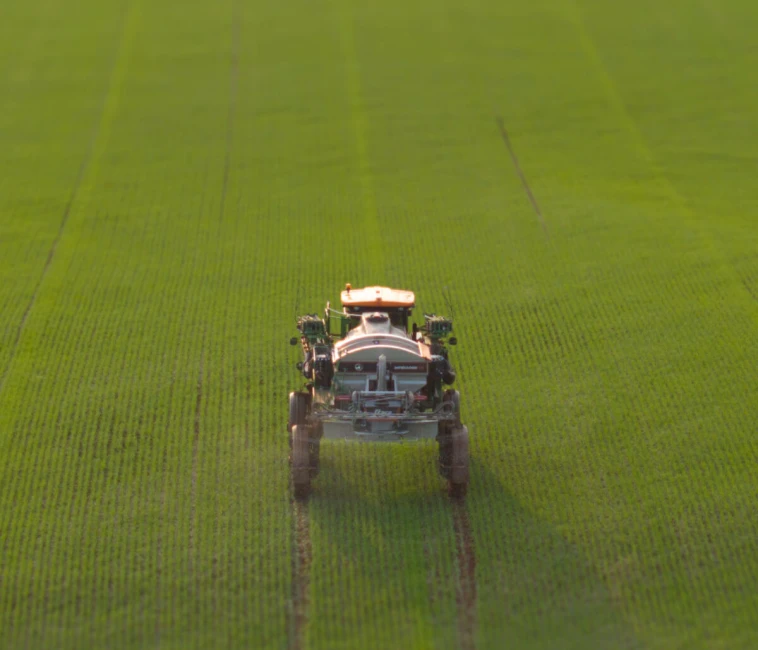
Agricultural spraying is a decisive stage in protecting the crop yield potential.
Studies by Cambridge University Press & Assessment indicate that even with management, pests and diseases can reduce production by up to 20-40 per cent in crops such as soybeans, maize, wheat and rice. Without control, losses can reach 50 per cent.
In this scenario, the self-propelled sprayer plays a key role. Instead of relying solely on implements attached to the tractor, the producer now has a dedicated spraying machine, capable of making better use of weather windows, maintaining a stable working speed and applying the correct metering with the support of electronic resources.
This guide explains what a self-propelled sprayer is, its main benefits, how many hectares it can spray per hour, when to compare it to agricultural spraying drones and what to consider when investing.
What is a self-propelled agricultural sprayer?
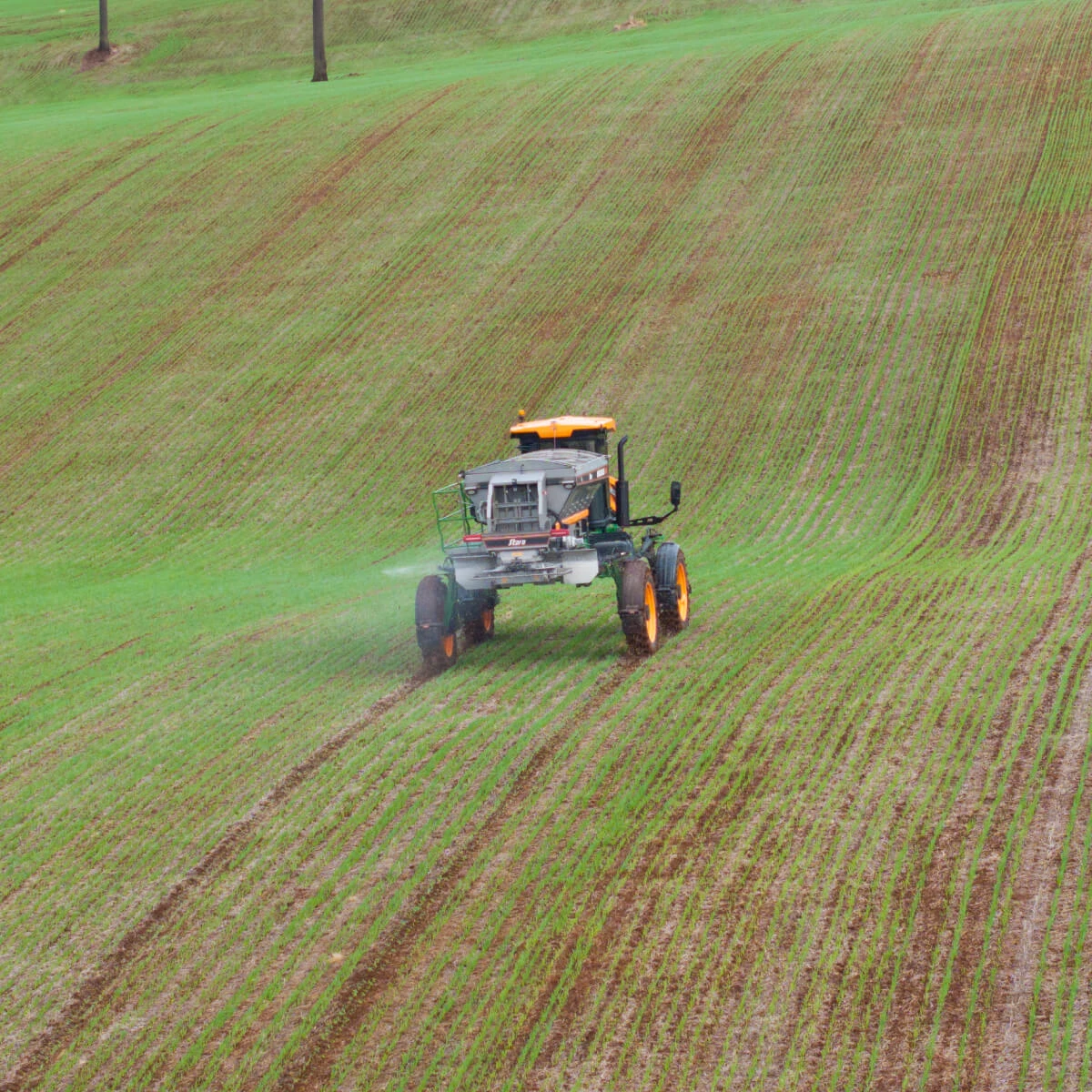
The self-propelled agricultural sprayer is an agricultural machine that combines the engine, transmission, cab and spraying system into a single unit. It doesn't depend on the tractor to move. Some typical features:
- its own engine and high chassis which allows it to enter the field at advanced stages of the crop plants;
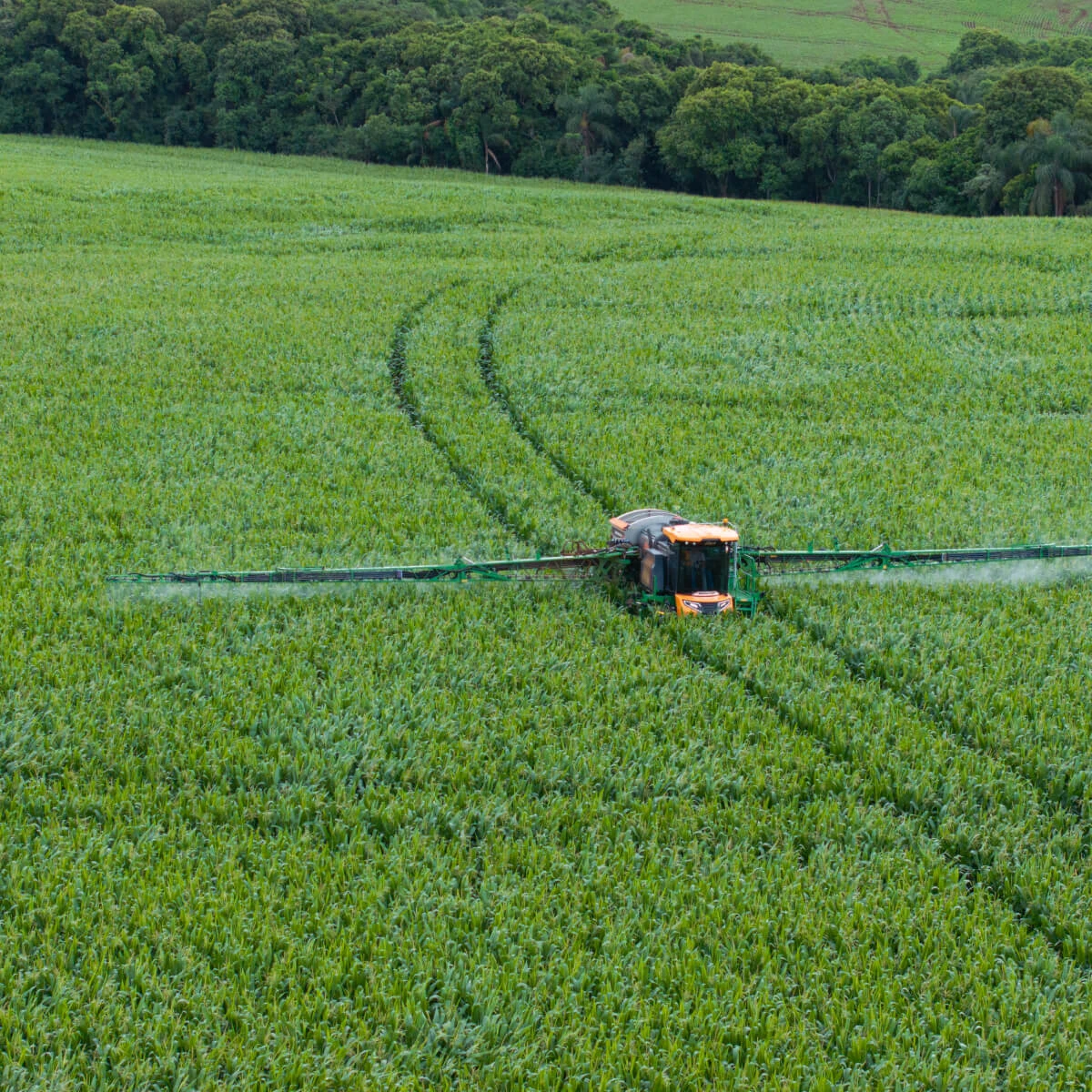
- wide spraying bars with height and section control, to increase the area covered per pass;
- higher capacity solution tank, reducing stops for refuelling;
- cab with extended vision and comfort, which improves the agricultural machine operator’s workday;
- on-board agricultural technology, such as auto steering, agricultural controller, automatic sections and telemetry.
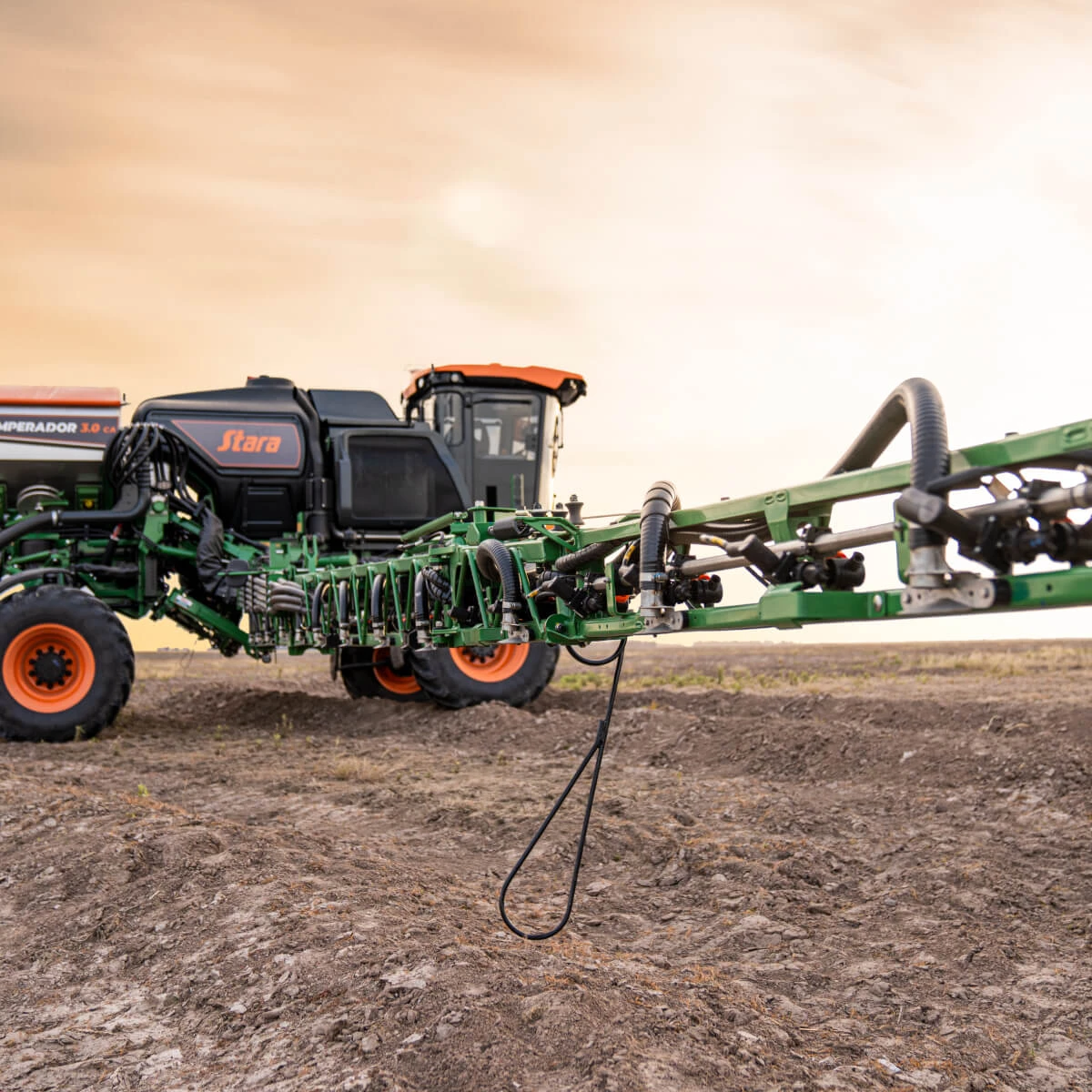
In Stara's line of agricultural machinery, the self-propelled sprayer Imperador 3.0 stands out as an example of high technology.
It combines spraying with central booms, fertiliser application and pneumatic seeding, as well as features such as the Nozzle-by-Nozzle Control system and continuous chemical solution recirculation, which improve precision and prevent overlapping applications.
What is the role of the self-propelled sprayer in farming?
The main role of the self-propelled agricultural sprayer is to apply chemicals (herbicides, fungicides, insecticides, foliar fertilisers) evenly and at the right time. This protects the crop against losses caused by:
- weeds;
- pests;
- diseases.
Left unchecked, pests and pathogens can reduce production by 20 to 40 per cent in the main crops, even in systems with good fertility and technology, according to the aforementioned data from Cambridge University Press & Assessment.
In addition, the self-propelled sprayer allows you to enter the area quickly in the event of outbreaks, take advantage of short windows of favourable weather and keep the metering, volume of solution and droplet pattern within the recommended range.
When combined with precision agriculture technologies, such as the Eco Spray spot spraying system, the agricultural machine applies the herbicide only where there are weeds, which further reduces chemicals consumption.
Main benefits of self-propelled agricultural sprayers
Below, we've put together 3 of the main benefits of this type of sprayer, to be considered according to the investment and the specific contexts of each farming. Check it out:
1. Operating efficiency and area coverage
The combination of boom width, tank capacity and adequate speed allows the self-propelled sprayer to cover large areas in a short time. Field capacity can be estimated by the formula:
- ha/h = (speed in km/h × boom width in m × field efficiency) / 10.
For example, if we have a 30 m boom, a speed of 15 km/h, on proper safety conditions and field efficiency of 75% (time spent manoeuvring, refuelling and making adjustments), the formula will be:
- ha/h ≈ (15 × 30 × 0.75) / 10 = 33.75 hectares per hour (approximate value, which varies depending on the terrain, shape of plots and stops).
Models such as the Imperador 3.0 can achieve operating yields of up to 40 ha/h in the seeding operation, which reinforces the machine's ability to cover large areas in short periods. This efficiency reduces working hours per hectare, fuel consumption per area and the risk of missing the ideal agricultural spraying window.
2. Precise application and less waste
Modern self-propelled sprayers feature:
- integrated agricultural controller;
- auto section control or nozzle by nozzle;
- automatic rate control (fixed or variable);
- auto steering;
- systems for continuous recirculation of solution.
In the Imperador line, the Nozzle-by-Nozzle Control system automatically shuts off each nozzle in already treated areas, which reduces overlap and saves up to 5% on chemicals.
The Imperador Eco Spray incorporates computer vision and artificial intelligence for spot spraying, using cameras that identify weeds and activate the nozzles only on the target. This process can result into average savings of between 30% and 60% on herbicides, and reach up to 95% in certain scenarios.
3. Comfort and safety for the operator
The self-propelled agricultural sprayer is designed for long working hours. The broad, ergonomically appropriate cabin, reduces physical fatigue and facilitates access to the controls. Items such as a suspension seat, steering wheel adjustment, an user-friendly dashboard and good visibility of boom assembly help the operator to stay alert throughout the operation.
Efficient climate control and, in many models, a pressurised cab reduce the ingress of dust and spray mist, which improves operator safety and well-being.
Supported by auto steering, farm controller and real-time monitoring, the machine requires less effort to maintain alignment and the application rate.
These features help reduce errors, increase the regularity of spraying and contribute to a more professional and sustainable work routine on the farm.
Read more: Agricultural machinery operator:5 common challenges in farming | Stara
How many hectares does a self-propelled sprayer cover per hour?
The operation capacity of a self-propelled agricultural sprayer depends on the boom width, the safe operating speed, field efficiency (shape of plots, number of manoeuvres, refuelling time) and the terrain conditions.
The formula used to estimate capacity is:
- ha/h = (speed × width × efficiency) / 10.
In a scenario with a 24 metre boom, a speed of 12 km/h and an efficiency of 70%, the result is around 20 hectares per hour.
With a 36 m boom, 18 km/h and 75% efficiency, capacity can reach approximately 48.6 hectares per hour.
For this reason, many producers work in the 20 to 40 ha/h range, depending on the model of self-propelled agricultural sprayer and the farm characteristics.
Where do self-propelled tractors deliver the most results?
Here, the key to knowing the potential of this investment is the size and type of property. On farms with large areas of grain, the self-propelled vehicle is often the mains aspect of application planning.
Autonomy, speed and regularity make it easier to keep to the spraying schedule. Other common options in this scenario may have limited performance:
- the tractorised sprayer is still useful in smaller areas or very small fields, especially when the property already has the necessary tractor;
- the spraying drone, on the other hand, excels in hard-to-reach places and in one-off applications in coppices. It can also be an alternative when excessive rainfall makes it difficult for land-based machinery to enter or when the land slope increases the risk of slip and soil compaction.
In general, in large-scale operations, it is the self-propelled tractor that concentrates the daily volume, constancy and efficiency of applications.
Does a self-propelled agricultural sprayer generate a return on investment?
Yes. An agricultural machine tends to have a good return on investment because it directly impacts three sensitive aspects of operating cost:
1. application time;
2. volume of chemicals;
3. losses due to delays in control.
The larger the planted area and the shorter the windows of favourable weather, the greater the perceived gain. Reducing two or three hours on the day of application can mean entering the crop field still at the ideal point and avoiding losses that can vary between 20 and 40 per cent in crops such as soybeans, maize e wheat.
In practice, many producers calculate ROI by the cost per hectare sprayed. When the machine covers more hectares per hour, reduces overlap with the support of technology and cuts down on chemicals waste, the operating cost per hectare becomes more predictable throughout the harvest.
In large areas, the savings generated by systems such as Nozzle-by-Nozzle and Eco Spray tend to offset a significant part of the initial investment.
Purchase alternatives via consortium and rural credit
To make the purchase viable, rural properties often evaluate alternatives such as agricultural financing and consortium. Financing adjusts the payment flow to the production calendar, while a consortium makes it possible to plan the replacement of machinery and reduce exposure to interest, since the investment is diluted over the months.
For both formats, understanding the annual volume of spraying and the potential gain in efficiency helps define which modality best fits the farm's reality.
How to choose the right sprayer
The decision starts with the total area and the spraying schedule. Properties that work many hectares per harvest need higher operating capacity.
In short windows of favourable weather, wide booms and larger tanks make a difference. In this scenario, models of the Imperador family tend to deliver better daily performance.
The on-board technology directly influences the application standard. The type of boom and the stabilisation system determine the regularity of the jet.
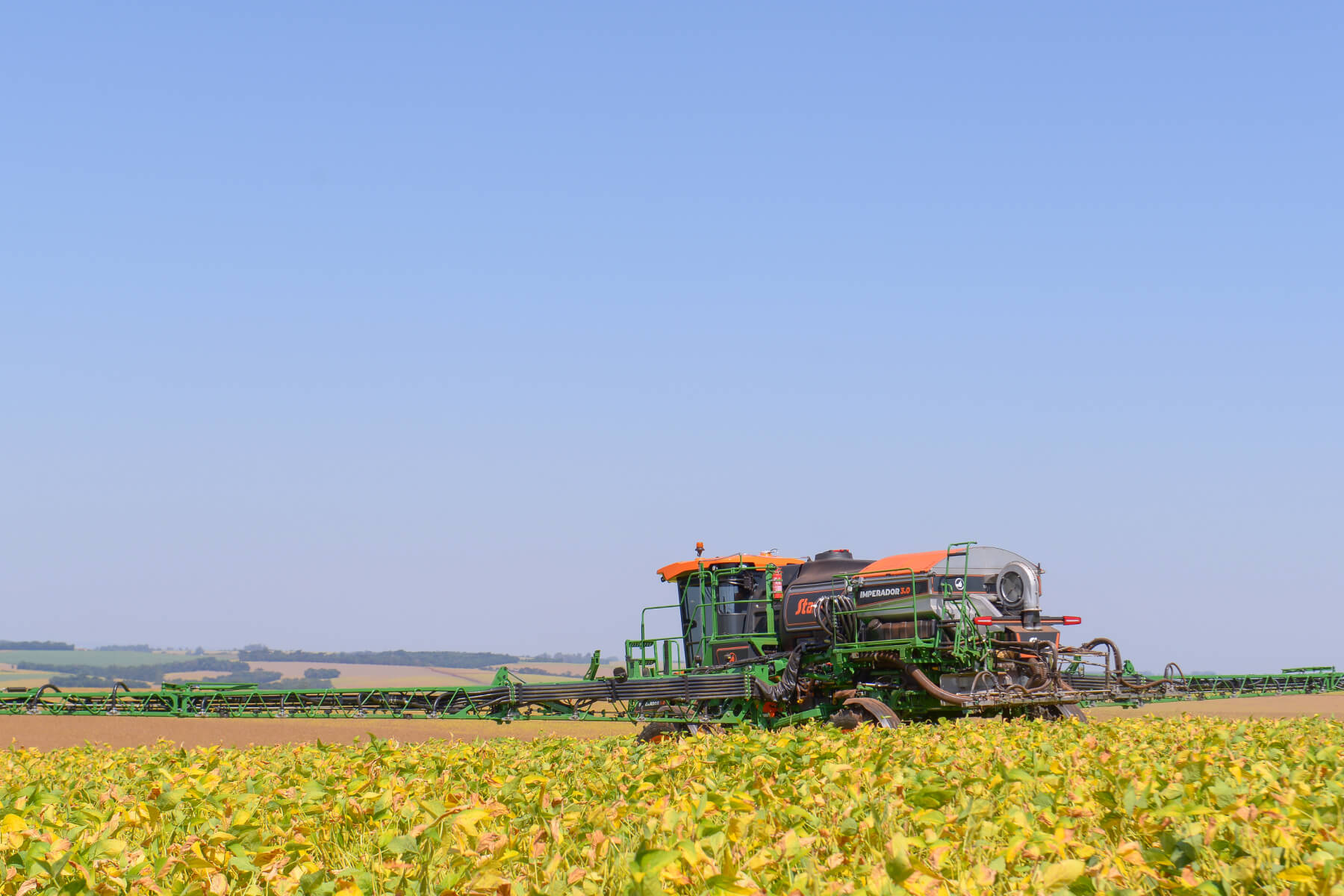
On uneven terrain, the Imperador 3.0’s central boom helps maintain a stable height. Features such as Nozzle-by-Nozzle Control system and continuous recirculation reduce overlap and avoid waste.
The auto steering with signal correction and the agricultural controller with prescription maps increase precision. Stara sprayers’ integration with Topper makes it easier to read maps, set metering and monitor operations in real time.
As the self-propelled tractor is a high-value machine, the support network around it influences the result. Initial configuration, updates and preventive maintenance reduce failures and downtime.
Services such as Conecta, in addition to the Stara dealership network, provide quick guidance for the operator and better use of the on-board technology throughout the harvest.
Calibration, adjustment and safety
The efficiency of spraying depends on a well-defined routine in the field. Before each operation, it should be:
- measured the flow rate of nozzles and checked that it is within the recommended range;
- checked the working pressure and travel speed;
- checked the filters, hoses and possible leaks;
- adjusted the height of booms according to the crop and type of nozzle.
This calibration discipline improves the uniformity of application, reduces waste and increases the useful life of components.
Security is part of the same process. Basic practices include:
- correct and complete wear of PPE during preparation, refuelling and application;
- compliance with NR 31.7 guidelines when organising preparation, application and disposal areas;
- be careful when preparing the solution and dispose of leftovers correctly;
- return empty packaging to authorised collection points.
These routines are more consistent when the operator has access to reliable information. Technical materials, training and educational platforms help to standardise procedures and avoid common mistakes.
As for Stara agricultural machines, the Operator Portal brings together up-to-date content, videos, manuals and practical guidance, aiming to facilitate the adoption of safe procedures and the continuous improvement of spraying throughout the harvest.
Investing in technology increases productivity
Investing in a self-propelled agricultural sprayer is a strategic decision for those seeking productivity, savings on inputs and greater control over plant health management.
With the right choice and a routine of calibration, preventive maintenance and training, the self-propelled sprayer becomes one of the farming's main allies in protecting the yield potential and competitiveness of the business.
Did you like the hints and want to find out the agricultural machine that best suits your farming?
Stop by a Stara dealer and find the most suitable equipment to boost your crop production. Request a quotation.