


The distribution of weeds can vary within the same field. While some occur in isolated patches, others are concentrated in specific areas or develop between crop rows. Given this variability, how can weeds be identified and herbicides applied only where required while the sprayer moves through the field?
To meet this need, Stara developed Eco Spray, a system that uses cameras and artificial intelligence to identify weeds in real time and activate individual spray nozzles only over detected targets. Available on the Imperador 3000 and Imperador 4000 self-propelled sprayers, the technology directs herbicide applications to the locations identified by the system, helping to reduce product consumption in situations of irregular weed infestation.
Throughout this article, you will learn how Eco Spray's computer vision system identifies weeds, how sensitivity levels influence nozzle activation, and which field conditions may affect detection, with guidance from Stara specialists.
How Does Eco Spray Identify Weeds?
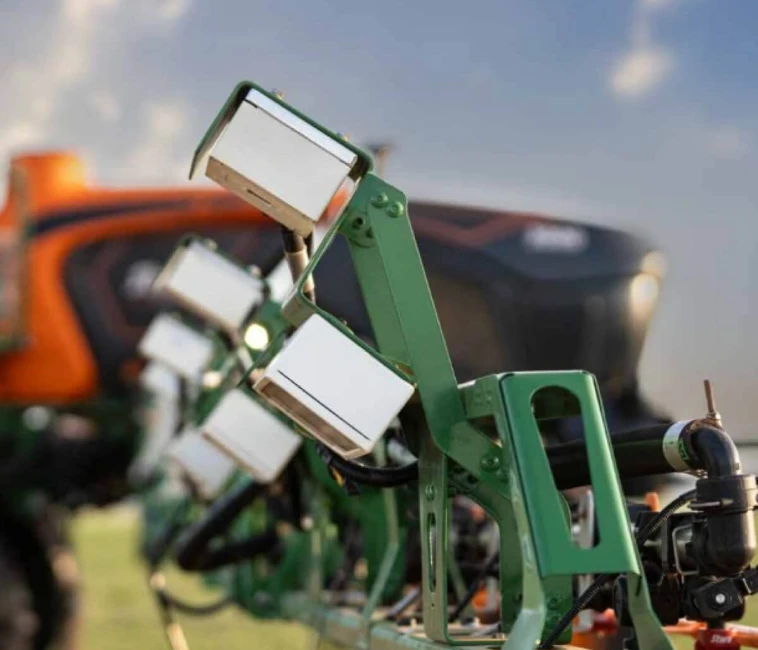
Identification begins with the high-resolution cameras installed on the front section of the booms of the Imperador 3000 and Imperador 4000 sprayers. These cameras capture images of the field while the machine is operating. The cameras are distributed along the boom at intervals of one metre, and the number of cameras varies according to boom width:
- 30-metre boom: 31 cameras.
- 36-metre boom: 37 cameras.
Each camera captures 15 images per second during spraying. This means that on a machine equipped with a 36-metre boom, the Eco Spray system records 555 images per second, supporting continuous monitoring of the area ahead of the boom.
Ramon Cancian, Agronomist and Product Marketing Analyst at Stara, explains how the processing technology integrated into the cameras enables target identification and application while the machine is moving:
“With Eco Spray, image capture, target identification through artificial intelligence and information processing all take place directly within the cameras. As a result, there is no need to send data to an external processing centre, allowing the system to recognise weeds and activate individual spray nozzles in real time.”
With these integrated functions, system operation can be summarised in five stages:
- Image capture: the cameras continuously monitor the area ahead of the boom.
- Analysis and identification: artificial intelligence processes the images to recognise targets according to the selected operating mode.
- Activation decision: the system evaluates the configured sensitivity parameters to determine which targets should receive treatment.
- Spraying: the corresponding nozzles are individually activated to apply herbicide to the identified locations.
Because Eco Spray identifies targets in real time, there is no need to create a prescription map in advance to define application points. The system determines where spraying should occur based on the images captured during operation and the settings established by the operator.
How Do Green-on-Brown and Green-on-Green Modes Identify Weeds?
To recognise targets, the artificial intelligence analyses the images captured by the cameras, identifying green plants against soil or crop residue, or distinguishing weeds from the established crop, depending on the selected operating mode.
This analysis takes place through two operating modes: Green-on-Brown and Green-on-Green. Each mode is designed for specific field conditions, as explained below.
Green-on-Brown: Detection During Pre-Planting Burndown
In Green-on-Brown mode, used during pre-planting burndown applications, Eco Spray identifies the contrast between the green colour of weeds and the brown colour of soil or crop residue. The system scans the area, records points containing vegetation and applies herbicide only where required, according to the configured sensitivity level, contributing to product savings.
When a target matching the predefined criteria is detected, Eco Spray activates the nozzle responsible for that specific location.
Green-on-Green: Differentiating the Crop from Weeds
When the crop is already established, target identification requires the system to distinguish weeds from plants that should be preserved. For this situation, the Green-on-Green mode was developed and is available for soybean, maize and cotton crops.
In this mode, Eco Spray analyses the planting pattern of the crop rows to identify weeds growing between the rows, regardless of whether they are smaller or larger than the crop itself. Detection takes place irrespective of row direction or sprayer travel direction, enabling individual nozzle activation for site-specific herbicide application.
Eco Spray does not identify the botanical species of each weed. However, the system recognises targets based on the established planting pattern, taking into account row spacing and the main crop. It then directs herbicide applications only to areas considered outside the recognised planting pattern and therefore identified as weeds.
How Do Sensitivity Levels Influence Weed Detection?
During image analysis, Eco Spray uses the sensitivity level configured in the Topper agricultural controller to determine which targets should receive treatment. The system offers four sensitivity settings, each defining the minimum weed size required to activate the spray nozzles.
|
Sensitivity |
Activation Criteria and Recommended Use |
|
1,44 cm² |
Detects targets from 1.44 cm² onwards. Prioritises weed control effectiveness, including small weeds in the early stages of development. |
|
16 cm² |
Detects targets from 16 cm² onwards. Provides a balance between weed control effectiveness and herbicide savings. |
|
64 cm² |
Detects targets from 64 cm² onwards. Prioritises herbicide savings during application. |
|
225 cm² |
Detects targets from 225 cm² onwards. Recommended for infestations with larger weeds. |
To illustrate the differences between sensitivity levels, consider a field containing weeds at various growth stages. With the 1.44 cm² setting, Eco Spray can detect smaller weeds, helping to control infestations at an earlier stage. At the 225 cm² setting, spraying only occurs once the target reaches the specified size threshold.
The sensitivity level should be selected according to infestation characteristics and the weed-management strategy defined for the area. Therefore, the operator must adjust the setting in the Topper controller following the guidance of the responsible agronomist or technical advisor.
How Does the Integration Between Cameras and Nozzles Improve Spraying Accuracy?
As soon as a weed is identified, Eco Spray determines which nozzle must be activated to perform the site-specific herbicide application. This process takes place in real time, allowing spraying to occur precisely when the boom passes over the detected target.
One of the system’s key features is the integration between the cameras and the spray nozzles. Each camera monitors the nozzle corresponding to its position as well as the two adjacent nozzles, one on either side. Matheus Henrique Baumgratz, Agronomist and Product Marketing Analyst at Stara, explains the benefit of this configuration:
Each camera can monitor up to three spray nozzles. This means that the same target can be identified by neighbouring cameras, increasing the likelihood of weed detection and providing greater accuracy in nozzle activation.
This integration becomes particularly important when a weed is partially hidden by the crop. If one camera cannot identify it due to obstruction, a neighbouring camera may detect the target and trigger herbicide application at the corresponding location.
Eco Spray also includes protection mechanisms for situations in which visibility or boom height compromises camera performance. These features are explained below, together with the field conditions that influence weed detection.
How Does Eco Spray Maintain Efficiency and Application Safety Under Different Conditions?
Eco Spray incorporates features that allow weeds to be identified both during the day and at night, alongside protection mechanisms that maintain spraying performance when camera readings are impaired. Boom height and target visibility are also factors that influence system operation and must be considered during field activities.
Lighting for Day and Night Weed Detection
Eco Spray cameras are equipped with LED lighting, enabling the system to identify weeds during both daytime and night-time applications. This allows the Imperador Eco Spray to operate 24 hours a day, maximising the use of suitable spraying windows.
The possibility of night-time operation, however, does not eliminate the need to assess weather conditions or comply with technical application recommendations.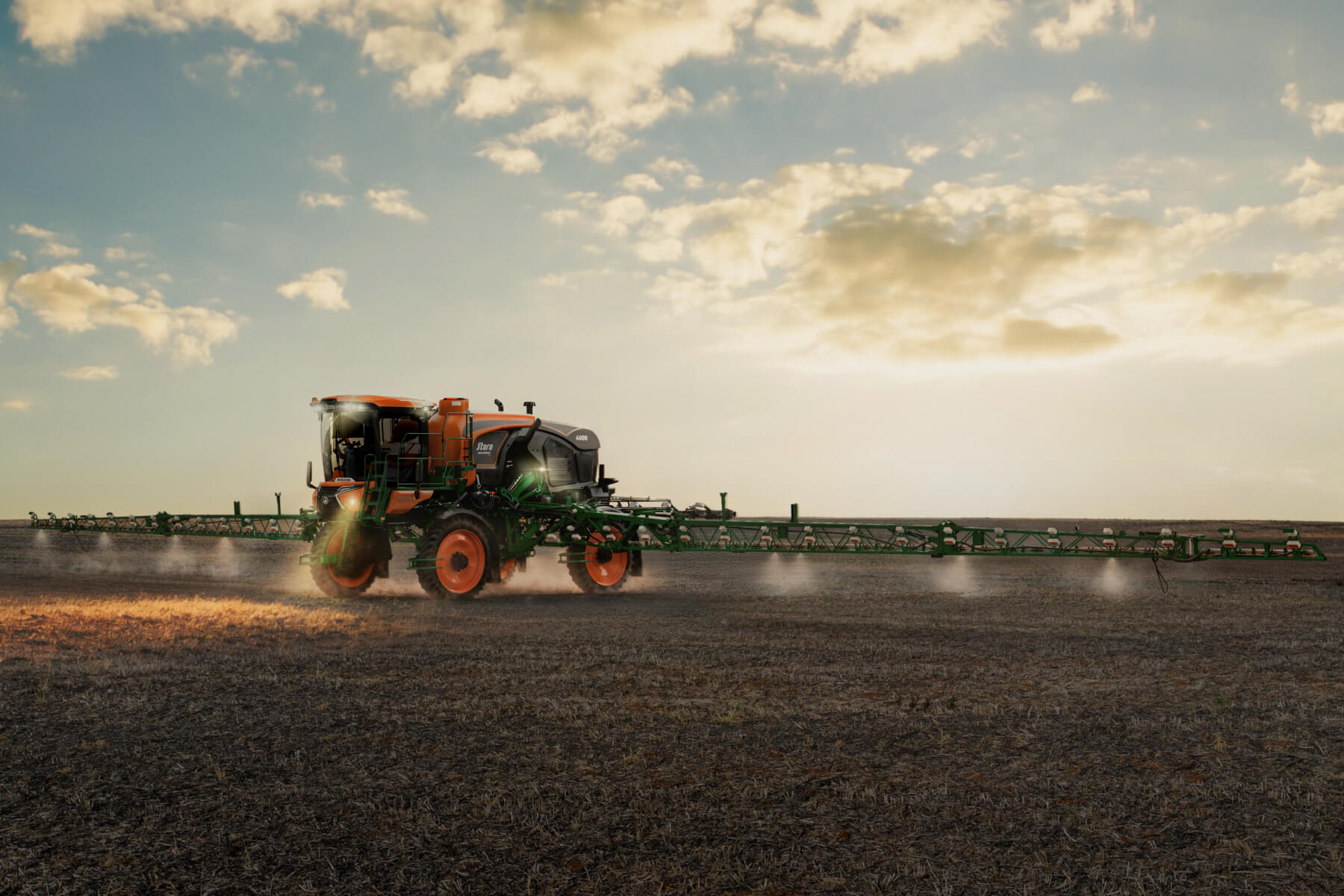
Boom Height and Protection Mechanisms
Eco Spray also includes a protection mechanism for situations in which one of the camera lenses becomes obstructed by dirt. Under these circumstances, spraying is maintained in the affected area, preventing identification difficulties from leaving potentially infested zones untreated.
Keeping the camera lenses clean and monitoring operating conditions are therefore important measures for maintaining Eco Spray performance during spraying operations.
What Is the Grower’s Role in Weed Identification and Control?
Frequently Asked Questions About Eco Spray’s Camera and Artificial Intelligence System
What Is the Difference Between Conventional Cameras and Artificial Intelligence Cameras in Agriculture?
Does Eco Spray Need an Internet Connection to Recognise Weeds?
Can Eco Spray’s Artificial Intelligence Identify Small Weeds?
What Is the Operating Speed of the Eco Spray System?
Can Eco Spray Identify Weeds Hidden Beneath Crop Residue?
Integrate Artificial Intelligence into Your Spraying Operations with the Support of Stara
Send Us Your Message
