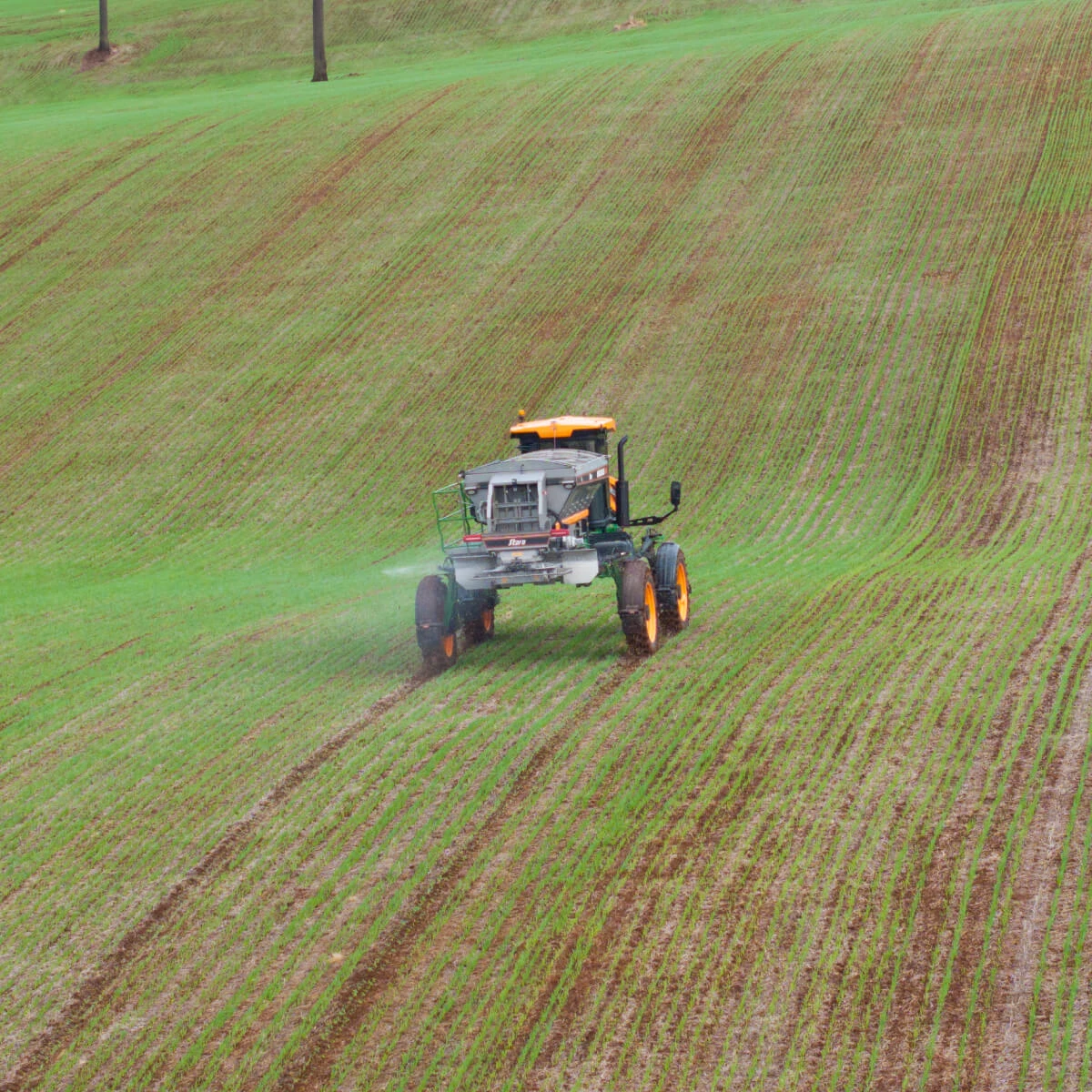



Self-propelled sprayer efficiency does not depend only on on-board technology. Spraying result is related to how the operator adjusts the equipment, prepares the application and drives the machine in the field.
The most common mistakes in self-propelled sprayer operation are listed as follows, along with the actions that prevent performance loss.
The recommendations follow the practices indicated by Stara and seize Imperador line technical resources, developed to expand precision, reducing waste and enabling operator work in the farm. Check it out.
5 mistakes that compromise self-propelled sprayer efficiency
Self-propelled sprayer efficiency is directly related to how it is adjusted and driven in the field. Small use routine deviations can become cover failures, higher chemical consumption and crop field performance loss. Check out the main relevant mistakes:
1. Spray nozzle incorrect adjustment
Nozzle choice and adjustment define droplet pattern, flow and drift risk. When the nozzle type, pressure or conservation state do not follow the technical recommendation, the application loses uniformity and compromises pest, disease and weed control.
Operator points of attention:
- check nozzle wear and flow regularly;
- adjust pressure and speed according to recommended droplet pattern;
- use nozzles with air induction whenever required by legislation or technical recommendation.
2. Inadequate boom height during application
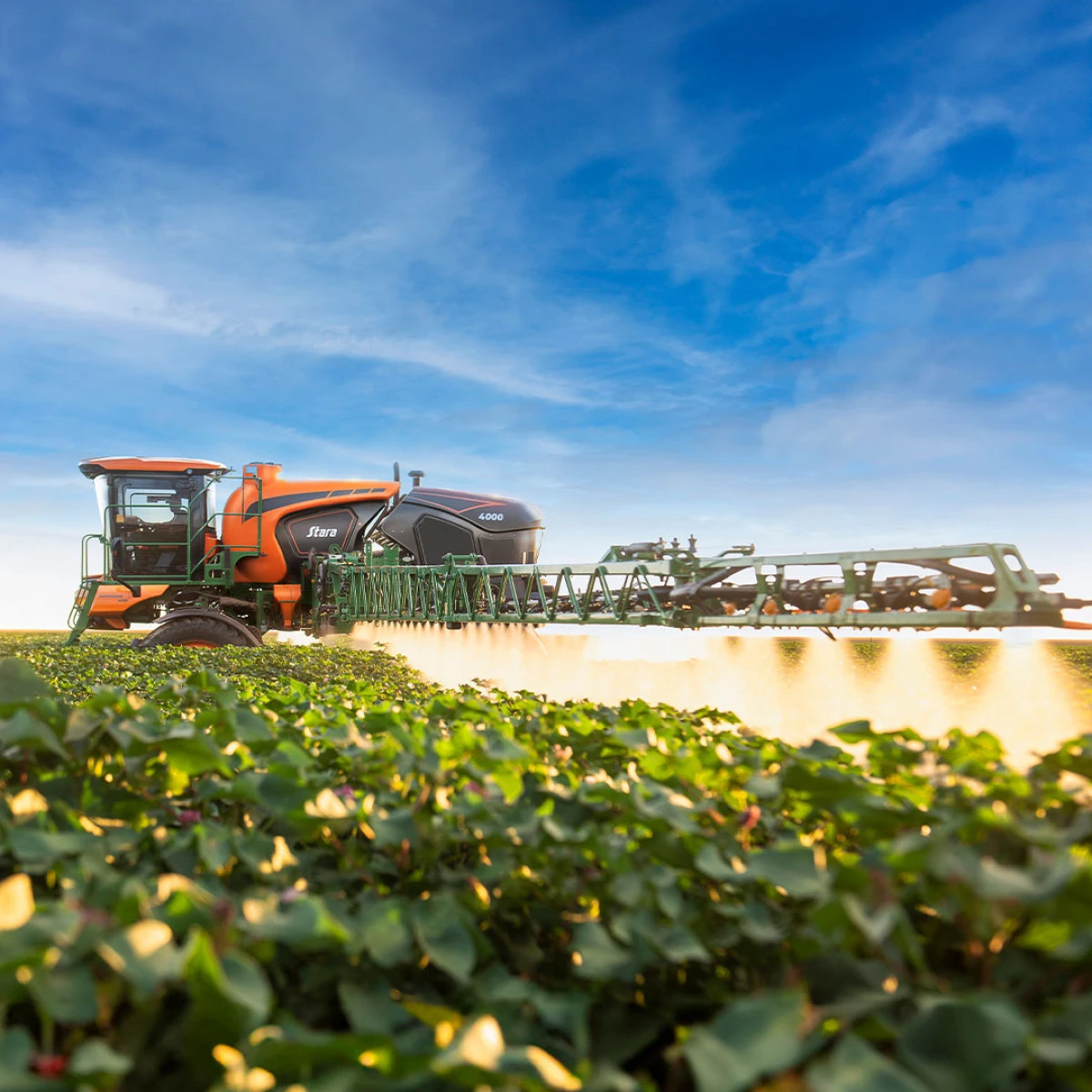
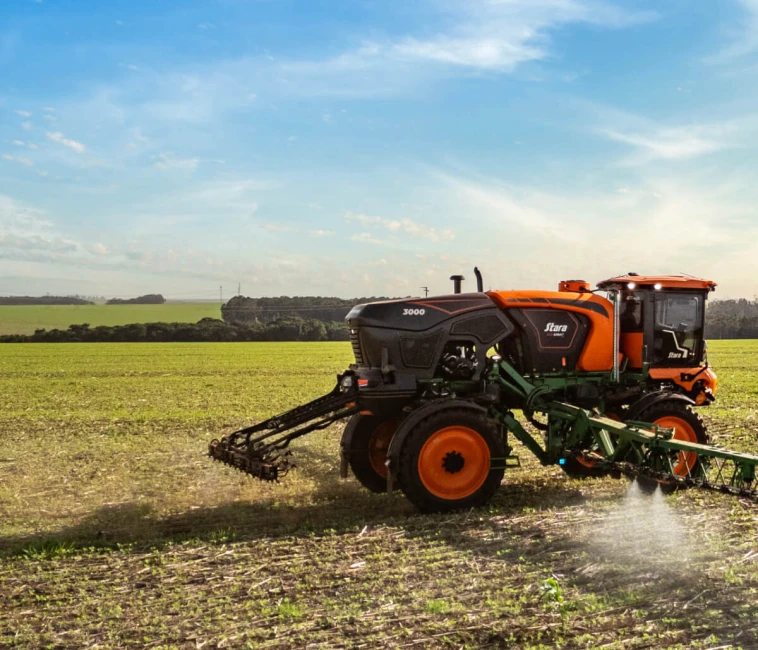
Boom height influences directly applied range stability and drift risk in spraying. On the one hand, a too high boom increases product loss in the environmental, and on the other hand, a too low boom reduces application uniformity and increases contact risk with the crop.
Lucas Henrique Luersen, agronomist and Start product marketing analyst, highlights the ground clearance and boom project of Stara self-propelled sprayers enables operating in more advanced harvest stages, sustaining application quality..
A self-propelled sprayer assures less crop damage in the crop field and enables entering more advance stage of crops like corn. It also enables more visibility to the operator, assuring more application quality. And it does not depend on a tractor for spraying
In practice, the operator should:
- adjust boom height according to nozzle type and application volume;
- seize Imperador central boom stability to keep constant distance from the target;
- avoid operation in speeds or terrains that make the boom oscillate excessively.
3. Operation speed out of recommendation
The speed interferes directly in flow applied, droplet pattern and capacity to keep the range uniform. Paces above or below recommendation change the volume by hectare and decrease agricultural spraying efficiency.
When the speed increases too much, the pressure tends to go to compensate the flow, what can generate finer droplets and increase drift risk. If the speed drops below forecast, the volume applied becomes higher than necessary, causing waste and control failures.
Operator good practices:
- define compatible speed range with nozzle type and application volume;
- avoid sudden accelerations and braking within the area;
- adjust the pace considering terrain slopes or irregularities.
Resources provided in Imperador, including Nozzle-By-Nozzle Control System and Twin Row Spray System enable keeping the application pattern even with small speed variations, reduction overlap and preserving uniformity.
4. Chemical solution inadequate preparation and lack of inspections
Chemical solution quality and inspections before operation influence direct the self-propelled sprayer performance. Unstable mixes, clogged filters or lack of recirculation compromise the application pressure, flow and uniformity.
Common problems include nozzle clogging, row failures and applied volume variation. These points arise mainly when product mix order is not followed or when residues remain in the system after previous operations.
What to do?
- cleaning spraying circuit;
- checking and cleaning filters, nozzles and hoses before supplying;
- complying with correct mix order provided to each product.
Keeping this routine enables a stable application, assures increased sprayer performance and enables continuous and efficient operation along all operations.
Learn more: Agricultural spraying: what’s the right time and why using a self-propelled machine?
5. Disregarding climate conditions at the time of application
Wind, temperature and humidity influence directly droplet behaviour. When spraying takes place in periods of strong wind, very dry air or intense heat, the drift increases and the application in the target decreases, even with self-propelled sprayer correctly adjusted.
Thus, application planning must always considered the adequate climate season and droplet pattern. In situations with higher drift risk, the nozzle choice becomes increasingly relevant.
Therefore, the operator must monitor wind, temperature and humidity before starting the operation, adjust droplet pattern to field scenario and prioritize more stable day times. This combination of correct nozzle choice and respect to climate changes reduces losses and increases application efficiency with self-propelled sprayer.
How Stara sprayer technologies help to prevent these mistakes
Stara self-propelled sprayer on-board technologies have been developed to support the operator in the stages that impact application efficiency the most. These resources reduce variations, keep droplet pattern stable and expand precision in different filed conditions.
Twin Row Spray System
Twin Row Spray System switches between two different flow nozzles to keep droplet pattern even when speed varies.
It reduces drift risks, keeps range uniformity and helps to preserve the correct metering by hectare in situations in which it would be difficult to adjust manually.
Nozzle-by-Nozzle Control System
Nozzle-by-Nozzle Control System avoids overlaps and chemical waste. Each nozzle is actuated individually, according to machine position, assuring better input usage and higher precision, especially in boundaries, curves and areas already sprayed.
Eco Spray
Eco Spray self-propelled sprayer enables localized herbicide application, identifying the target with cameras an spraying only where there are weeds. This technology reduces chemical use significantly, prevents unnecessary application and improves crop field agronomic performance.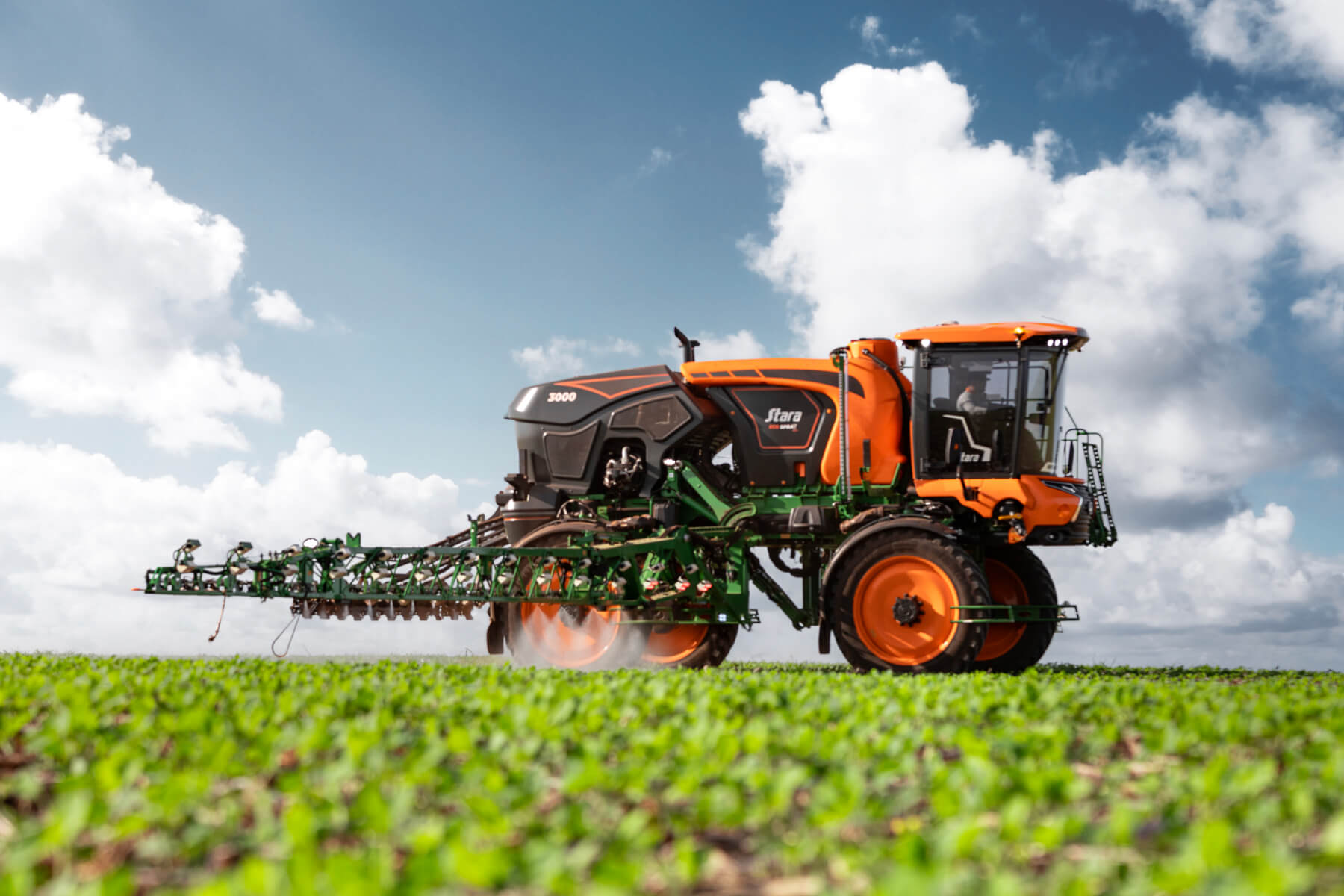
Topper
The Topper controller centralizes self-propelled sprayer adjustments and calibrations, guiding the operation during machine setting.
The system enables flow, speed, application map adjustments, as well as other parameters, standardizing the operation and reducing common adjustment mistakes. It improves application stability and expands field operation efficiency.
With the integrated use of these technologies, the operator keeps spraying quality even before terrain variations, speed or climate conditions, assuring more precision and better agricultural machine usage.
How can operation routine efficiency be sustained?
Self-propelled sprayer efficiency depends on the combination between on-board technology and operational expertise. Even advanced agricultural machines require the operator knows the adjustments, follows inspection routines and sustains field practice regularity.
Some points enhance this routine:
- participating of deal technical delivery and review contents presented regularly;
- using Topper to standardize adjustments and calibrations, following screen guidance;
- creating a simple checklist before each application (nozzles, filters, hoses, pressure and boom height);
- defining adequate speed ranges to each application type and comply with them in the area;
- recording clogging occurrences, range or drift failures to adjust the operation in the next passes.
Self-propelled sprayer efficiency starts in use routine!
Self-propelled sprayer efficiency depends less on a single adjustment and more on a decision set made at each application. Correct nozzle adjustment, adequate boom height, compatible speed, chemical solution careful preparation and attention to the climate are the base of a uniform and safe spraying.
When these points are aligned to the technology available in Stara self-propelled sprayers, the operation achieves predictability and quality. The result is seen in the field as better chemical usage, higher crop field protection and consistent agricultural machine performance within all harvest.
Learn more: Precision Agriculture: everything you should know
Questions & Answers on self-propelled sprayer efficiency
How is it possible to know if the precise spraying nozzle needs to be changed?
The wear appears when the flow measured is above the nozzle original value. If there is significant difference between nozzles of the same row, it is a sign for immediate change. Frequent cloggings also indicate wear or dirt built up.
What is the ideal speed to spray with self-propelled sprayer?
Depends on nozzle type, volume by hectare and droplet pattern desired. The speed must remain stable during all pass. Sudden variations affect the application pattern and increase drift.
How can one choose the best nozzle to each chemical?
The choice must consider product type (fungicide, insecticide or herbicide), recommended droplet pattern and operation pressure. For some herbicides, the legislation requires nozzles with air induction to reduce drift.
What to do when the boom oscillates too much during application?
Check speed, terrain type and suspension adjustment. Imperador central boom system helps to reduce oscillations, however the height needs to be adjusted according to nozzle and application volume.
What is the best time to spray?
The periods with lower drift risk are the ones with light wind, lower temperature and good relative humidity. Avoid spraying at midday or with winds above recommended technical limit.
Did you like the suggestions and want to find out what is the ideal agricultural machine to your harvest?
Visit a Stara Dealer and find the most adequate equipment to maximize your agricultural production. Ask for a quotation.