


The adjustment of agricultural machinery directly influences the consumption of inputs, the uniformity of applications and the production performance on your farm. Small deviations in speed, application range or dosage generate waste that may not be seen immediately, but have an impact on the cost per hectare and the final result of your crop.
When your machine operates in the correct settings, it means the operator applies the right amount of inputs, in the right place and at the right time. This improves production efficiency, reduces overlap between passes and contributes to more precise management in different fields.
In this content, you'll understand how adjusting agricultural machinery helps to reduce inputs and increase performance. You will also see which parameters deserve attention and how technology applied to precision agriculture supports more consistent adjustments throughout harvest.
What does it mean to adjust an agricultural machinery?
The adjustment of agricultural machinery is the set of technical adjustments that define how the equipment distributes seeds, fertilisers or chemicals along the production.
When the adjustment is done correctly, your application delivers the recommended rate evenly, reduces overlap between passes and avoids wasting inputs. In practice, this results in better utilisation of the products applied and higher yields on the farm.
Adjustment must take into account the type of equipment, the input used, the conditions of your farming, and the manufacturer's technical recommendations. For this reason, the parameters vary depending on the model, such as planters, spreaders or self-propelled sprayers, requiring frequent checks throughout the harvest.
Why does adjustment have a direct impact on input consumption?
Adjustment directly impacts input consumption by defining how each product will be applied throughout production. Small deviations in adjustments eventually turn into waste, reapplications and an increase in the cost per hectare.
The main factors that increase input consumption when adjustment is incorrect are the following:
- above the recommended dosage, which increases expenses without productive gain;
- incorrect application range, which generates overlap between passes;
- variations in speed, which change the applied rate per area;
- distribution flaws, which leave inequalities in the fields that jeopardise the crop development.
Main parameters that require attention when adjusting
An efficient regulation depends on controlling parameters that have a direct effect on application uniformity, input consumption and agricultural machine performance. Small variations in these adjustments alter the final production result and increase the cost per hectare. Check it out:
Travel speed and agricultural machine performance
Travel speed influences the applied rate, the quality of distribution and the performance of your agricultural machine. When the operator works above the recommended speed, the application loses uniformity, which increases the coefficient of variation. At sub-optimal speeds, consumption per area can rise without any productive gain.
The correct setting takes into account the type of agricultural machine, the input used and the farming conditions. Keeping the speed stable helps preserve the set rate, improves the application efficiency and contributes to a higher yield throughout the production day.
Application range and overlap between passes
The application range defines the effective width covered each time the machine passes. When this parameter is poorly adjusted, there is overlap between passes or gaps in coverage, which increases input consumption and leaves inequalities in the fields that impair crop development.
In broadcast seeding systems, adjusting correctly the spinner disc vanes and the range width, usually between 12 and 36 metres depending on the product, reduces waste and improves the uniformity of application on the farm.
Dosage and application rate per hectare
The dosage determines the amount of input applied per hectare and needs to be in line with the crop's technical recommendation. Incorrect adjustments increase consumption, reduce product efficiency and jeopardise production results.
Whenever the application rate is properly adjusted, the agricultural machine delivers the correct amount to each area, avoiding excesses, reapplications and unwanted variations along the fields. This control is essential for reducing costs and maintaining consistent performance during harvest.
Adjusting agricultural machinery by type of equipment
Each type of agricultural machine requires specific adjustment parameters. Components, application methods and interaction with the input change depending on the equipment, which has a direct impact on consumption and performance on the farm.
The correct adjustment takes into account the machine model, the product applied and the farming conditions. Here's a look at the main points of concern for each type of equipment.
Adjusting planters and seeders
When it comes to planters and seeders, adjustment is directly related to plantability. Uniform distribution, correct depth and regular spacing are key factors for the crop to succeed.
Travel speed, meter discs, planter toolbar pressure and furrow depth should be checked before operation.
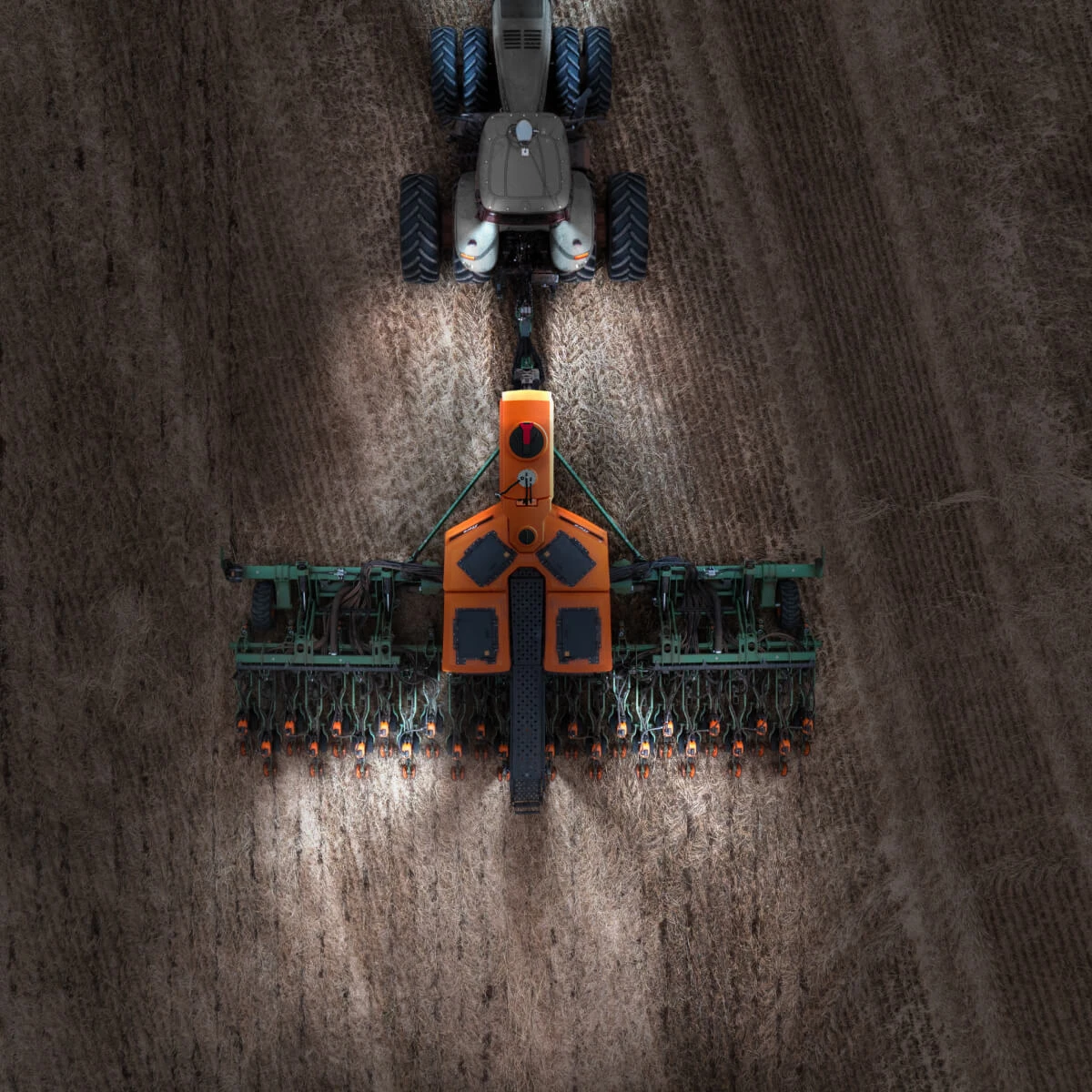
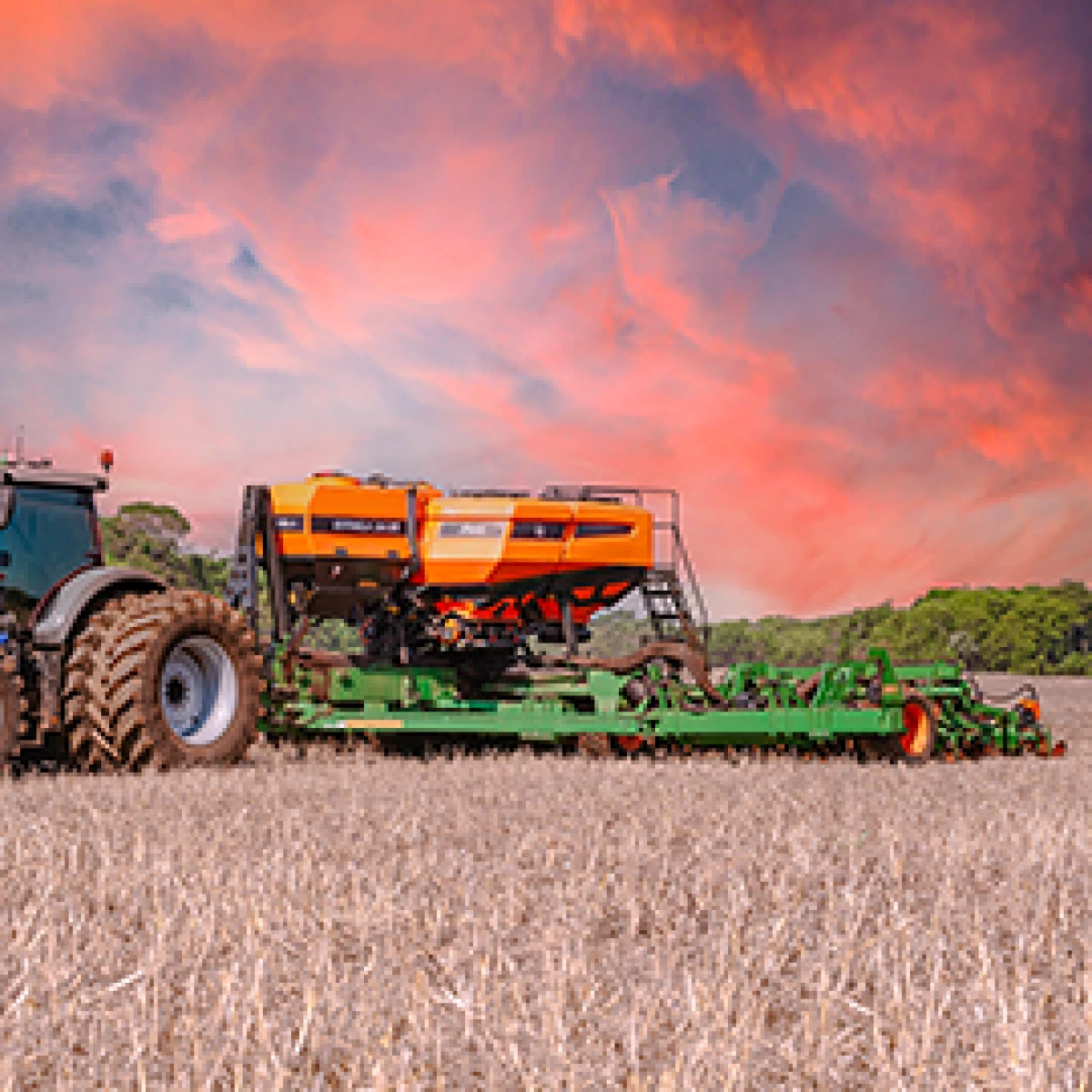
Stara planters, such as Estrela and Eva, rely on features that turn the process of adjustment and calibration into an easy task
Taking Estrela as an example, the hydraulic row pressure system maintains constant pressure in all seed row units, reduces shaking and ensures uniform placement. This system is adjusted directly on Topper, as is the cutting power adjustment, which allows the modules to adjust automatically, without the need for shims or lifts.
Eva also stands out for its ease of calibration. In the smartphone-controlled version, for example, the operator makes seed and fertiliser adjustments directly on the app, with instant adjustments, which speeds up adjustment and contributes to greater precision in different fields.
Read also: 5 factors that influence on an agricultural seeders performance
Spreader adjustment
As for spreaders, the adjustment defines uniformity and consumption of fertiliser. Adjustments to the distributor vanes, application range and rate per hectare reduce waste.
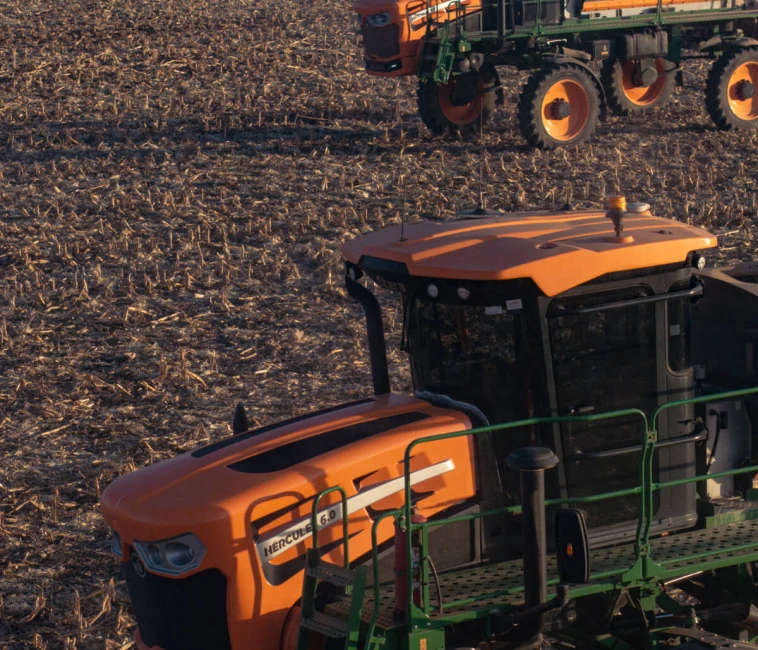
Hércules 4.0 and Hércules 6.0 self-propelled machines apply fertiliser by broadcast, with high application quality and high operating efficiency.
These models allow variable rate application, which ensures precision in the dosages indicated by the prescription maps by applying only the required amount for each area, resulting in product savings and productivity boost.
On the other hand, the Bruttus spreader line, which applies by gravity, stands out for its uniform distribution and low coefficient of variation when adjusted according to the product and the recommended application range, which is generally between 6.7 and 11.1 metres.
Adjusting self-propelled sprayers
The adjustment of self-propelled sprayers influences the efficiency of application and the use of chemicals. Speed, working pressure, spray nozzles and spray boom height need to be aligned with the type of product to be applied and the stage of the crop.
Self-propelled sprayers in the Imperador line have the exclusive central boom system. This provides more stability during applications and ensures the application of 58% more solution on target, according to data from FAPA.
In addition, models such as Imperador 3.0 and Imperador 3000 and 4000 are equipped with technologies that contribute to a more precise application when the adjustment is correct.
The Nozzle-by-Nozzle Control System, for example, automatically shuts off the spray nozzle when Topper identifies an area on which solution has already been applied, avoiding overlap and product waste.
Good practices for adjusting agricultural machinery before starting production
Before production begins in the field, checking the adjustments avoids waste from the very first passes of the agricultural machine. This initial care ensures that the parameters defined in theory are correct in field practice.
Good practices that should be part of the operator's routine:
- carry out a test area before full production;
- check that the applied rate is in line with the technical recommendation;
- validate the application range and the overlap between passes;
- check the actual speed of travel during work;
- review the regulation whenever inputs are changed or operational adjustments are made.
This stage reduces initial errors, improves application uniformity and contributes to greater predictability in the use of inputs throughout the harvest.
When to check the adjustments during harvest?
Adjusting agricultural machinery is not just a one-off adjustment made at the start of production. Over the course of the harvest, operational and input changes require new conferences to maintain efficiency, economy and performance on the farm.
Adjustments should be checked every time there is:
- a change of inputs, such as changing seeds, fertilisers or pesticides;
- a variation in product features, such as granulometry, density or formulation;
- a change in farming conditions, relief or soil moisture;
- an adjustment of travel speed to meet production windows;
- a change of plot or management zone;
- an update of prescription maps or variable rate parameters;
- a preventive maintenance or scheduled overhauls;
- a variation in application uniformity that is noticed by the operator.
Reviewing the adjustments at these times helps to maintain the agricultural machine performance, reduce waste and ensure greater predictability in the use of inputs throughout the harvest.
How does Stara support the operator when it's time to revise the adjustment?
Stara supports the operator with solutions aimed at practical guidance and correct adjustment in day-to-day production. In addition to operation monitoring, the focus is on tools that make it easier to calibrate, learn and make decisions at the right time.
Stara Distribution App directly assists in the calibration of broadcast spreaders, providing greater assertiveness, agility and efficiency for work in the field. It allows the operator to optimise spreading vane adjustment, carry out profile tests and assess the quality of inputs directly from their smartphone.
The Operator's Portal brings together specific training on Stara's agricultural machines, with videos and practical content that show how to carry out adjustments correctly in different field situations.
In addition, services such as Stara Telemetry are available to the farm manager, supporting performance analysis and production planning. Together, these solutions help to keep regulation aligned with actual crop conditions throughout the farming, with greater safety, efficiency and predictability.
The support of specialised technical assistance, with services such as Conecta, guides the operator in checking the parameters whenever there are changes in production.
This continuous monitoring contributes to more assertive decisions, reduces waste and keeps regulation aligned with the crop's real conditions throughout the harvest.
Preventive maintenance and adjustment go hand in hand
Preventive maintenance is essential if the adjustments are to remain stable throughout the harvest. Components in good condition ensure that the set parameters are maintained during production, avoiding variations that increase input consumption and compromise the performance of your agricultural machine.
At Stara, this care is supported by a range of services and technologies that increase the operator's control over the agricultural machine.
In addition to Conecta, the Stara dealer network offers on-site support for preventive maintenance and adjustment checks, integrating technology, specialised technical assistance and continuous monitoring.
This combination strengthens production predictability, reduces waste and keeps the agricultural machine operating within optimal parameters on the farm.
Adjustments as the basis for efficiency and performance
Adjusting agricultural machinery is decisive for reducing input consumption and maintaining consistent performance throughout the harvest. Correct adjustments ensure uniform application, better product utilisation and greater predictability in the farm's production.
When integrated with Stara's technologies, such as the Topper agricultural controller, variable rate application, nozzle-by-nozzle shutdown, Telemetry and specialised technical assistance, adjustment becomes more precise and stable.
This setup transforms the agricultural machine into a management tool, connecting input savings, operational efficiency and consistent production results.
Frequently asked questions about adjusting agricultural machinery
What is the difference between adjusting and calibrating agricultural machinery?
Adjustment is setting the equipment components according to the operation purpose. Calibration, on the other hand, consists of checking that the set parameters are actually being delivered by the machine.
How often should the adjustment be checked?
Adjustments should be reviewed at the start of production and whenever there is a change of inputs, a change of field, a change in speed or an update of variable rate parameters. Frequent checks help maintain performance and economy.
Does the adjustment change depending on the type of input used?
Yes. Characteristics such as the density, granulometry and formulation of input directly influence the adjustments. Each product change requires a new check to ensure uniformity and avoid waste.
How does adjustment influence the coefficient of variation in application?
Correct adjustment reduces variations in the distribution of the input, reducing the coefficient of variation. This results in a more even application and better utilisation of the product in the plots.
Will technologies such as agricultural controllers replace manual adjustment?
No. While technology does support and facilitate adjustment, it does not eliminate the need for initial checking and practical adjustments. The agricultural controller helps to maintain the correct rate during production, provided the adjustment is set correctly.
Did you like the hints and want to find out the agricultural machine that best suits your farming?
Stop by a Stara dealer and find the most suitable equipment to boost your crop production. Request a quotation.