


For the agricultural machinery operator, keeping sprayers, planters, seeders and distributors well calibrated means applying the right amount of product in the right place. This reduces rework, improves the uniformity of operations and contributes to a more profitable crop.
This is why the calibration of agricultural equipment, as well as its maintenance, is so important. Stara, a benchmark in technology and precision agriculture, has made it its mission to make the everyday life in the field easier, with technology and practical guidelines that ease the operations.
Throughout this content, you will understand what calibration is, which agricultural machines require special attention and how to incorporate this routine into your daily life, all of that with the support of the technology embedded in Stara agricultural machines.
What is calibration of agricultural machinery?
Calibration of agricultural equipment is the process of adjusting the machine so that it delivers, in practice, the same metering as the operator defines on the panel or in the application project.
On the farm, this means checking that the amount of seed, fertiliser or spray mixture applied per hectare is in line with the agronomic recommendation.
How does this stage affect the routine in the field?
In the field, calibration usually goes hand in hand with adjusting the agricultural machine. Adjusting the planter or spreader, for example, defines settings such as gears, rotations, boom height and working depth.
Calibration confirms, by using measurements, that these adjustments are delivering the expected result, such as litres per hectare, kg per hectare or seeds per metre. Some practical examples of calibration in the operator’s daily routine:
- check the flow rate of the spray nozzles and adjust pressure and speed to achieve the recommended volume per hectare;
- measure, in a test area, how many kilos of fertiliser the distributor applies per hectare and adjust the metering device;
- check the number of seeds distributed per metre in the planter and correct the planting rate or working speed;
- check the number of kg per hectare of seeds in the seed drills
When this stage is done well, the agricultural machine works more predictably. The agronomist's recommendations are transformed into real applications in the field, with greater cost control and better utilisation of the crop's productive potential.
Which agricultural equipment needs to be calibrated frequently?
Most of the agricultural machinery used on farms relies on calibration. Each system that applies seed, fertiliser or solution needs to deliver the correct metering per area. That's why it's worth organising your routine by type of equipment.
Self-propelled and drawn sprayers
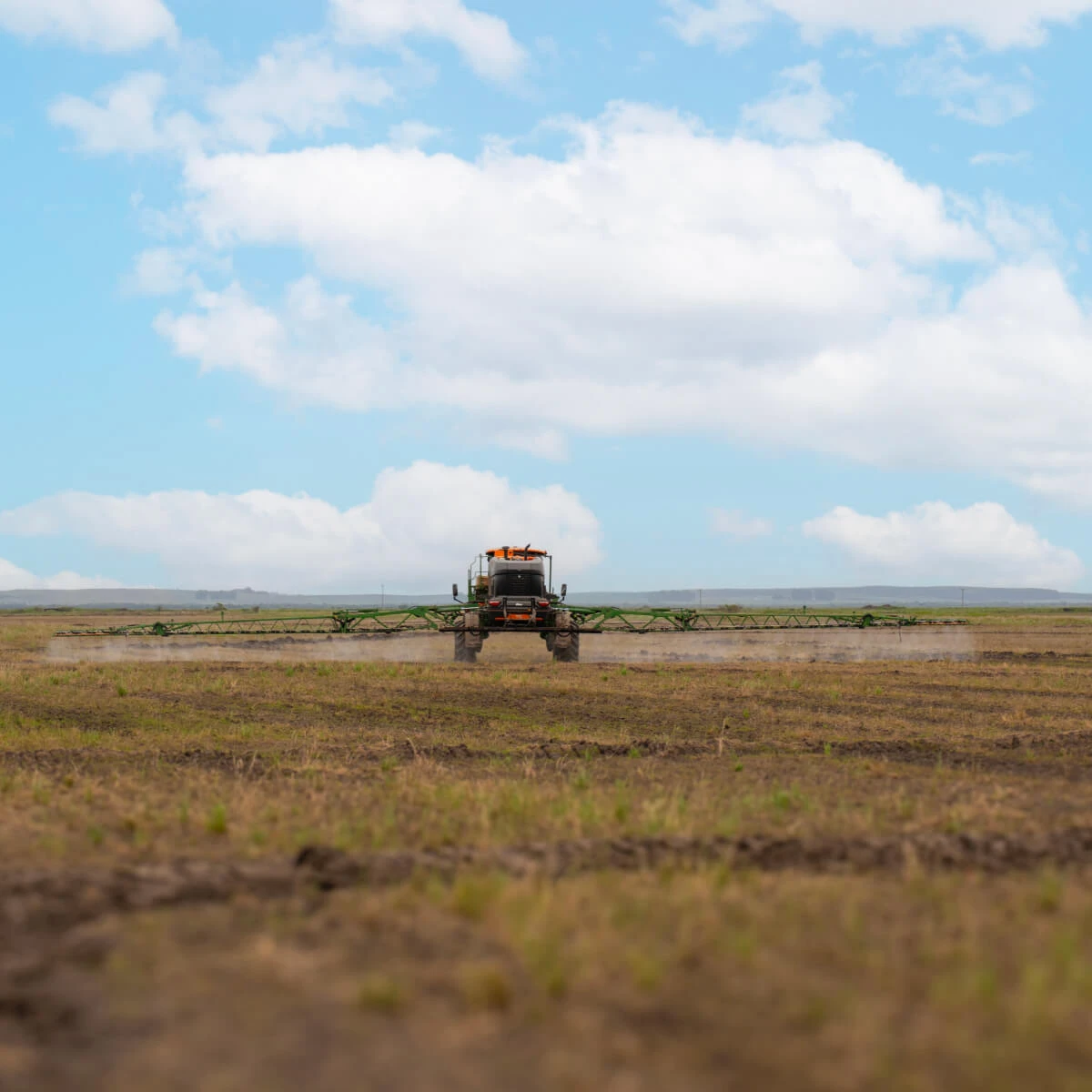
Sprayers work with volume per hectare and need spray nozzles in good condition, correct pressure and compatible forward speed. Points of attention:
- measure the actual flow rate of each nozzle over a period of time;
- compare with the recommended flow rate in the table or instructions manual;
- adjust pressure, work speed and change nozzles when the deviation exceeds the indicated limit.
When the sprayer is well calibrated, the metering of chemicals per hectare operates within the recommended level, with less drift risk and control failures.
Seeders and planters
When sowing, calibration ensures that the amount of seed distributed per metre is in line with the crop design. The basic routine includes:
- test the seed rate in the test area;
- check spacing between seeds and depth of placement;
- adjusting gears and metering units until the desired seed bed is achieved.
This reduces failures and doubles, improves emergence and makes better use of the seeds' potential.
Distributors and fertilisers
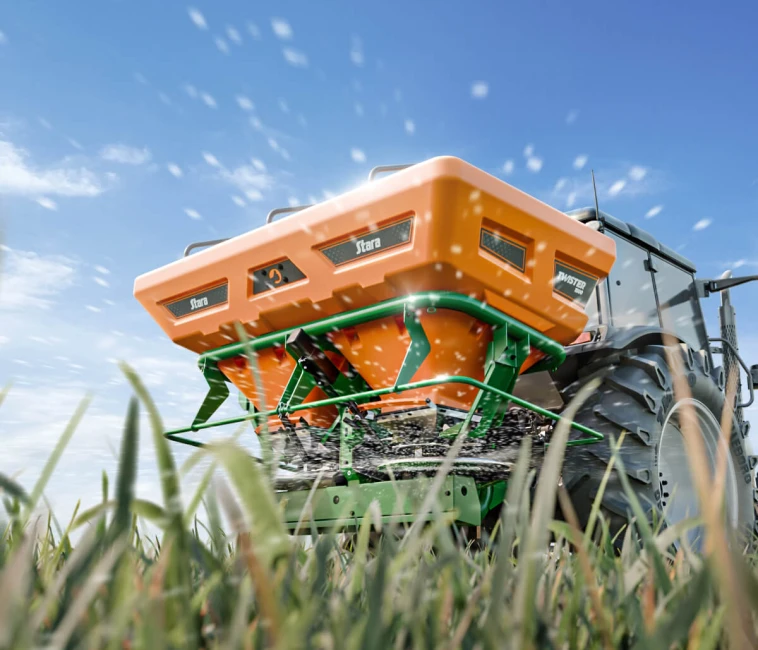
Fertiliser distributors and fertiliser spreaders work with metering in kilos per hectare. Calibration serves to ensure that the machine delivers the planned quantity with a uniform distribution range. Good practice:
- weigh the material applied in the test area/time;
- compare the result with the desired metering;
- adjust the opening of meter units, disc rotation and speed.
Uniform fertilisation is crucial to avoid over or under-fertilised areas.
Calibration frequency: when to do it and what to watch out for?
This process needs to be part of the harvest calendar, being just as important as preventive maintenance. It's not enough to address the issue only when a visible problem appears. Some milestones help to define the frequency:
- before the beginning of each harvest or major operation;
- after long periods of machine downtime;
- after servicing, changing nozzles, discs or hoses;
- whenever the operator notices a difference between the configured dose and the result in the field.
For machines that operate many hours a day, it is wise to check the calibration at set intervals, following the manual.
When calibration becomes mandatory in practice
Calibration becomes essential in any situation where:
- the crop depends on exact doses to avoid phytotoxicity or control failures;
- the farm participates in certification programmes, quality audits or traceability;
- the application of inputs represents an important part of the cost of production.
In these scenarios, registering and maintaining standardised procedures is no longer a choice but a requirement to remain competitive.
Attention: whenever you calibrate an agricultural machine, it is worth recording the date and time, the person responsible for the activity, the parameters adjusted and any parts replaced.
Practical steps for calibrating agricultural machinery
Calibration doesn't start in the bucket or tray, but in the way the operator organises the routine. Following a clear sequence helps to ensure that the meter set on the panel is the same as that delivered to the field, with fewer attempts and corrections in the field.
The script below can be adapted for different agricultural machines, always with the support of each model's manual. The purpose is to standardise the procedure: prepare the equipment, measure what is being applied, compare with the recommendation and adjust until the desired value is reached.
1. Prepare the equipment
Before measuring anything, it's important to:
- clean the tanks, row units, nozzles, discs and sensors;
- check hoses and connections for leaks, cracks or looseness;
- check the oil, fuel and hydraulic fluid levels;
- ensure that the tyres are inflated and that there are no loose components.
An agricultural machine in poor physical condition cannot be calibrated.
2. Refer to the technical manual
The manual indicates the recommended working pressure range, nozzle, meter units and transmission gear flow rates, as well as acceptable drift limits and check intervals.
The operator must use these tables as a reference to compare what the machine is delivering against what it should be delivering.
3. Measure and test
Some procedures are common to different machines:
- measure the flow rate of the spray nozzles in graduated buckets, with a timer;
- carry out application tests in a known area and weigh the input distributed;
- rotate the seeder on a bench or test area to count seeds per metre.
For Stara machines equipped with the Topper, calibration becomes simpler. Simply activate the measurement command and inform the monitor of the volume collected during the test. The system automatically adjusts the parameters to keep the flow rate within the recommended range.
For the first calibration, the procedure follows the same logic. The only difference is the creation of the product in Topper. After that, the monitor automatically updates the settings, ensuring accuracy from the very first applications.
With this data, the operator adjusts pressure, opening of meter units, gears and speed until the result is close to the recommended value.
4. Ensure frequent checks during the harvest
Even after a good initial calibration, it is important to repeat tests at specific times. One of these is whenever there is a change of product, a change of mixture or granulometry, as these variations alter the behaviour of the input in the agricultural machine.
It is also worth recalibrating after impacts, blockages or emergency maintenance. These events can affect the adjustment of nozzles, meter units and hoses and jeopardise the metering applied in the field.
Another point of attention are sudden changes in terrain or soil type, which interfere with the stability of the machine and can affect the uniformity of the application along the range being worked.
This prevents the calibration from "deviating" during the harvest. By following each of these steps, it is possible to maintain good quality in the operation and focus on results, without unforeseen events.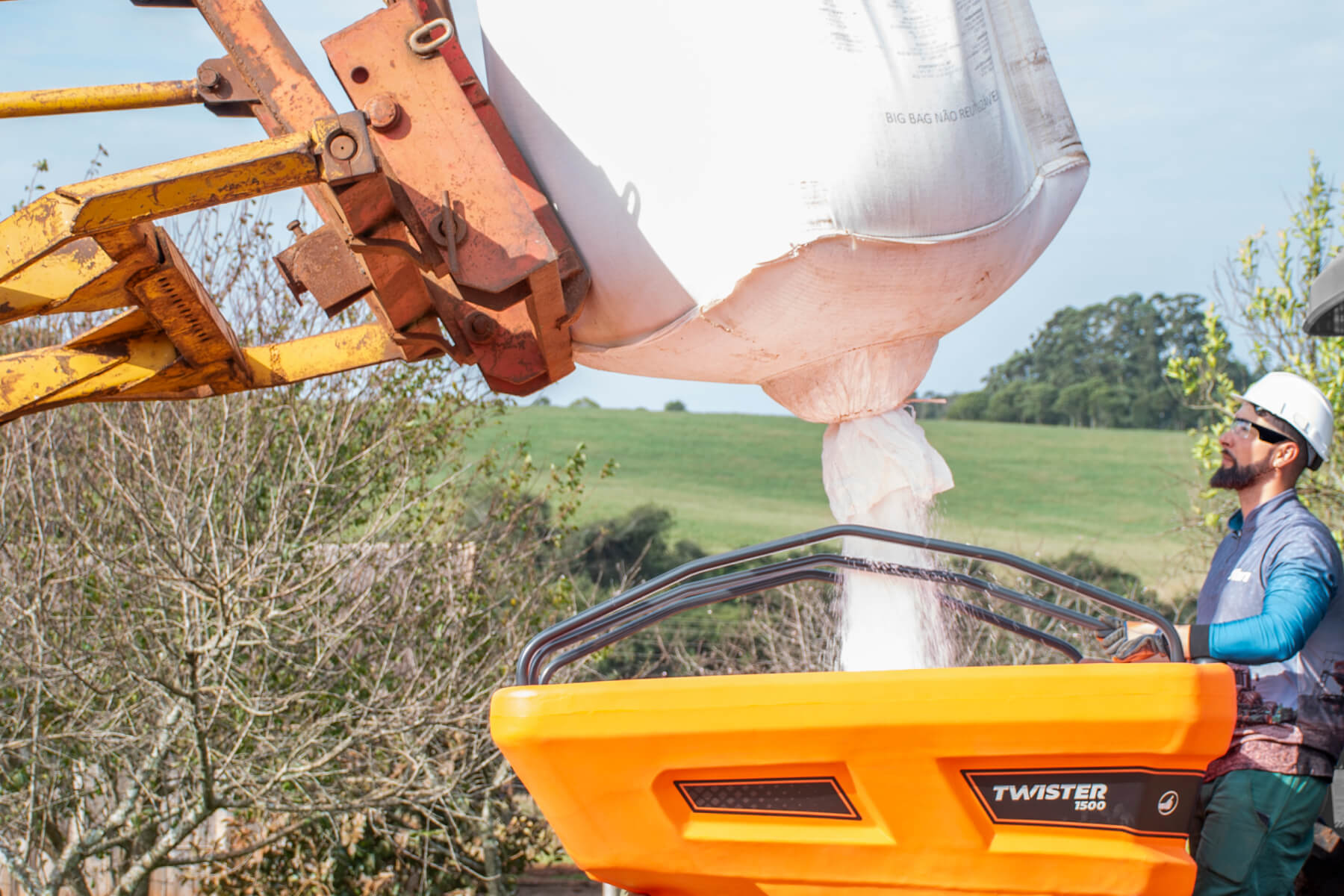
What about tyre calibration?
The correct tyre pressure influences traction, fuel consumption, soil compaction and operator safety. The first step is to look for the indication in the agricultural machine's manual and in the tyre's specifications. There they are:
- maximum pressure;
- recommended ranges for different loads and speeds.
Working outside these ranges increases the risk of damage and impairs performance.
Good calibration practices
Always calibrate the tyres when the machine is in working condition, taking into account the implements attached and the load. Check the pressure when the tyre is cold, at the start of the day, and avoid large differences in pressure between tyres on the same axle.
Standards and technical references related to calibration
Even if the operator does not work directly with normative documents, understanding the logic behind them helps to enhance the calibration routine. Standards such as ISO 9001 deal with quality management and emphasise the importance of:
- check measuring instruments;
- define calibration intervals;
- record who calibrated, when and with what results.
In practice, rural properties that follow these principles gain traceability and reduce application problems. In addition, regulatory and technical standards from different sectors emphasise safety and the best use of equipment. Even when written for another segment, the logic adapts well to the field.
Stara technology as a partner in calibration and application control
The electronic features built into Stara agricultural machines help the operator turn good calibration into direct results in the field. The combination of correct regulation and application technology reduces waste, improves the uniformity of operations and strengthens control over costs per hectare.
Agricultural monitors and controllers display application rate, speed, area worked and fault alarms in real time. This allows the operator to identify meter deviations quickly and correct them in the field.
Variable rate and section control systems automatically adjust the application according to the prescription map and geographical position, avoiding overlap, coverage gaps and unnecessary use of inputs.
Electronic records of operations make it possible to compare what has been planned with what has been achieved, analyse meter history and support decisions on new calibrations, adjustments and management strategies.
Integration with technical assistance services, scheduled overhauls and specific training helps the operator to better exploit these resources.
Stara Spreading App: quick calibration of the agricultural spreader
Stara Spreading App speeds up the agricultural spreader calibration and reduces the waste of fertiliser. Developed by Stara Product Engineering and used by thousands of farmers, it guides the operator to:
- indicate the optimum positioning of spinner disk vanes, based on data from the machine, the product and the desired application range;
- carry out application profile tests with trays, assessing uniformity and coefficient of variation;
- test the fertiliser quality, identifying variations in density between samples and more.
Learn more: The Stara Application speeds up the agricultural spreader calibration
The role of calibration in the performance of agricultural machinery
A consistent calibration routine turns agricultural machinery into a more predictable and efficient ally. When the operator measures, adjusts and records what the machine does in the field, it reduces waste, protects the investment in inputs and increases the chance of each plot expressing its yield potential.
With the support of the technology embedded in Stara agricultural machinery and reliable technical references, such as manuals and training, this stage is no longer an occasional fix and becomes part of farm management.
Did you like the hints and want to find out the agricultural machine that best suits your crop field?
Stop by a Stara dealer and find the most suitable equipment to boost your crop production. Request a quotation.