


Grain transport begins to weigh on crop costs when it no longer keeps pace with harvesting. This occurs when the grain cart takes too long to return to the field, faces queues at unloading, operates with inadequate capacity, or loses efficiency due to overloading, improper sealing, and unproductive time between trips.
This impact goes beyond movement itself. When logistics do not flow smoothly, grain removal slows down, production becomes subject to interruptions, and part of the available time in the field is no longer converted into operational output. Transport is among the main components of logistics costs in the grain supply chain in the country, which reinforces the importance of this stage for overall farming performance.
For this reason, discussing grain transport also means discussing operational efficiency and cost control. Throughout this content, you will understand why this stage requires planning, which factors affect performance in day-to-day field operations, and how choosing the right grain cart can contribute to more efficient production on the farm.
How does grain transport increase farming costs?
Grain transport affects operating costs when it fails to keep up with harvesting and begins to limit production flow. Whenever load removal takes longer than it should, farming loses continuity and part of the available field infrastructure no longer operates at the expected level of performance.
This impact appears on several fronts: more idle time between collection and unloading, increased unproductive travel, poorer utilisation of agricultural machinery, and difficulty maintaining an organised farm routine during peak demand periods.
Costs rise because transport ceases to support production and instead creates bottlenecks throughout the day.
What should be taken into account to make grain transport more efficient?
Efficiency in grain transport depends on a combination of logistical planning, operational capacity and care with the load. Before the harvest, it is important to define exit routes from the fields, the distance to the unloading point, the number of trips required, and the compatibility between harvested volume and grain cart capacity.
When these factors are well aligned, return trips to the field tend to be faster and outflow better matches the pace of farming.
Another important factor is how the load behaves during transport and unloading. Moisture, impurities, grain type and travel time directly affect product preservation and workflow fluidity.
Efficient transport, therefore, does not simply mean moving grain quickly, but maintaining a consistent flow, avoiding losses and reducing interruptions between harvesting, transport and unloading.
In the case of rice, for example, transport requires even greater attention to the time between harvesting and unloading, load covering, and correct separation of cultivars, in order to prevent quality losses during handling.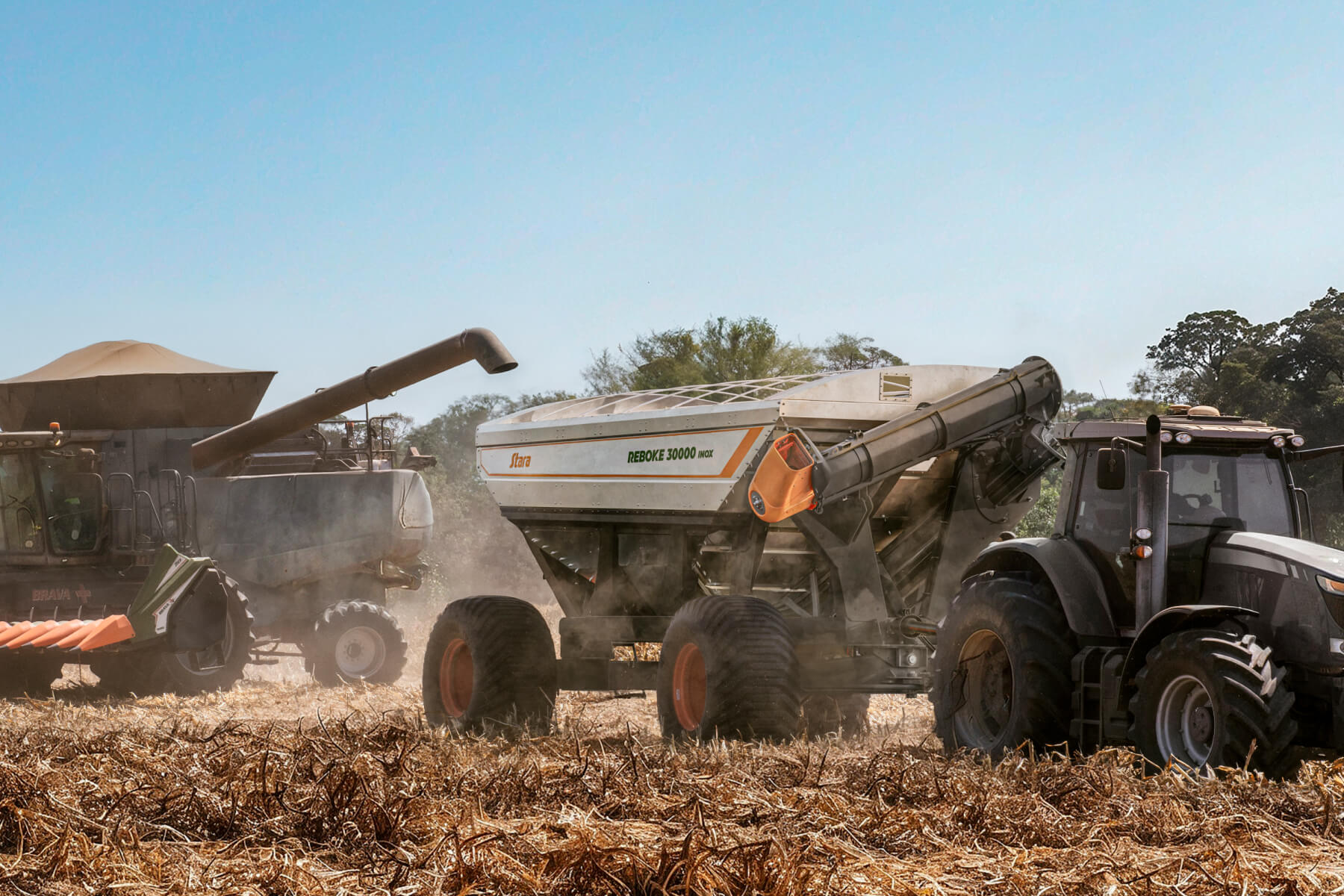
5 practices to reduce operational costs in grain transport
Below are five practical measures to reduce operational costs in grain transport, which should be adapted to the specific context of each farm:
1. Plan operational flow in advance
Before the harvest begins, it is important to organise where the grain will be unloaded, the route to that point, how many trips will be required, and how the sequence of load removal from the field will be managed. This planning reduces waiting time between collection and unloading and prevents production from losing momentum due to lack of outflow.
2. Choose the grain cart according to farming demand
The grain cart must keep pace with harvesting and the available window to leave the field, unload and return. When capacity falls below the volume harvested per hour, the equipment cannot move grain at the same speed as production: the harvester has to wait, the number of trips increases, and part of production time is consumed by travel and queues instead of being converted into output.
3. Avoid interruptions during transport and unloading
Unloading should be treated as part of harvesting performance, not merely as the final stage of transport. When the trailer takes too long to empty or encounters queues at the receiving point, it remains idle longer, delays its return to the field, and reduces grain removal capacity at the moment the harvester most needs support.
4. Preserve the load throughout the journey
Preserving grain during transport depends on objective precautions even before the trailer leaves the field. The first is respecting equipment capacity: overloading increases the risk of spillage, compromises stability during transport, and may cause losses even in the first bends or uneven sections.
It is also important to check sealing, closure and the integrity of the tank to avoid leakage points and contamination.
Another key point is ensuring that the grain cart is suitable for the type of product transported and the conditions of the route between field and unloading point. Grain transported in incompatible, poorly sealed or unchecked equipment is more likely to suffer losses, contamination and physical damage along the way.
In day-to-day farm operations, this requires quick inspections before each trip, careful loading, and monitoring of load behaviour until unloading.
5. Keep preventive maintenance up to date
Regular inspection of components such as tyres, roller bearings, unloading systems and transmission ensures operational efficiency, reducing the risk of unexpected downtime and emergency repair costs. Well-adjusted equipment also operates more efficiently, has a longer service life and contributes to lower tractor fuel consumption, directly impacting operational performance.
How does the Reboke range support efficiency in grain transport?
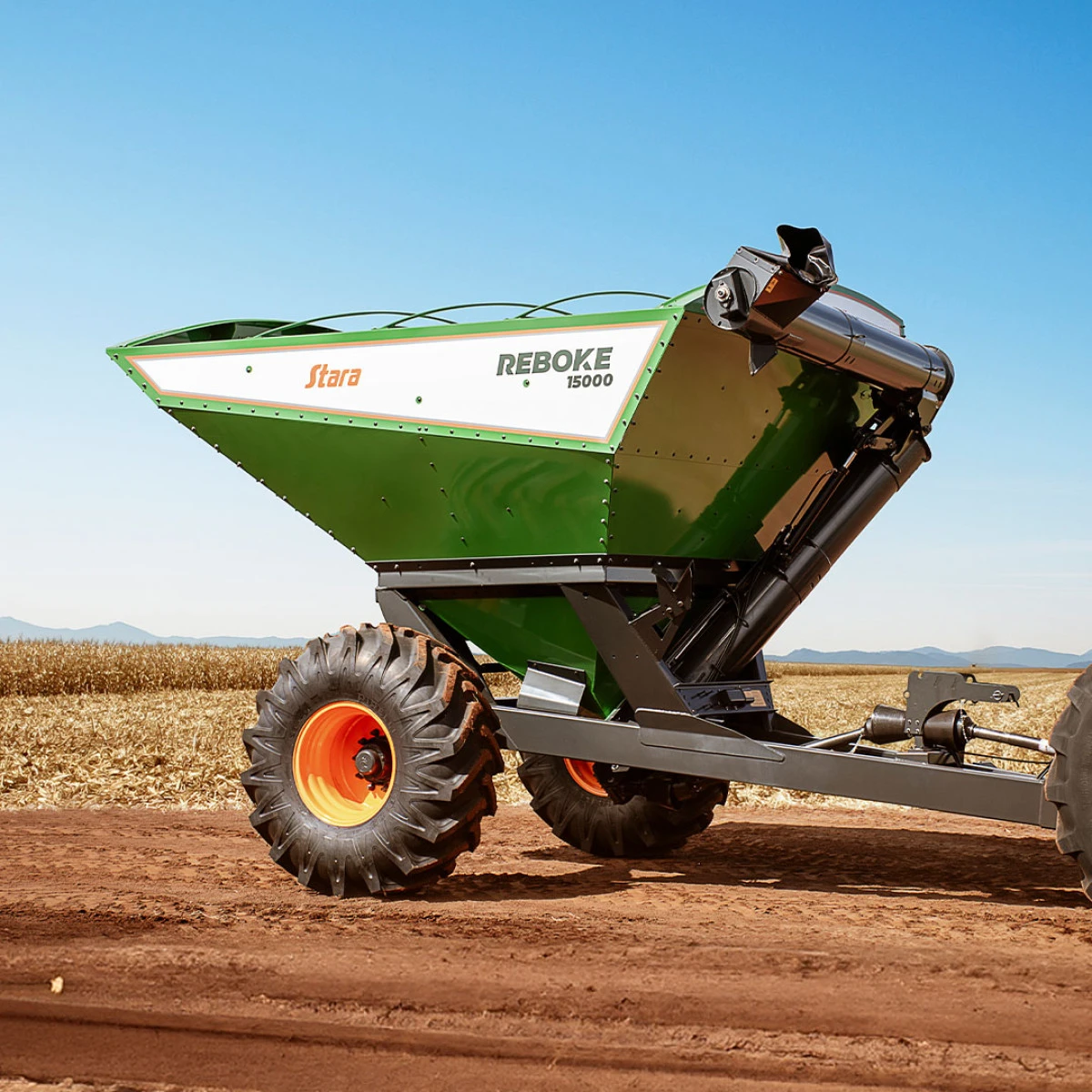
Within Stara's portfolio, the Reboke range directly meets grain transport demands by combining load capacity with features that influence farming pace. The Reboke 11000 has a load capacity of 11 m³, while the Reboke 15000 reaches 15 m³.
Both feature a 340 mm unloading tube with discharge capacity of up to 2,500 kg/min, as well as hydraulic actuation for opening and closing the feedgate and tube, contributing to faster grain outflow.
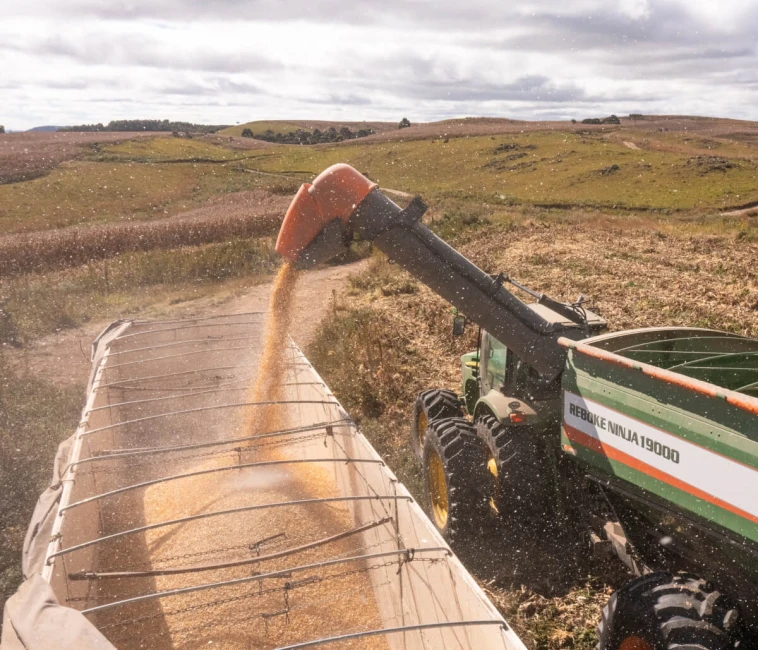
The Reboke Ninja extends this concept to operations requiring greater capacity. The range includes models 19000, 24000, 33000 and 40000, with capacities of 19 m³, 24 m³, 33 m³ and 40 m³ respectively.
Another distinguishing feature is the 500 mm unloading tube, with discharge capacity of up to 10,000 kg/min, along with high-flotation tyres that help prevent soil compaction during grain transport.
The Reboke Inox adds versatility to the transport of both grain and fertiliser. The range includes models with capacities of 15 m³, 20 m³, 25 m³ and 30 m³, featuring a 400 mm unloading tube and grain discharge capacity of up to 5,500 kg/min, depending on model, product, density and moisture.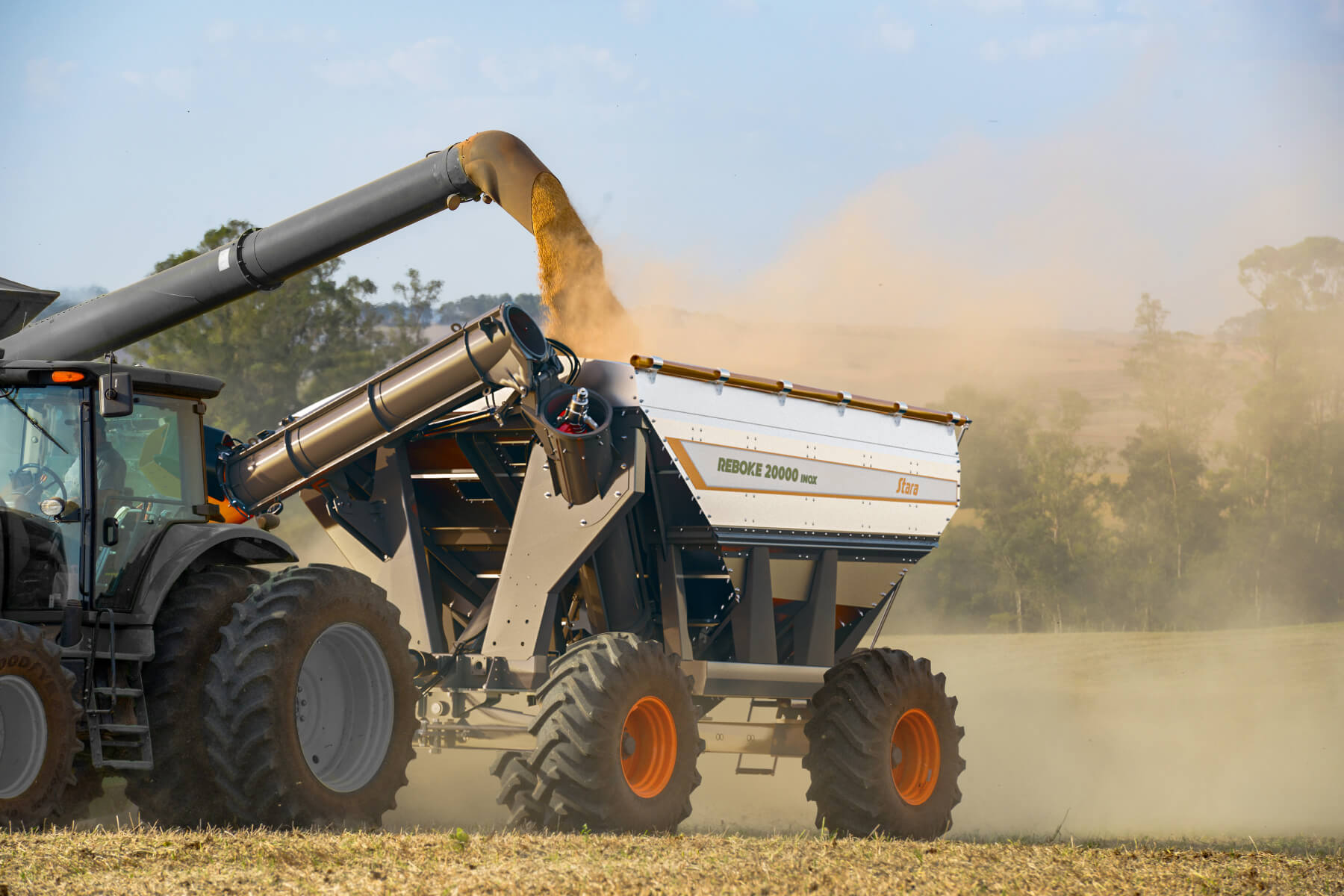
Key features include a stainless steel tank for high corrosion resistance; a directional spout that improves load distribution into the lorry; a telescopic tube for supplying fertiliser to planters; and high-flotation tyres that enhance durability, practicality and load distribution on the lorry during unloading.
The Reboke Ninja and Inox ranges also stand out for offering the greatest turning radius of the category, which eases farming steering operations and avoids steering system damages.
Grain transport as an ally of field efficiency
Grain transport directly influences operating costs because it affects harvesting pace, the time available for outflow, and the ability to maintain uninterrupted production.
When farms better plan load flow, organise unloading, and choose a grain cart compatible with farming demand, they reduce bottlenecks, avoid losses and make better use of available field resources.
For this reason, paying close attention to this stage is a practical way to improve efficiency throughout the harvest. Explore Stara solutions designed for grain transport and transfer to learn more.
Frequently asked questions about grain transport in farming
What can cause grain losses during transport?
Overloading, inadequate sealing, spillage during transport, route conditions, delays in unloading, and incompatibility between the grain cart and transported volume are among the main factors contributing to losses during grain transport.
What should be taken into account when choosing a grain cart for grain transport?
Load capacity, unloading speed, sealing, return time to the field, and compatibility with farm operations are among the key evaluation criteria.
How to reduce bottlenecks in grain unloading?
Organising trailer arrival order, reducing waiting time at the unloading point, and using equipment that speeds up the process help make transport more continuous and productive.
How much grain is lost during transport?
Losses vary depending on load, route, equipment and operational management. Poorly adjusted transport can increase waste and compromise product quality.
Did you like the hints and want to find out the agricultural machine that best suits your crop field?
Stop by a Stara dealer and find the most suitable equipment to boost your crop production. Request a quotation.