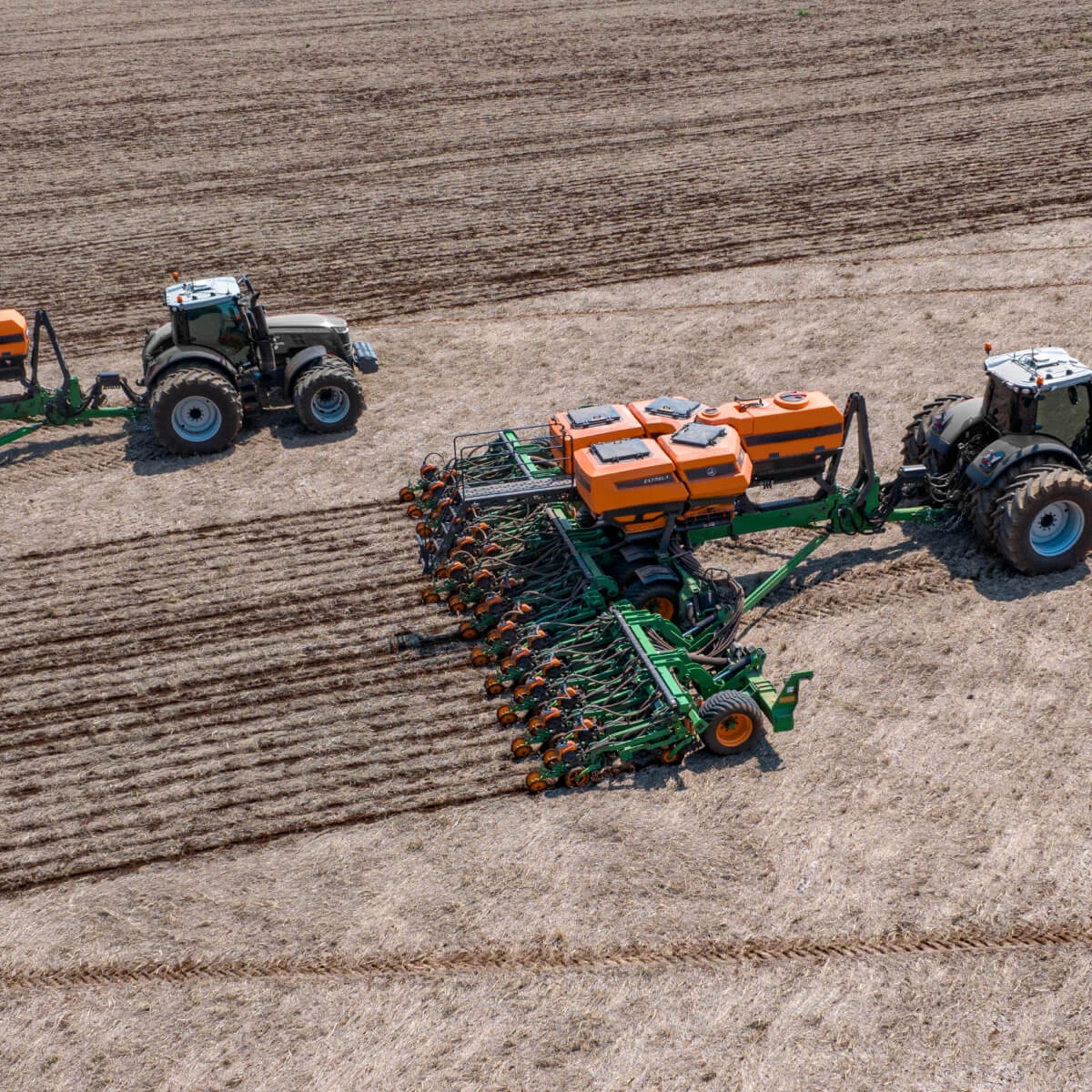



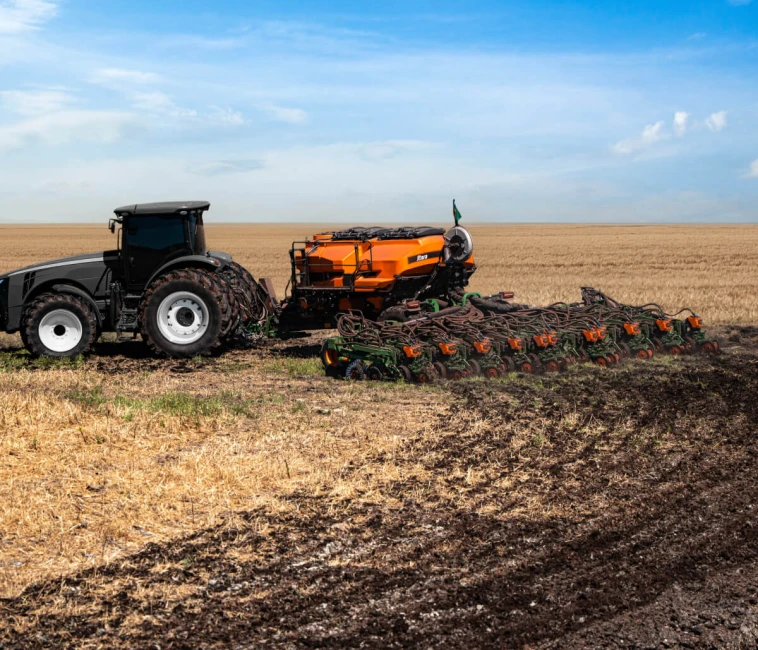
Planting system choice is one of the most significant decisions for crop field performance through time. It influences directly productivity, soil management, input use and productive system stability, especially in climate variability scenarios and agricultural intensification.
According to Crop System study, of Universidade Federal do Paraná (UFPR), the planting systems have evolved to comply with the need for balancing agricultural production, fertility preservation and problem reduction, including soil compaction and erosion.
Understanding how each system works is essential to select the most adequate strategy to soil, crop and farm management conditions. Next, see what are planting systems, what are the main models used in agriculture and how to choose the most indicated one to each crop field reality.
What are planting systems?
Planting systems include agronomic practice set that define how the seed is implanted in the soil, considering disturbance grade, plant cover presence and management before, during and after seeding. They guide the relation among soil, plant and agricultural operation within all productive cycle.
It is important to differentiate close, but different concepts. Understand:
- planting system: defines the agronomic logic adopted to implement the crop (conventional, direct planting or minimum crop).
- planting method: it describes seed application, including row or broadcast planting.
- agricultural system: it is wider and involves crop rotation, soil management, use of inputs and productive strategies within harvests.
Planting correct system choice influences soil behaviour, plant development and management efficiency. Thus, the selection creates more favourable conditions to germination, root growth and agricultural production sustainability.
Why is planting system choice strategic?
Planting system definition impacts crop field agronomic and operational results. This decision interferes directly in four key points:
- productivity: well adjusted systems enable uniform emergence, better nutrient performance and lower initial plant stress;
- soil conservation: the system adopted defines surface protection level, erosion control and physical and biological structure maintenance;
- input use: the correct choice increases fertilizer, soil regulator and chemical application efficiency, reducing losses and waste;
- crop field stability: adequate systems expand result predictability within harvests and reduce risks associated to climate.
What are the main planting systems?
Planting systems stand out mainly due to soil disturbance level, plant cover and management adopted before and after seeding.
Conventional planting
Conventional planting is based on soil disturbance before seeding, generally by means of ploughing and harrowing operations. The purpose is letting the soil loose, levelled and free from crop remains.
This system enables seed application and weed initial control, however it requires larger number of operations and agricultural machine frequent use. Main advantages include:
- crop implementation convenience;
- soil regulator and fertilizer incorporation;
- good undesired plant initial control
Direct planting
Direct planting is a system in which seeding is performed on non-disturbed soil, keeping previous crop straw on surface. Only a narrow furrow is opened to seed and fertilizer application.
It is common to mix direct planting and direct seeding. Direct seeding is related only to seeding operation without previous preparation. Direct planting is wider and involves continuous management principles.
Direct planting system principles
Soil permanent cover is one of system pillars. The straw protects the surface against rain impact, reduces evaporation and enables soil structure conservation.
Minimum soil disturbance preserves physical structure, reduces superficial compaction and keeps biological activity.
The permanent cover protects the surface and enables organic matter preservation. On the other hand, crop rotation, one of direct planting pillars, is fundamental to system balance ,as it improves nutrient absorption, enables pest and disease control and favours soil biological diversity within harvests.
3 direct planting benefits
Direct planting generates consistent gains as it reduces soil mobilization and keeps the surface protected, favouring system efficiency within harvests, because:
- cover maintenance protects the soil, reduces losses due to erosion and preserves organic matter;
- lower disturbance improves water infiltration and retention, expanding plant water availability;
- within harvests, these factors result in higher productive stability and better response to climate variations.
In direct planting, seeding quality is decisive to system performance. Planters with precise depth control, uniform seed spreading and consistent regulations, like Stara planters, enable correct crop field implementation even in areas with high straw presence.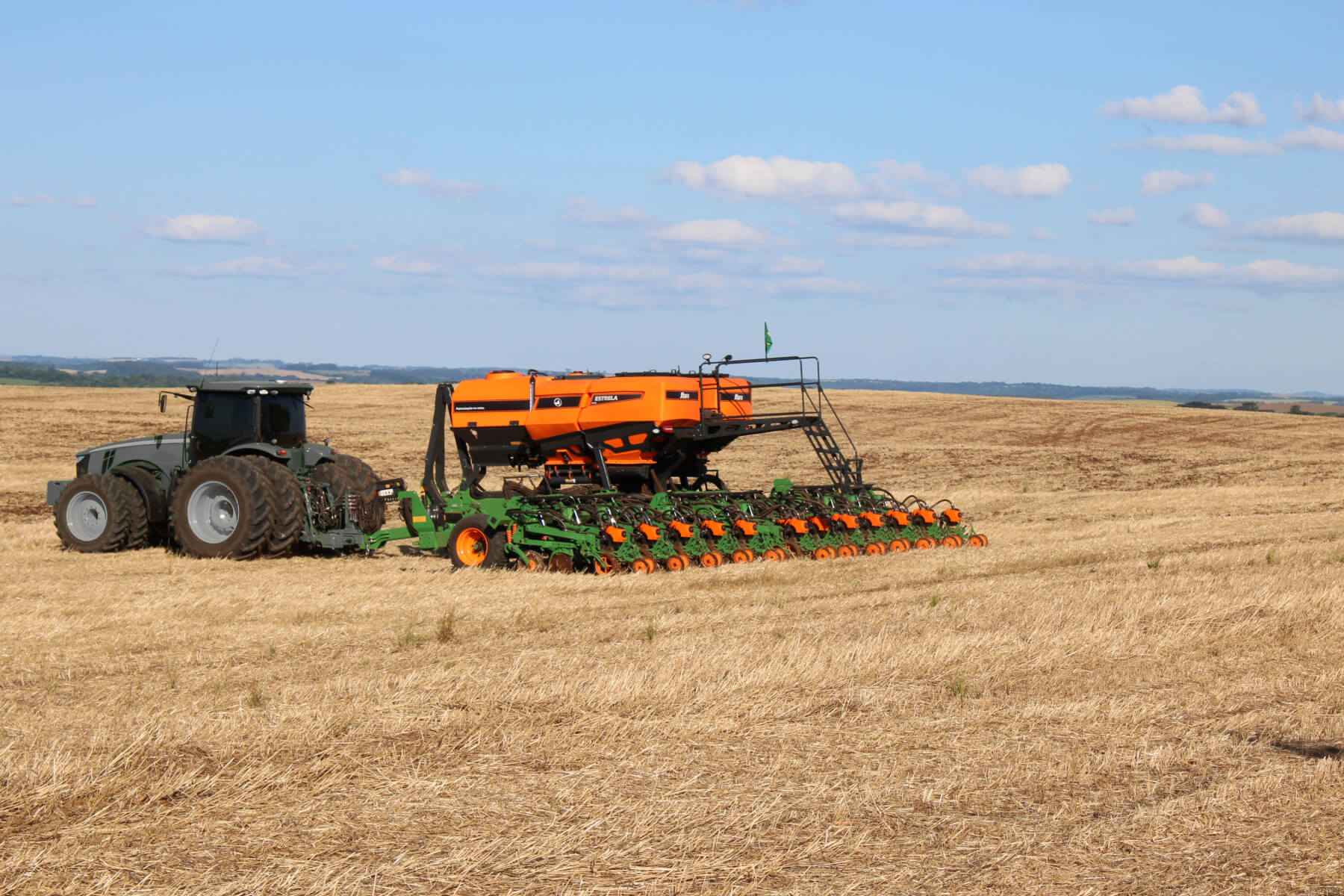
Contact us and ask for a quotation.
Minimum crop
Minimum crop is an intermediate system between conventional planting and direct planting. It reduces number and intensity of soil preparation operations, keeping part of plant cover on the surface.
This system is indicated when direct transition to direct planting is not feasible yet, whether due to management limitations, soil history or punctual correction need.
In relation to conventional planting, it presents less disturbance and lower erosion risk. Compared to direct planting, it also requires attention to management to prevent structural losses.
Another planting methods and variations
Apart from planting systems defined by soil disturbance level, there are implementation variations and methods that comply with specific crop field needs. These alternatives are chosen according to crop, productive purpose, terrain conditions and operational availability, always considering seeding efficiency and further management.
- row planting: the most common mechanized agriculture method; with higher plant population control; seed uniform spreading and better operational efficiency;
- broadcast planting: used mainly in pastures and cover crops, when spacing between plants is not significant to crop development;
- aerial planting: indicated to large areas, hard to access terrains or short planting seasons, requiring strict technical planning to assure good seed spreading and germination.
Common errors at planting system choice or execution
A planting system adoption requires more than model initial choice. Execution errors compromise results and reduce system efficiency within harvests.
Lack of complementary management
A recurring error is treating the planting system as an isolated decision. Systems including direct planting rely on complementary practices, including crop rotation, adequate straw management and weed correct control. Without this set of actions, expected benefits are not consolidated.
Mixing method and system
Another common error is associating planting system only with the way of seeding. Row, broadcast or aerial planting are methods, not systems. The confusion leads to incomplete choices, not considering soil preparation, plant cover and management through time.
Ignoring soil history
Disregarding the area history compromises adopted system efficiency. Compaction, fertility levels, previous erosion and crops used in previous harvests influence the planting system performance directly. Soil previous evaluation is essential for safer decisions.
Disregarding agricultural machine operation
Even well defined systems can fail when the operation is not adequate. Incorrect regulations, irregular depth, excessive traffic and lack of operational control affect planting quality.
To reduce this failure type, technical follow-up and remote monitoring of operations are major allies. Services including Telemetria Stara enable following agricultural machine performance, identifying operational deviations and supporting quicker adjustments in the field.
How can ideal planting system be chosen?
Planting system choice must be technical and aligned with crop field reality. Some points help to guide this decision. See:
Compatibility with crop
The first step is to check which planting systems are indicated to the crop to be implemented. Each crop responds differently to soil preparation, straw presence and management adopted.
Farm conditions
Soil type, management history, terrain and rain pattern influence system performance directly. These factors help to define if the system will be feasible and sustainable within harvests.
Available operational resources
Each system requires specific operations and adequate agricultural machines. Aspects including seeding rate, seed depth and application uniformity need to be controlled.
System execution technical knowledge
Crop field implementation requires planning and technical expertise. Evaluating previous results, using consolidated practices and relying on duly established technologies reduce risks and increases result predictability.
Ideal planting system decisions must integrate agronomy, operation and technology, forming a solid base for crop field productivity.
What is the relation between planting systems and soil management?
Planting system choice defines how the soil will be managed through time, and influences its productive capacity directly. Each system interferes in a different way in soil physical, chemical and biological properties, impacting crop field efficiency and result stability within harvests.
- soil structure: systems with less disturbance preserve aggregates, reduce particle breakdown and enable root growth;
- fertility: plant residue maintenance on surface enables nutrient absorption, increases microbiological activity and enables organic matter formation;
- water humidity and infiltration: soil cover reduces evaporation, improves infiltration and decreases superficial draining, making the profile more stable under different rain patterns;
- plant cover and organic matter: straw protects the surface, reduces erosion and increases crop field resilience within harvests.
Agricultural machine correct operation completes this management. Adequate regulations, controlled traffic and the use of Stara precision agriculture technologies enable preserving soil structure and keeping adopted planting system efficiency.
Direct planting in Brazil and technology applied to field reality
In Brazil, the predominant planting system is the direct planting, a model in which the country has become a reference worldwide. This system wide adoption is associated to soil conservation need, reducing erosion losses and increasing productive stability in different regions and climate conditions.
Direct planting presents specific technical challenges, including high straw volume, residue efficient cutting need, seeding depth maintenance and adequate pressure control on soil. Crop field implementation quality depends directly on agricultural machine capacity to face these conditions with precision and uniformity.
Stara planters are developed considering Brazilian soil reality and system demands. With robust structure, efficient cutting disks to high straw flow and precise load control in rows, they provide singularity to seeding, better seed-soil contact and more emergence uniformity.
Apart from mechanical robustness, Stara portfolio is integrated to precision agriculture technologies including Topper, that enables functions like Row to Row Shut Downs and Variable Rate application. These resources are automatically adjusted to seed and fertilizer spreading according to prescription map, increasing input use efficiency and reducing overlap.
As direct planting system is aligned to Stara agricultural machines and technologies, the farmer changes operational challenges into more efficient technical decisions, enhancing crop field implementation quality and result predictability within harvests.
Planting System Questions & Answers
What is SPD?
SPD is an acronym for Sistema de Plantio Direto (Direct Planting System) It is a system in which seeding is performed with no soil disturbance, keeping permanent cover by straw and adopting crop rotation as mandatory management practice.
What are the main planting systems?
Main planting systems used in agriculture include conventional planting, direct planting and minimum crop. They stand out mainly due to soil disturbance grade and plant cover management.
What planting system is more sustainable?
Conservation systems, including direct planting and minimum crop, tend to be more sustainable as they reduce erosion, preserve soil structure and improve input use efficiency.
Which planting system protects the soil in a better way?
Direct planting is the system that offers more protection to soil, as it keeps permanent plant cover, reduces rain impact and minimizes disturbance, decreasing erosion losses.
Does the planting system influence productivity?
Yes. Planting system influences germination, plant development and water and nutrient availability and crop field stability, impacting productivity directly within harvests.
Did you like the suggestions and want to find out what is the ideal agricultural machine to your harvest?
Visit a Stara Dealer and find the most adequate equipment to maximize your agricultural production. Ask for a quotation.