


Soil health is one of the most relevant factors for agricultural productivity, crop field stability and production system sustainability.
Soil health goes beyond chemical fertility. It gathers adequate physical conditions, chemical balance and active biological activity, which enable plant growth, water flow regulation, nutrient absorption and biodiversity maintenance through time.
According to USP Soil Health & Management Research Group, balanced soils in physical, chemical and biological aspects present increased resilience to climate stresses, enhanced input efficiency and production predictability. Soil quality is directly linked to management history adopted in the area.
This guide presents main concepts, indicators and practices related to soil health, based on technical studies and field practical application.
What is soil health and why does it matter?
Soil health is related to soil capacity to keep its physical, chemical and biological functions in a balanced way, supporting agricultural production through time.
Unlike the view restricted to fertility, the concept considers the soil as a dynamic system, influenced directly by the management adopted in the area.
Healthy soils
Healthy soils have more capacity to keep productive stability in adverser conditions, including drought periods, excessive rain or temperature variations. This performance is related to balance among adequate physical structure, nutrient availability and active biological activity.
UFScar researches indicate physical, chemical and biological properties act in an integrated way. Changes in any of the components above affect water infiltration directly, root development and productive system efficiency.
Management history
Management history impacts this system directly, influencing water infiltration, root growth, nutrient availability, and soil biodiversity.
Crop field efficiency practical impact
In practice, soil health impacts directly relevant agronomic indicators, including fertilizer use efficiency, root development, water retention, resistance to compaction, and production predictability. Areas with healthy soil tend to present less productivity variability between harvests and agricultural system longer lifespan.
3 soil health pillars
Soil health is supported by balance between three fundamental pillars:physical, chemical and biological. These pillars do not act in isolated way. Changes in one of them affect directly the other ones, impacting productive system efficiency as a whole.
1. Physical pillar
The physical pillar is related to soil structure and its capacity to enable root growth, water infiltration and storage, and gas exchange. Soils with good structure present stable aggregates, well spread pores and lower compaction risk.
When the physical pillar is compromised, even chemically fertile soils can present low productivity. Compaction, for example, reduces water infiltration, limits root deepening and decreases nutrient use efficiency, increasing water stress risk and productive losses.
Soil physical quality indicators
Main physical indicators include soil density, total porosity, aggregate stability and water infiltration capacity. High densities and low porosity indicate root development restriction and high vulnerability to erosion and superficial draining.
2. Chemical pillar
The chemical pillar is linked to soil fertility and balanced plant nutrient availability. It includes parameters like pH, cation exchange capacity, macro and micronutrient base and content saturation.
Cation exchange capacity, known as CEC, indicates soil capacity to retain and provide positively charged nutrients, including calcium, magnesium and potassium. The higher the capacity, the higher the nutrient retention and the lower the loss risk due to lixiviation.
Chemically balanced soils enable higher nutrient absorption efficiency and better crop response to fertilizer management. Chemical unbalance can limit plant growth even in well physically structured areas.
Soil chemical quality indicators
Main indicators include water pH, effective and potential CEC, nitrogen contents, phosphorus, potassium, calcium, magnesium and micronutrients. Such data joint interpretation enables fertility management more accurate adjustments.
3. Biological pillar
Biological pillar is related to soil life and interactions among micro-organisms, roots and organic matter. This component is essential to nutrient absorption, aggregate formation and natural protection against pathogens.
Biologically active soils present higher plant residue decomposition capacity, better nutrient performance and higher structural stability. The biological activity also enables soil organic carbon increase, a key factor to system resilience.
Soil biological quality indicators
The most used indicators include microbial biomass, micro-organism diversity, enzyme activity and relation between fungus and bacteria. These parameters enable understanding soil biological performance and its response to adopted management practices.
How can soil health be measured and monitored?
The evaluation requires continuous and integrated follow-up. No isolated indicator is enough to represent system operation. Thus, the monitoring must consider physical, chemical and biological analyses, always related to area management history. For example:
- correct sampling is the first step: 0 to 10 cm layer concentrates higher biological activity, organic matter and direct management effects, and it is a reference to most soil health evaluations;
- the collection must represent homogeneous areas and be repeated though time to enable result comparison;
- chemical analyses provide information on fertility, pH, cation exchange capacity and nutrient availability;
- on the other hand, chemical analyses enable identifying structural problems, including compaction, low porosity, and water infiltration limitation. Such data explains a large part of restrictions to root development and input use efficiency;
- biological analyses expand soil performance understanding while evaluating microbial activity, biomass and organism diversity.
What is more, integrated methodologies, including BioAS, enabling interpreting these indicators jointly, providing a more complete reading of soil functionality. This approach type enables decision-making and reduces interventions based only on isolated parameters.
How does technology enable soil health management?
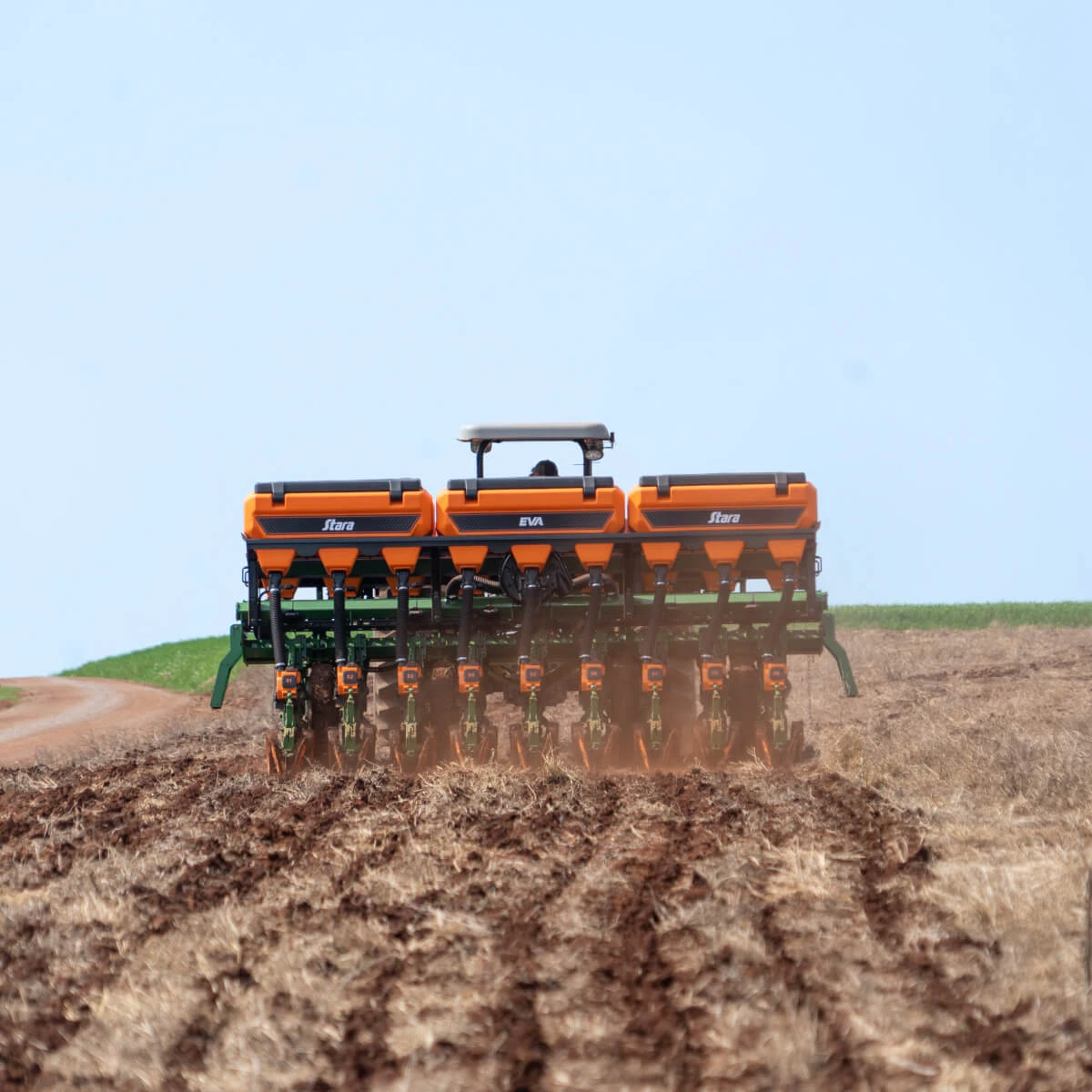
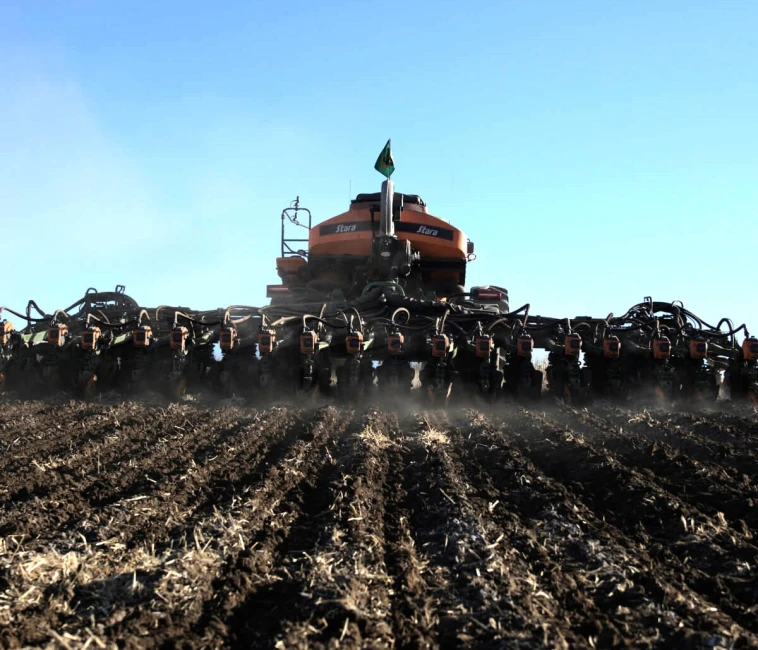
Soil health management requires operational precision, repeatability and data-based decision-making. In such context, Precision Agriculture expands farmer capacity to manage the soil more efficiently, reducing negative impacts and increasing result consistency within harvests. Lucas Luersen, agronomist and Stara Product Marketing analyst, highlights:
Operational decisions including machine traffic management, equipment correct regulation and precision agriculture technology use have direct impact to soil health, mainly in compaction reduction and structure preservation within harvests.
Agricultural machine use enables controlling, with higher accuracy, operations that affect soil structure directly, including traffic, input spreading and crop implementation. Overlap, failure and unnecessary pass reduction enables lower compaction and higher soil physical pillar preservation. Luersen adds:
Agricultural machine controlled traffic is one of main factors to reduce soil compaction. Precision Agriculture also prevents input overlap, enabling applying only the quantity required, with no excesses or deficiencies to plants."
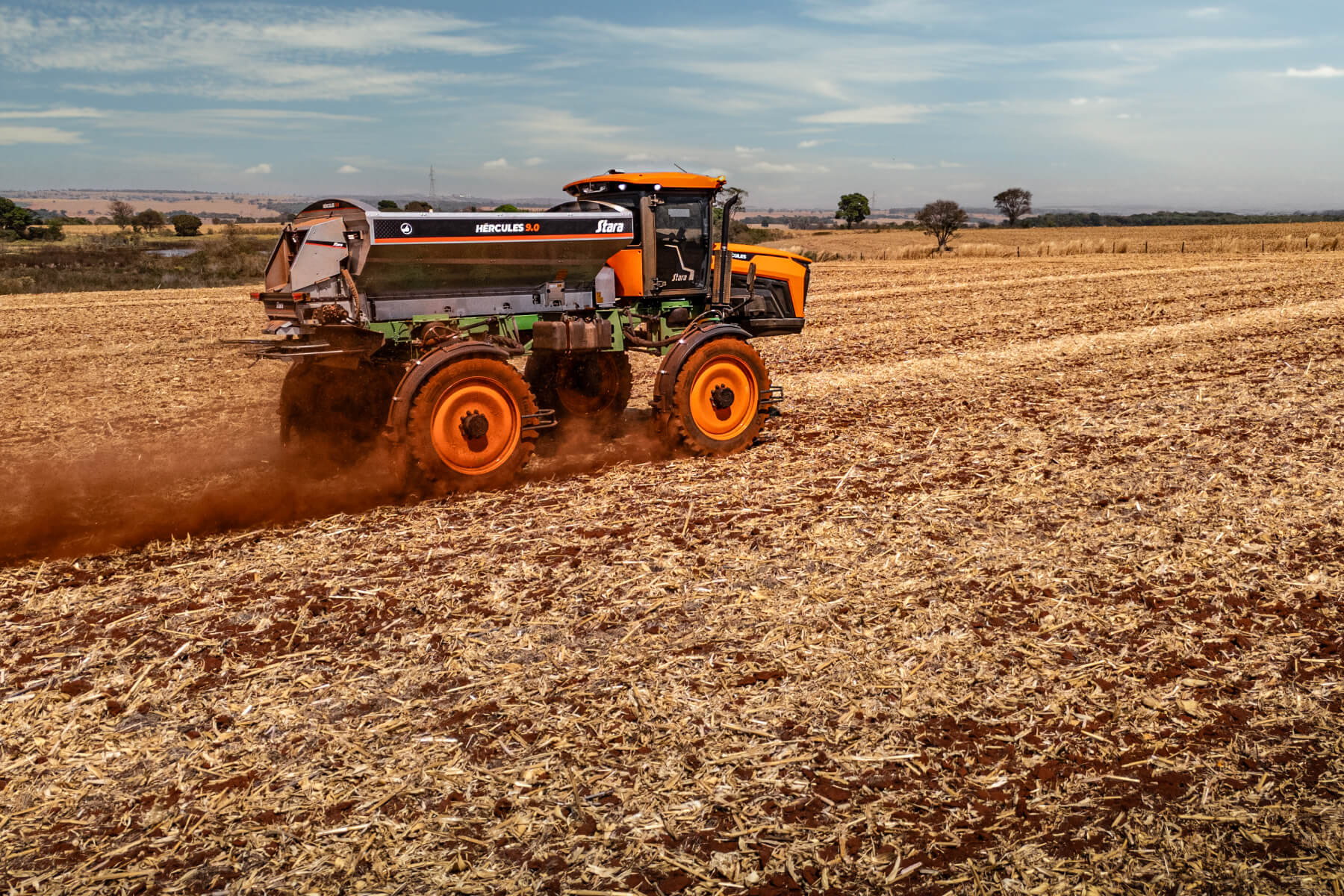
Stara solutions integrate agricultural controllers, application maps and operational maps to support decisions that are more suitable to field variability. Variable rate application, for example, enables matching correction and fertilizer application to actual soil conditions, avoiding excesses that compromise chemical balance and biological activity.
Soil levelling, whenever used to micro unevenness correction and superficial drainage correction, enables more uniform operations and reduction of areas subject to flooding or erosion. This practice enables crop implementation, agricultural machine performance and soil structure maintenance through time.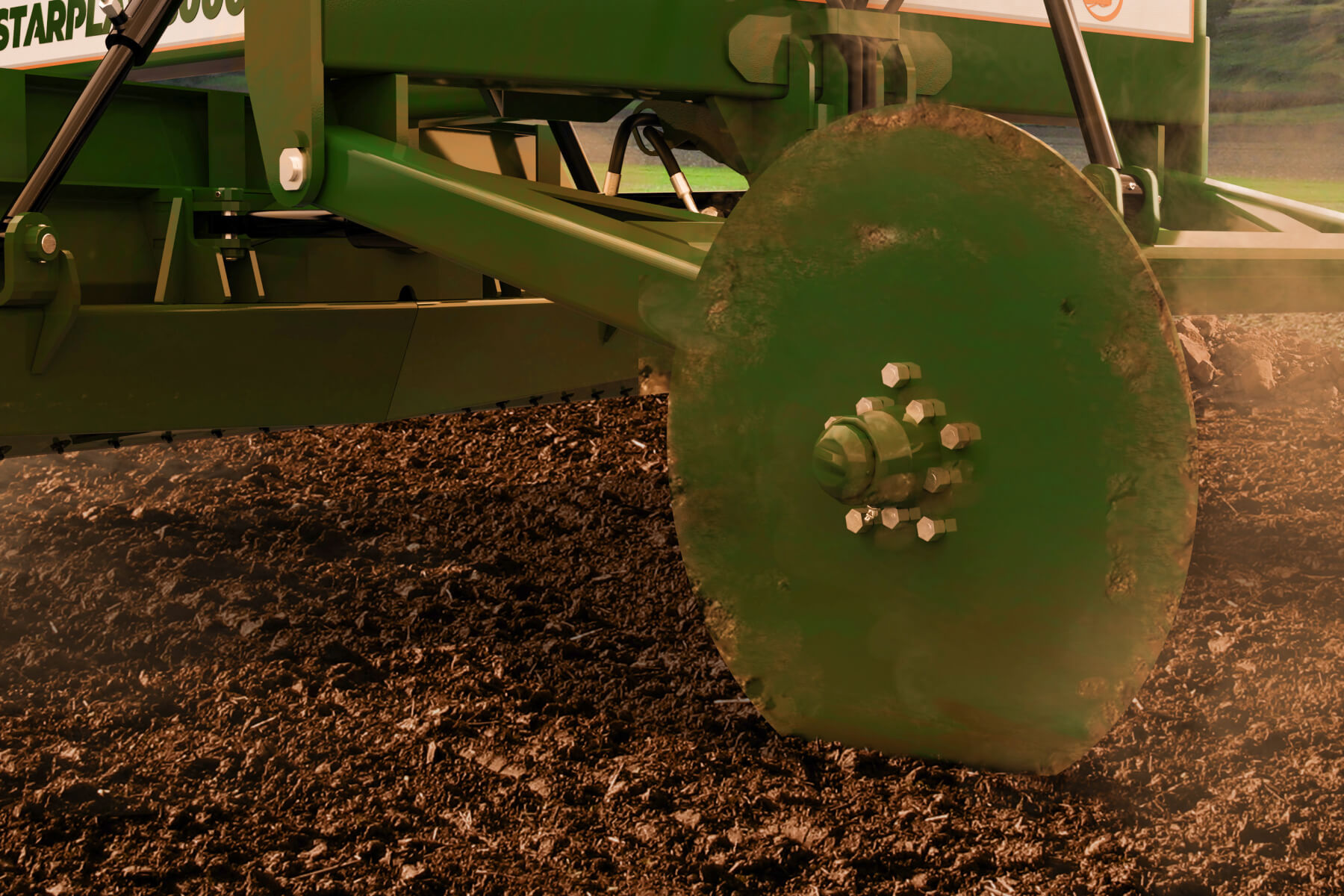
Planters and seeders play a major role in soil health, as they influence seed spreading, soil-seed contact and initial root development. Equipment with precise depth control, line pressure and row alignment enable uniform emergence and reduce the need for later corrective interventions. According to Lucas Luersen:
The planter is the machine that starts all crop field productive process. In it, correct seed spreading and fertilizer application are defined, including with the use of variable rate, apart from inoculation, which intensifies micro-organism activity in the soil since the cycle start.
As it integrates technology, agricultural machines and agronomic knowledge, Stara enables more balanced productive systems, in which soil health is not only just a concept, but also a manageable factor within farm routine.
Check out Stara complete Agricultural Machine line
Investing in soil health is assuring more productivity
Soil health is direct result of management adopted through time. Balance soils from a physical, chemical and biological point of view support more stable, efficient and predictable crop fields, reducing productive risks and improving input performance.
Continuous monitoring, along with conservation practice adoption technology use, changes soil health into a manageable factor in the farm. Precision Agriculture expands such capacity as it integrates data, operation and decision-making in the field. Lucas Luersen points out:
One of main practical signs the management is improving soil health is the visible organism presence, like earthworm and fungus. This is also seen in healthier plants, with higher resistance to stress and less deficiency symptoms.
By means of agricultural machines, agricultural controllers and digital solutions, Stara enables the farmer to execute more accurate operations, preserve soil structure and keep more balanced productive systems within harvests. Thus, not only soil health management is an agronomic concept, but also becomes integral part of crop field productive strategy.
Soil Health Questions & Answers
What are the first practical steps to improve soil health?
The first health is knowing the area soil. It includes correct sampling, basic chemical analysis and structure visual evaluation. After that, the farmer can adjust practices including crop rotation, plant cover, and fertility localized correction.
What is the main difference between traditional soil analysis and BioAS methodology?
The traditional analysis focuses mainly in chemical parameters. BioAS expands this reading as it incorporates biological indicators, including microbial activity and soil performance as a living system, offering a more complete view of soil health.
Is it possible to recover a degraded soil? How long does it take?
Yes, it is possible. Time varies according to degradation grade, soil type and management adopted. In general, physical and biological improvements begin to appear between two and five harvests, as long as correct practices are kept in a continuous way.
How does crop rotation impact soil biodiversity?
The rotation diversifies root system and plant residues, stimulating different micro-organism groups. It increases soil biodiversity, improves nutrient absorption and reduces pest and disease pressure.
What are low-cost practices to increase organic matter in the soil?
Keep straw, use cover plants and adopt crop rotation are accessible and efficient practices. These actions enable organic matter build-up and biological activity through time.
Why does the soil analysis have to be done in 0 to 10 cm layer?
This layer concentrates more biological activity, organic matter and agricultural management direct effects. Thus, it is more sensitive to evaluate soil health and responses to practices adopted.
How does soil health help the crop field to resist the drought in a better way?
Healthy soils have better structure and higher capacity to infiltrate and store water. It assures water availability for more time to the plants, reducing drought period impact.
Did you like the suggestions and want to find out what is the ideal agricultural machine to your harvest?
Visit a Stara Dealer and find the most adequate equipment to maximize your agricultural production. Ask for a quotation.