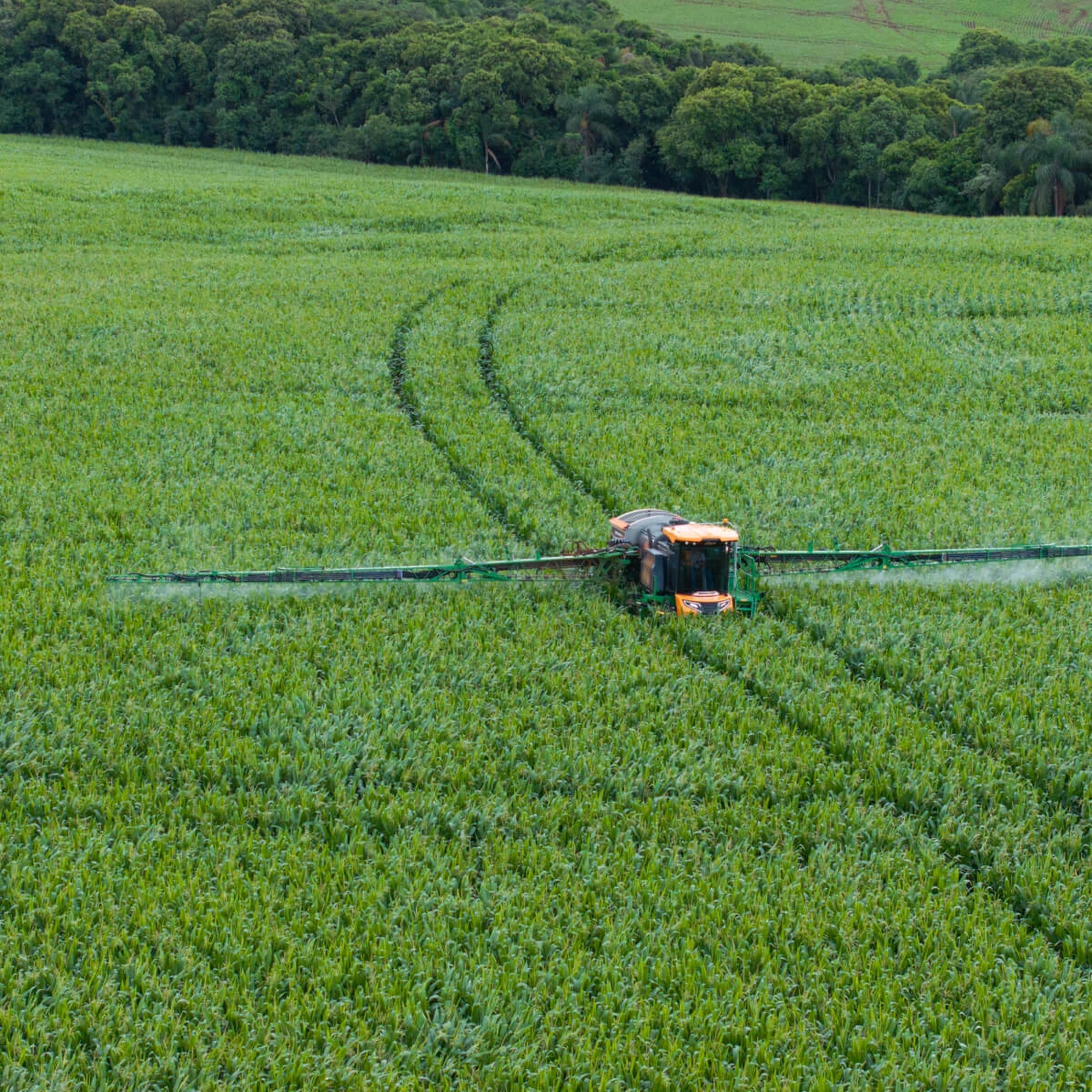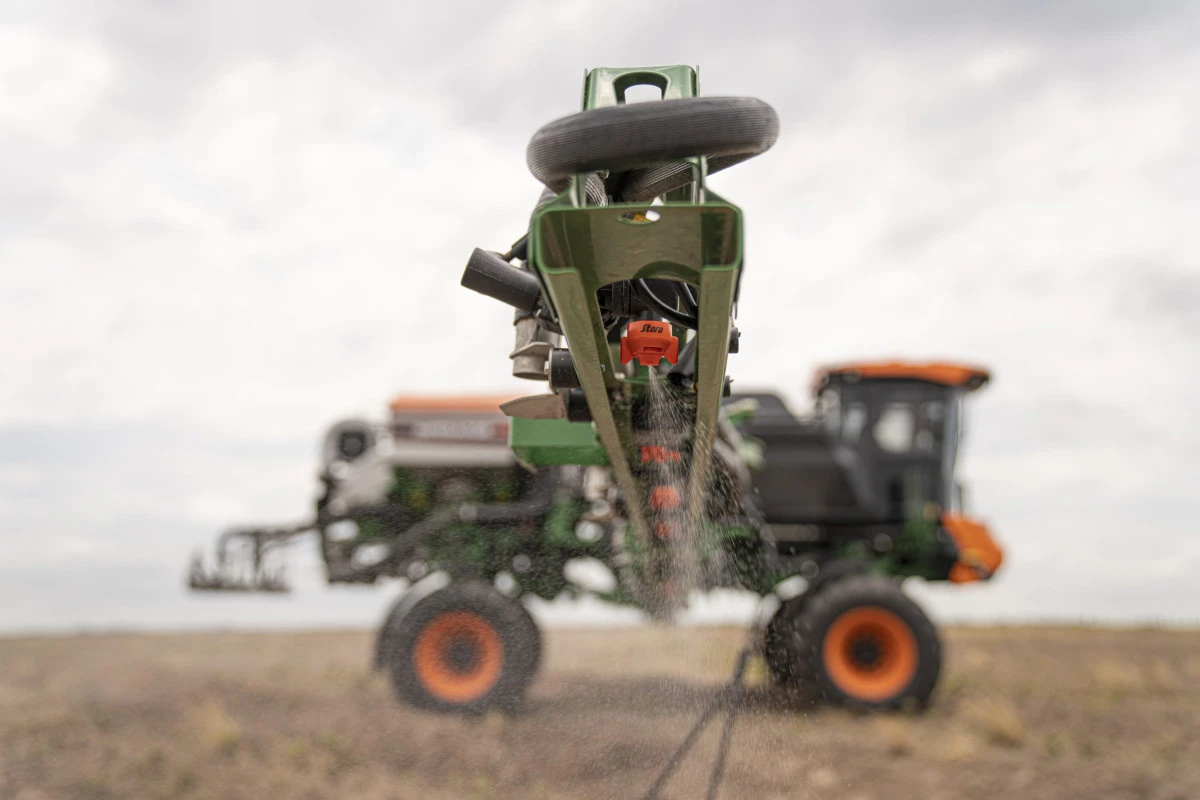
The selection of spray nozzles is essential for the quality of crop protection applications, as their characteristics directly influence flow rate, spray distribution and the size of the droplets produced. These differences can affect product deposition on plants and, consequently, the results of the operation.
In this context, droplet size deserves special attention. While smaller droplets have greater coverage potential, they are more susceptible to wind displacement. Larger droplets, on the other hand, present a lower risk of drift, although they may provide less intensive coverage. Therefore, nozzle selection should take into account the product being applied, target characteristics and operational conditions.
But how do you choose the most suitable spray nozzle for each situation? Learn which factors influence droplet formation, how droplet characteristics affect application efficiency, and which Stara technologies contribute to this process.
How Does Droplet Size Affect Spraying Efficiency?
As the spray mixture passes through a spray nozzle, it is broken into droplets of different diameters, forming what is known as the droplet spectrum. This characteristic influences spray distribution and deposition on plants, penetration into the crop canopy, and the susceptibility of droplets to drift and evaporation.
One of the measurements used to characterise this spectrum is the Volume Median Diameter (VMD or Dv50), which makes it possible to compare the droplet sizes produced by different spray nozzles. Combined with information regarding the product being applied, target characteristics and environmental conditions, this measurement helps determine the most appropriate droplet spectrum for the operation.
To explore nozzle selection criteria in greater depth, also see our content about the main types of spray nozzles and how to choose the most suitable model for your operation.
Fine, Medium or Coarse Droplets: What Is the Difference in Spraying?
For the same volume of spray mixture, smaller droplets are produced in greater quantities, while larger droplets concentrate the liquid into fewer droplets. These differences influence plant coverage, spray deposition and the risk of losses during application.
Fine Droplets: Greater Coverage Potential
Fine droplets offer greater coverage potential and are particularly relevant for applications requiring wider distribution of the product across treated surfaces. However, they are more susceptible to drift and evaporation, especially under windy conditions, high temperatures and low relative humidity.
Coarse Droplets: Lower Susceptibility to Drift
Coarse droplets are less susceptible to drift, reducing the risk of spray mixture movement outside the target area. However, for the same application volume, they provide fewer droplets on the plants, which may reduce coverage in certain situations.
Medium Droplets: A Balance Between Coverage and Drift Control
Medium droplets can provide a balance between coverage and drift reduction in certain treatments. Their suitability, however, depends on the product’s mode of action, the target and agronomic recommendations.
These differences demonstrate how droplet size influences three important aspects of spraying: coverage, drift and evaporation.
|
Characteristic |
Smaller Droplets |
Larger Droplets |
|
Coverage |
Greater coverage potential, with more droplets available to reach the target. |
Fewer droplets for the same spray volume, potentially reducing coverage. |
|
Drift |
More susceptible to wind displacement, increasing the risk of losses. |
Less susceptible to wind displacement, improving deposition on the target. |
|
Evaporation |
More susceptible to evaporation, especially under high temperatures and low relative humidity.
|
Less susceptible to evaporation due to the larger individual droplet volume. |
These differences reinforce the importance of selecting droplet size according to the characteristics of each application. To achieve this, it is also necessary to consider the factors that influence droplet formation in order to obtain the desired droplet spectrum.
What Can Change Droplet Size During Spraying?
The size of the droplets produced during spraying depends on nozzle characteristics, operating pressure and spray mixture properties. Therefore, selecting the appropriate nozzle is an important part of sprayer set-up and should also take operating conditions into account.
Nozzle Type and Operating Pressure
The internal design, orifice diameter and features such as pre-orifices and air induction influence spray breakup. In air-induction models, air is incorporated into the liquid stream, producing droplets that generally have a larger diameter and lower susceptibility to drift.
Pressure also influences the droplet spectrum. In many nozzle models, increasing pressure produces smaller droplets, although this relationship varies according to nozzle geometry. Operators should follow the manufacturer's recommended pressure ranges while considering the flow rate required to achieve the planned application rate.
Speed, Flow Rate and Nozzle Wear
During spraying operations, changes in travel speed require adjustments to flow rate in order to maintain the programmed application rate. This compensation must respect the nozzle’s operating pressure limits, preventing undesirable changes in droplet characteristics.
Nozzle wear also deserves attention, as it can alter performance characteristics and compromise application quality. Ramon Cancian, Agronomist and Product Marketing Analyst at Stara, explains:
“With continuous use, spray nozzles experience wear, which may be intensified by higher operating pressures. Over time, this wear can change flow rate, droplet size and spray distribution uniformity, compromising application quality.”
Stara offers a comprehensive portfolio of spray nozzles manufactured from polyacetal and ceramic materials, each with different wear-resistance characteristics. To identify possible changes in performance, it is important to carry out proper cleaning, inspect components and compare measured flow rates with the values specified by the manufacturer.
Even when nozzles are well maintained and the machine is correctly adjusted, application results also depend on the field conditions encountered during the operation.
How Do Weather Conditions and Boom Height Affect Droplet Behaviour During Spraying?
Once formed, droplets travel a certain distance before reaching the target. During this journey, wind can displace them beyond the application area, while high temperatures and low relative humidity favour evaporation, particularly in the case of smaller droplets.
Ramon Cancian highlights that wind speed deserves special attention because both strong gusts and calm conditions associated with temperature inversion can negatively affect spraying operations:
“Operators often assume that the absence of wind represents the ideal condition for spraying. While strong winds increase the risk of drift, calm conditions also require attention, as they may be associated with temperature inversion. Under these circumstances, finer droplets can remain suspended in the air and drift beyond the target area.”
In addition to meteorological conditions, the distance between the boom and the target also influences spray quality, as it affects both droplet travel distance and spray distribution. On Stara self-propelled sprayers in the Imperador range, the central-boom system contributes to machine stability during operation, helping maintain the application height established during set-up.
Matheus Henrique Baumgratz, Agronomist and Product Marketing Analyst at Stara, explains the importance of this feature:
“The central-boom system provides stability during spraying. Throughout the machine’s travel path, it enables the operator to maintain an appropriate boom height, contributing to spray quality.”
After assessing weather conditions and considering the characteristics of the operation, growers can proceed with selecting the spray nozzles best suited to the needs of their crops.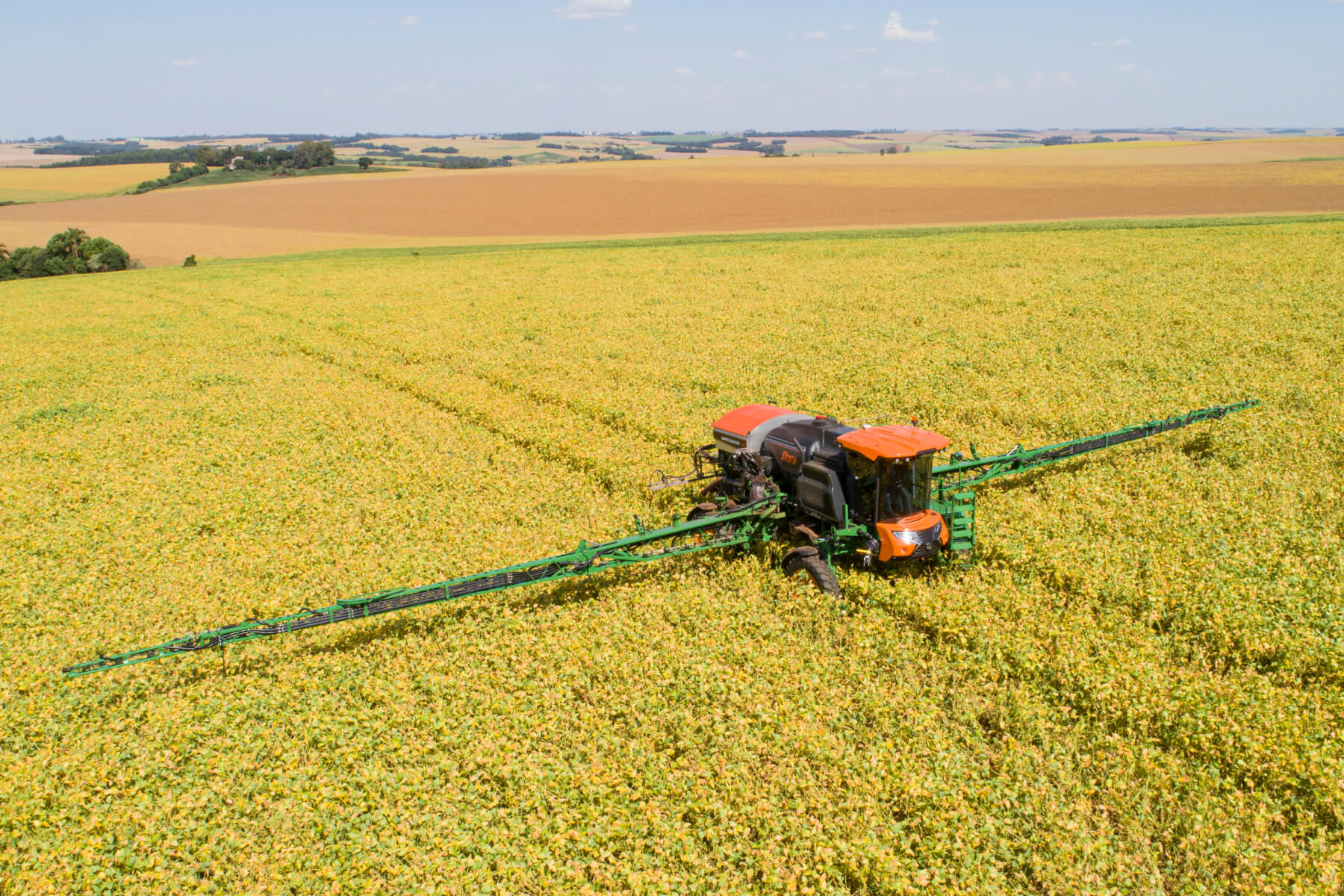
How to Choose the Right Stara Spray Nozzles for Each Requirement
The choice of spray nozzle should take into account the product being applied, target characteristics and the planned application rate. Based on this information, it is possible to determine the required flow rate, spray pattern and droplet classification, while also considering coverage requirements and the need to reduce drift risk.
To meet a wide range of application requirements, Stara offers 15 spray nozzle families, each with specific operating and spray distribution characteristics.
|
Stara Family |
Nozzle Characteristics and Applications |
|
Stara TP-STP |
Uniform flat-fan spray pattern, designed for site-specific applications such as those performed by the Imperador Eco Spray. Its distribution pattern allows operation without the conventional overlap between adjacent spray patterns, depending on the system configuration. |
|
Stara 3D-S3D |
37.5° angled flat-fan spray pattern for broadcast applications. Enhances spray deposition on different parts of the plant, particularly in crops with dense foliage. |
|
Stara Guardian-SG |
120° fan spray pattern with a pre-orifice for drift reduction. Suitable for broadcast spraying, with a 20° angle to improve deposition on different parts of the plant. |
|
Stara Low Drift Air-SBA |
Air-induction nozzle with a 110° fan angle. Produces larger droplets to reduce drift susceptibility and is particularly suitable for herbicide applications. |
|
Stara Twin Fan-SDL |
Dual fan spray pattern with air induction, designed to improve coverage from different angles. Suitable for applications requiring good deposition within the crop canopy while reducing drift. |
|
Stara Ultra Low Drift-SUB |
Double air-induction technology with a 120° fan angle. Produces larger droplets and is particularly suitable for pre- and post-emergence herbicide applications prioritising drift reduction. |
|
Stara Maximum Low Drift-SBDM |
Air-induction nozzle with a pre-orifice, developed to produce extremely coarse droplets and reduce drift. Particularly suitable for pre-emergence and hormonal herbicides. Dicamba, for example, is a hormonal herbicide with a high drift potential that requires the exclusive use of approved spray nozzles for greater safety and reduced drift risk. |
|
Stara Wide Fan-SLA |
110° fan spray pattern producing medium to fine droplets, promoting coverage for insecticide and fungicide applications under suitable weather conditions. |
|
Stara Hollow Cone-SCV |
80° hollow-cone spray pattern producing fine to very fine droplets. Suitable for applications requiring high coverage, particularly insecticides and fungicides, under favourable weather conditions. |
|
Stara TT-STT |
Wide-angle flat-fan nozzle with a 110° spray angle and medium to fine droplets. Features a large rounded internal passage to reduce the risk of blockage and is suitable for various broadcast applications. |
|
Stara AIXR-SAIXR |
110° flat-fan spray pattern with air induction and a removable pre-orifice. Produces larger droplets to reduce drift risk and is particularly suited to herbicide applications. |
|
Stara TTJ-STTJ |
Twin-fan nozzle with forward- and rear-facing spray jets at a 60° angle. Enhances coverage on different parts of the plant, particularly in crops with dense foliage. |
|
Stara TXA-STXA |
80° hollow-cone nozzle with a ceramic tip. Produces very fine droplets for applications requiring high coverage, especially insecticides and fungicides, under favourable weather conditions. |
|
Stara XR-SXR |
110° flat-fan spray pattern with medium to fine droplets and uniform distribution. Suitable for insecticide and fungicide applications requiring good coverage while respecting weather and operational conditions. |
|
Stara Solid Stream-SJS |
Solid-stream nozzle with a ceramic core, developed for in-furrow application during planting. Suitable for inoculants, nematicides, fungicides, insecticides, fertilisers and biological products, according to usage recommendations. |
How Does the Stara Spraying App Help with Nozzle Selection?
The Stara Spraying App, available for Android and iOS, is a support tool for spray planning. To use it, the operator selects the Stara sprayer model and accesses the"Nozzle Selection" feature, which takes various operational parameters into account.
Ramon Cancian, Agronomist and Product Marketing Analyst at Stara, explains how the tool works:
“In the Stara Spraying App, you enter the type of application, the application rate and other working conditions. Based on this information, the app recommends the most suitable nozzle, helping growers make their decision.”
Before starting the operation, growers should also check the crop protection product label recommendations and assess weather conditions, considering both coverage requirements and drift risk.
How Do Stara Sprayer Technologies Contribute to Application Quality?
Selecting the appropriate spray nozzles and defining the desired droplet spectrum are important steps in achieving high-quality spraying. However, other factors, such as operating pressure control and spray mixture homogeneity, also influence application results. On sprayers in the Imperador range, technologies such as the Dual Line System and the Continuous Recirculating System contribute to these aspects.
- Dual Line System: The Dual Line System allows two spray nozzle lines with different characteristics to be used either alternately or simultaneously. This configuration enables spraying across a wider operating speed range while maintaining appropriate pressure levels and the desired droplet size, without compromising operational performance.
- Continuous Recirculating System: The Continuous Recirculating System keeps the spray mixture in constant circulation throughout the spraying system, helping maintain mixture homogeneity and reducing particle sedimentation inside the tank and pipelines. As a result, it contributes to a cleaner system, preventing nozzle blockages and maintaining application consistency.
- Self-Cleaning System: The Self-Cleaning System automatically cleans both the spraying circuit and the nozzles, providing greater convenience and efficiency during maintenance operations. This feature helps reduce residue build-up and the risk of blockages, supporting proper nozzle performance and application quality.
The availability of these technologies varies according to the sprayer model and configuration. Their benefits also depend on correct machine set-up and continuous monitoring of operating conditions.
What Should Be Checked Before and During Spraying?
Before starting a spraying operation, it is important to verify that the machine is correctly adjusted for the planned application. This inspection involves several factors that influence droplet formation and overall application quality, including:
- Product and Target: Check the product label recommendations and the coverage requirements of the target.
- Nozzles: Verify the nozzle model, spray pattern and droplet classification recommended for the application.
- Pressure and Flow Rate: Ensure that operating parameters are within the recommended ranges and correspond to the planned application rate.
- Weather Conditions: Monitor temperature, relative humidity and wind speed.
- Spray Boom: Check boom height relative to the target, overall stability and nozzle spacing.
- Component Condition: Inspect for wear, blockages and general cleanliness of all components.
During spraying operations, these factors should continue to be monitored. Changes in weather conditions or machine operating parameters may require adjustments or even the temporary interruption of the operation in order to preserve application quality and safety.
Stara Spray Nozzles: The Right Technology for Different Applications
Every agricultural operation presents unique requirements that demand careful consideration when selecting spraying components. To meet these needs, Stara offers spray nozzles with different spray patterns, droplet classifications and operating characteristics, covering broadcast applications, spot spraying and in-furrow application during planting.
Visit your local Stara dealership and speak with our specialists to find the options best suited to your farming operation.
Discover Stara Spray Nozzles
Frequently Asked Questions About Spray Nozzles
What Is the Difference Between a Flat-Fan Nozzle and a Hollow-Cone Nozzle?
A flat-fan nozzle distributes the spray mixture in a band-shaped pattern, whereas a hollow-cone nozzle produces a ring-shaped spray pattern. The choice depends on target characteristics, coverage requirements and the recommendations for the product being applied.
What Do the Colours of Spray Nozzles Mean?
For nozzles manufactured according to the ISO standard, the colours indicate different nominal flow-rate classes. However, droplet size also depends on the nozzle model, the technology used and the operating pressure. Therefore, nozzles with the same colour do not necessarily produce the same droplet classification.
Can the Same Nozzle Be Used for Fungicides, Herbicides and Insecticides?
Yes, provided that its characteristics are compatible with the requirements of each application, including spray pattern, droplet classification and the required flow rate. Product label recommendations and manufacturer specifications must also be followed.
How Do I Know When Spray Nozzles Need Replacing?
Replacement of spray tips is recommended when they show a flow-rate variation greater than 10% compared with the original flow rate of new nozzles of the same model and specification.
Where Can I Find Information About Stara Spray Nozzle Models?
Nozzle models and their specifications are available on the Stara website and in the Stara Spraying App. Stara dealerships can also provide guidance on the characteristics and applications of each model.