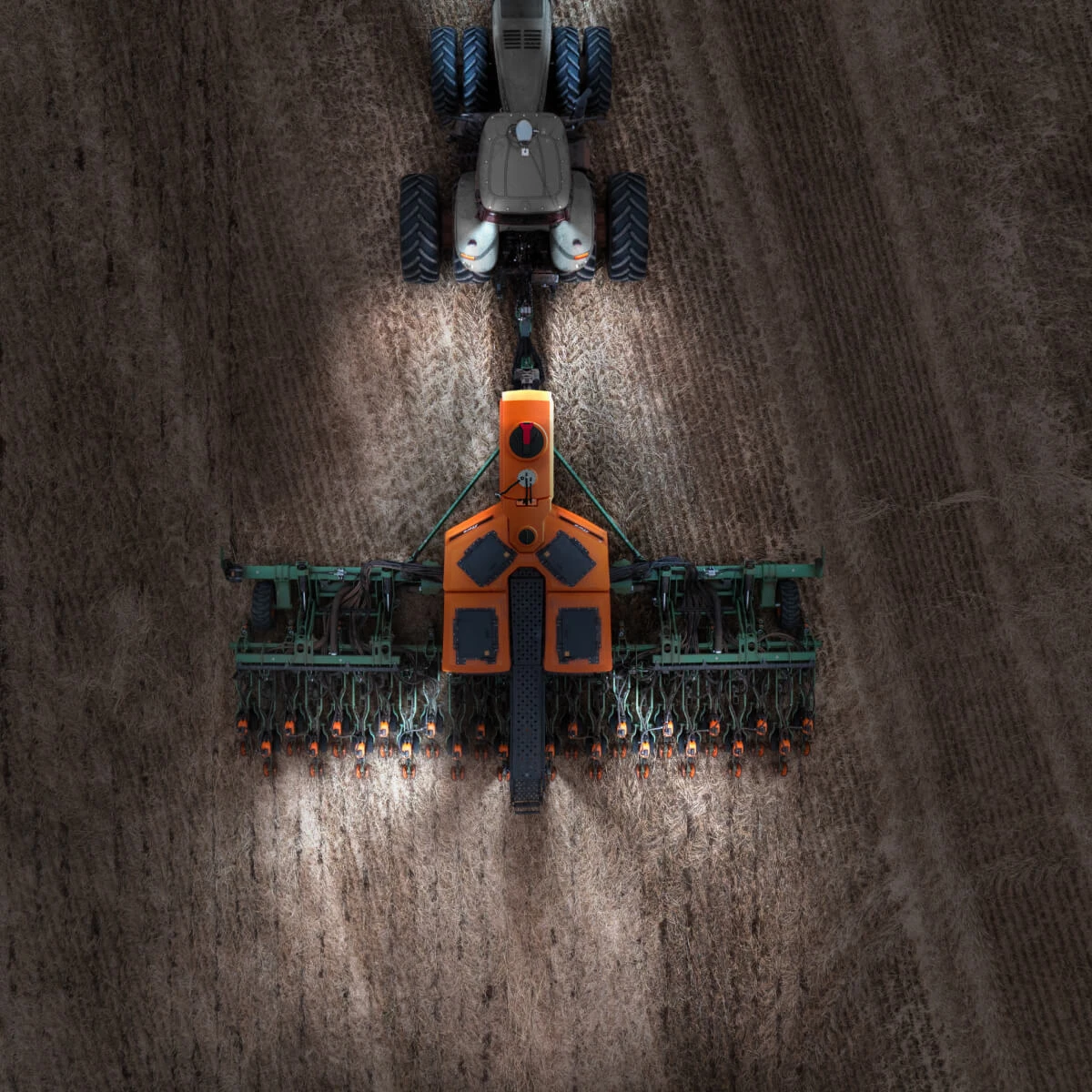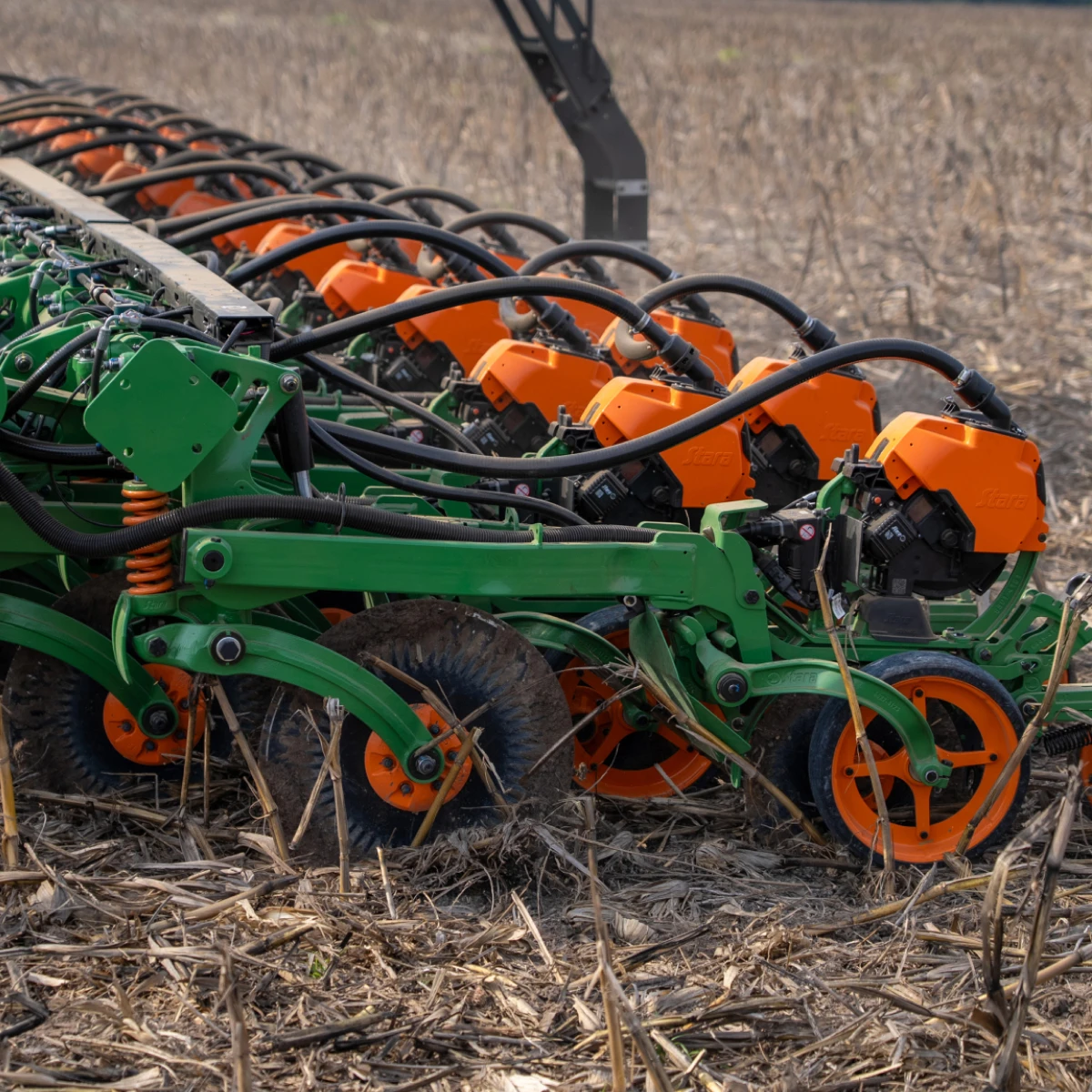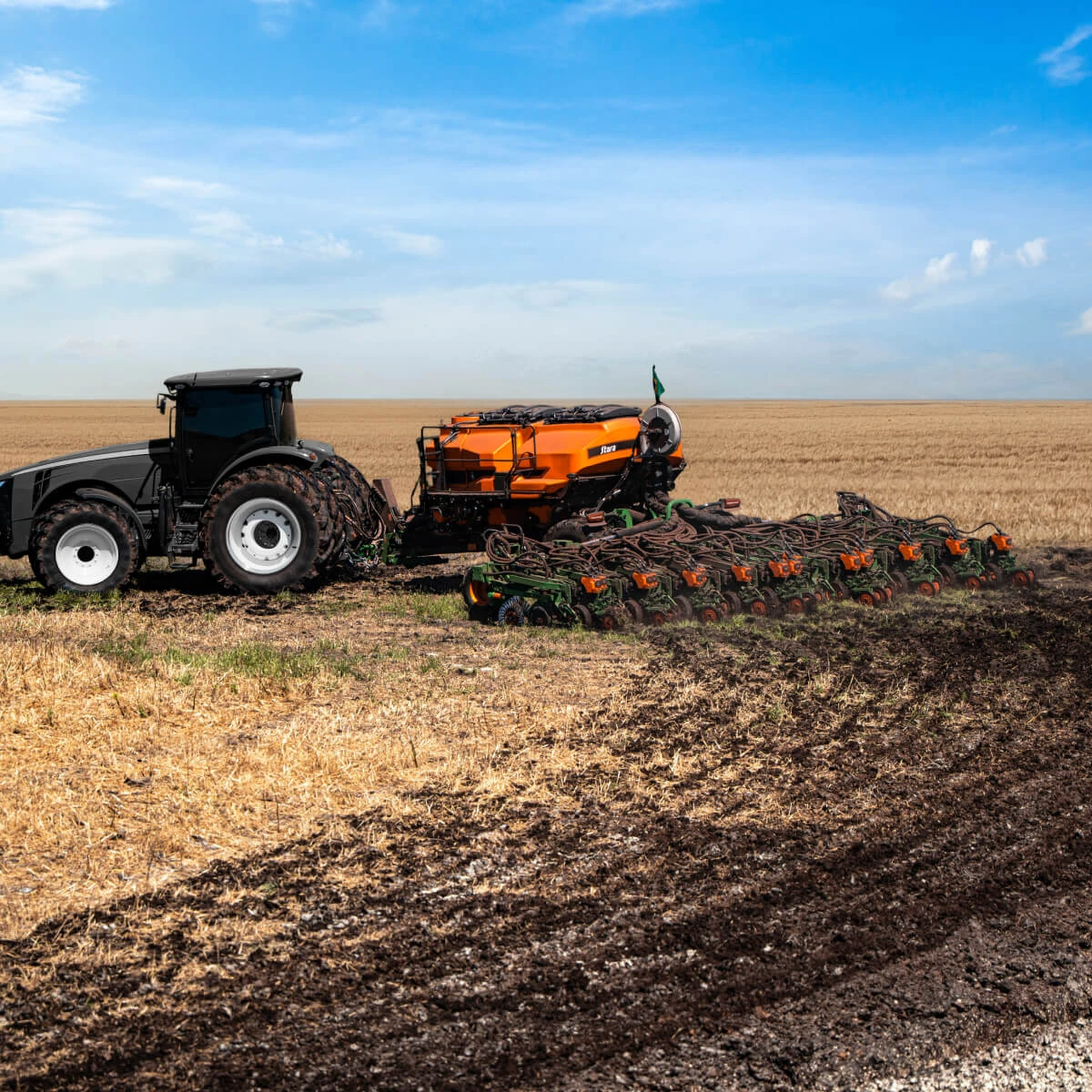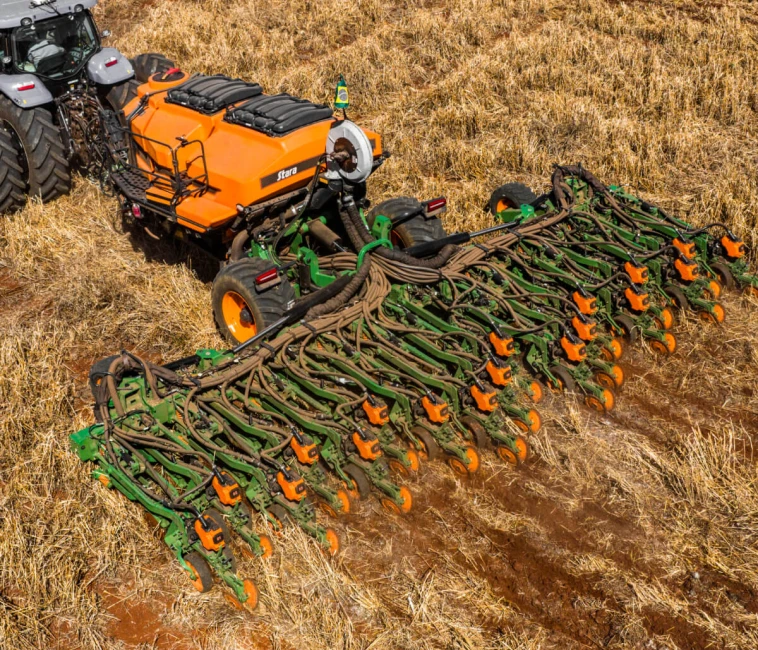
The practices adopted at planting influence early crop establishment. One option is in-furrow inoculant application, which delivers beneficial microorganisms to the seed zone during planting.
On Stara planters with a factory-fitted in-furrow spraying system, the operator can plant and apply inoculant simultaneously, monitoring both activities on a single display. This allows inoculation to be incorporated into the planting operation in line with the recommendations for the crop and product used.
Read on to learn how in-furrow spraying works, how inoculation can benefit crops and how Stara solutions support this operation.
What is in-furrow spraying and how does it work?
In-furrow spraying involves applying liquid products directly into the planting furrow. When inoculants recommended for this application method are used, it delivers microorganisms to the seed zone at planting.
Before application, the spray mixture must be prepared according to the product manufacturer's recommendations, taking into account dose, application volume, water quality and compatibility of the components used.
During planting, the system delivers the spray mixture to the nozzles, which direct it into the furrow, close to the seed.
When the product applied is an inoculant, this process is known as in-furrow inoculation. Its purpose is to encourage interaction between microorganisms and plants from the earliest stages of development.
What are the benefits of in-furrow inoculation?
In-furrow inoculation offers important benefits for crop establishment by delivering beneficial microorganisms directly to the seed zone, encouraging their interaction with plants from the start of the growing cycle.
Results vary depending on the crop, inoculant and application conditions. The main benefits include:
- Supporting biological nitrogen fixation (BNF): in soybeans, inoculation with Bradyrhizobium bacteria encourages the formation of root nodules, where biological nitrogen fixation takes place. This process helps supply the crop with nitrogen and plays a fundamental role in soybean production in Brazil.
- Maintaining inoculant viability: when inoculant is applied directly to the seed, certain seed treatment products can affect bacterial survival. In-furrow application allows the inoculant to be applied separately from the seed treatment, reducing its direct exposure to these products. Compatibility between the products remains an important consideration.
- Distributing microorganisms in the furrow: application delivers the inoculant to the seed zone, promoting contact between the microorganisms and the seed.
- Root development: effects vary according to the microorganisms in the inoculant. In soybean co-inoculation, for example, the use of Azospirillum brasilense is associated with root system development, helping plants explore the soil and take up water and nutrients.
- Yield potential: by supporting plant nutrition and development, inoculation can help improve yield. The response depends on the microorganisms used, the crop, management practices and field conditions.
To apply the spray mixture during planting, the machine must be equipped to store and distribute it properly. Tank capacity, rate control and features that help preserve the properties of the products used are important factors. Stara planters with factory-fitted in-furrow spraying systems offer a range of features to support this application. 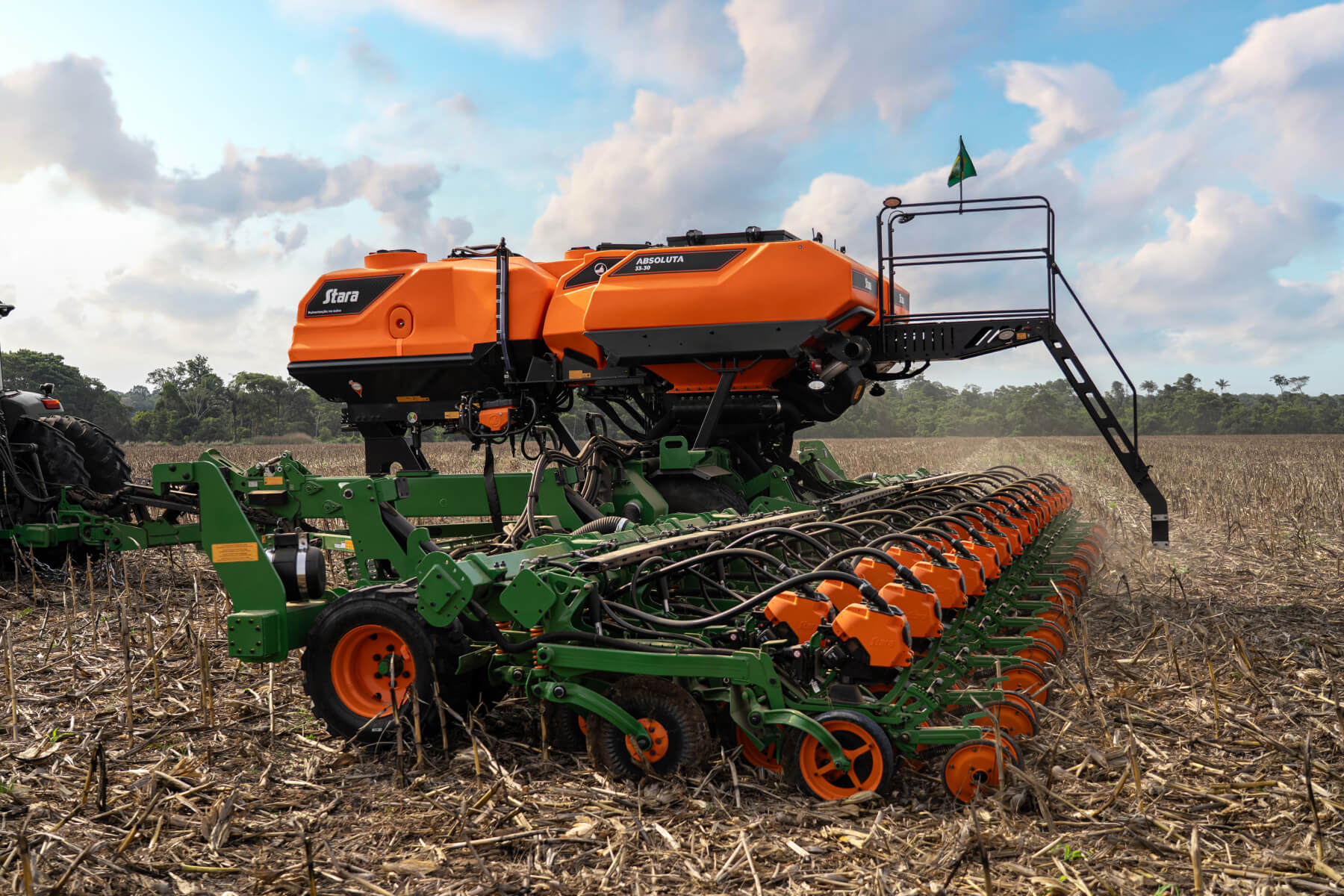
Which Stara planters offer in-furrow spraying?
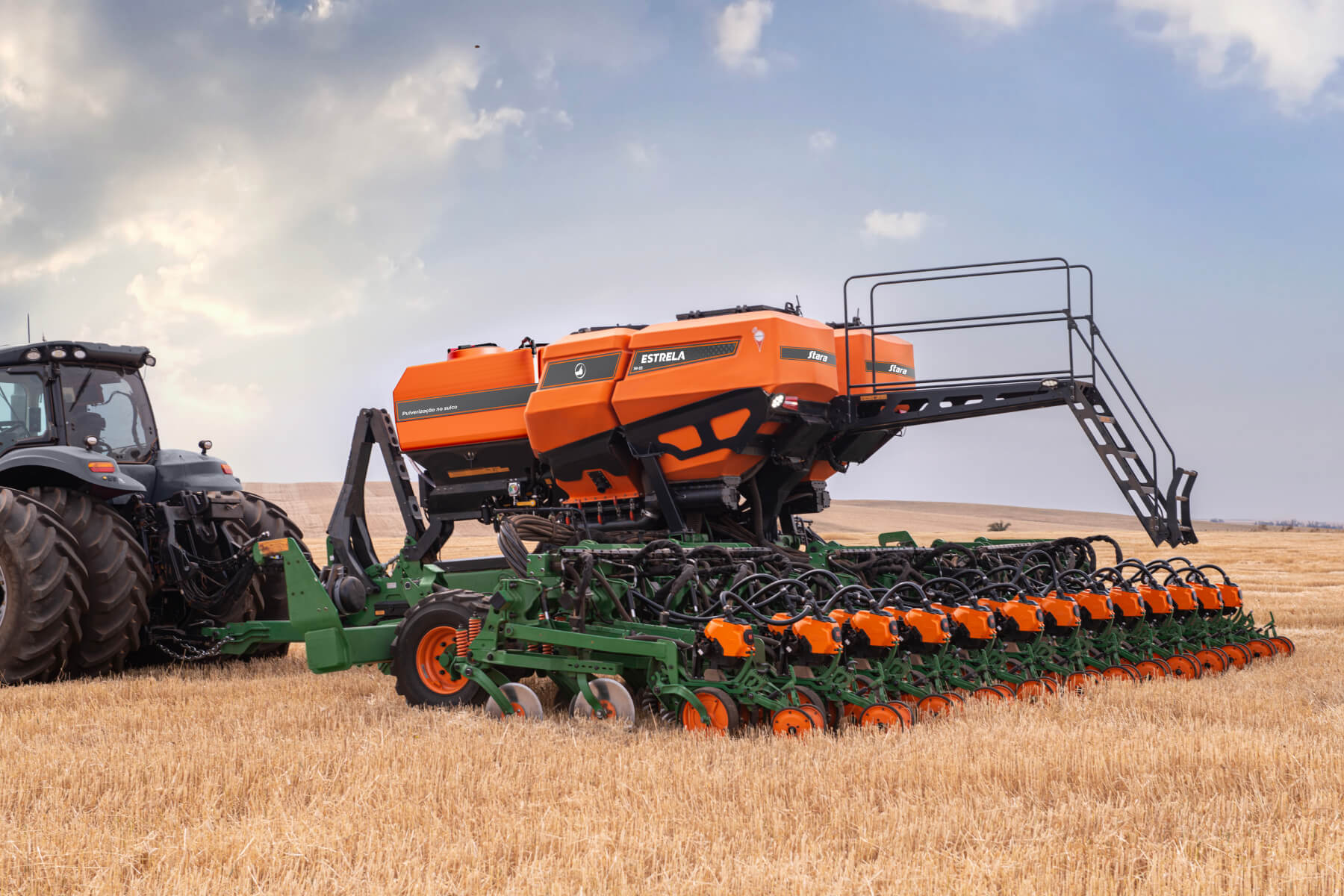
Stara's Absoluta, Estrela and Princesa planters feature a factory-fitted in-furrow spraying system, with no modifications required.
Matheus Henrique Baumgratz, an agronomist and Product Marketing Analyst at Stara, explains how the company's system works:
The tank has three layers, with a central thermal insulation layer between two layers of polyethylene. This construction helps protect the spray mixture from high temperatures and solar radiation. A sensor allows the operator to monitor the temperature during operation, while a pump delivers the mixture to the nozzles for in-furrow application.
The system fitted to all three planters includes features that help with spray mixture preparation, application control and operational planning. Key features include:
- Agitation system: keeps the spray mixture circulating continuously in the tank, helping maintain a uniform composition throughout application.
- Automatic section shut-off: stops spraying in the relevant sections to help control application during operation.
- Automatic rate adjustment: adjusts the application rate to match the planter's forward speed.
- Three-layer tank: features a central thermal insulation layer between two layers of polyethylene, helping protect the spray mixture from heat and light.
- Clean water tank: provides water for operating procedures and system cleaning.
- Induction hopper: helps incorporate products into the spray mixture during preparation.
These features are available on the Absoluta, Estrela and Princesa planters, while tank capacity varies according to the machine model and configuration.
The different tank capacities allow refilling schedules to be tailored to each planter and the farm's working routine.
What difference does a factory-fitted system make?
When the in-furrow spraying system is factory-fitted, the tank, circuit, nozzles and controls are built into the planter from the outset. Application is therefore integrated into the planting operation, with no need to install an additional system.
Matheus Henrique Baumgratz, an agronomist and Product Marketing Analyst at Stara, explains how this integration makes fieldwork easier:
The system was developed specifically for this application. The operator controls both planting and in-furrow spraying settings from a single display. At the end of the day, a function for cleaning the entire system also makes routine work easier.
To use these features, the system must be set up according to agronomic recommendations and the instructions for the product being applied. The settings must account for the spray volume, dose and other parameters required for the planned crop management programme.
What should be considered for effective in-furrow spraying?
Effective in-furrow spraying requires care throughout the operation. Before planting, this involves preparing the spray mixture and setting up the system. In the field, it means monitoring application. Once work is complete, the system must be cleaned and its components inspected.
Before planting
First, check that the inoculant or other liquid product is recommended for the crop and for in-furrow application. Follow the manufacturer's instructions and agronomic recommendations on dose, concentration, compatibility and conditions of use.
The spray mixture must also be prepared according to the product's specific instructions. At this stage, it is important to consider water quality, compatibility between the components used and the conditions needed to preserve their properties until application.
Before work begins, select the nozzles according to the application rate and working speed, and calibrate the system using the product to be applied. Planning should also take into account the area to be planted, tank capacity and refilling arrangements to keep the operation running.
During operation
As the planter moves through the field, the operator should monitor the application rate and check that the system is working properly and distributing the spray mixture correctly to the active rows.
Automatic rate adjustment responds to changes in speed, while automatic section shut-off stops application in previously treated areas to prevent overlaps.
Topper controller allows the operator to monitor the operation and identify any need for intervention or adjustment.
After operation
At the end of work or when changing products, clean the circuit according to the planter manual and the instructions on the inoculant label. Cleaning helps remove residues from the tank, pipework and spray nozzles, and prepares the system for its next use.
After cleaning, inspect the tank, hoses, connections, filters and nozzles to check their condition and help keep the system in good working order.
In-furrow spraying: an approach that can help improve crop yield
In-furrow spraying allows inoculation to take place during planting by delivering the spray mixture into the planting furrow. When carried out according to the recommendations for the crop and product used, this practice can support the activity of microorganisms that benefit plant development.
On Stara planters, the integrated system allows operators to apply the product while planting and monitor operating parameters from the cab. Spraying and planting therefore form part of the same field operation.
To make the most of these features, inoculation should be considered when planning planting operations. Product selection, dose, spray volume, and machine settings should follow agronomic recommendations and account for the conditions in each field.
Frequently asked questions about in-furrow spraying
Does in-furrow spraying replace other applications?
Not necessarily. In-furrow application can complement seed treatment and other crop management practices. Its purpose depends on the product used, its recommended use and the agronomic recommendations for the crop.
Does the inoculant dose change when it is applied in the furrow rather than directly to the seed?
The dose, concentration and application volume must follow the inoculant's specific recommendations for in-furrow use. The dose recommended for direct seed application should not be automatically converted to an in-furrow dose, as each application method has its own recommendations.
What is co-inoculation and how does it relate to in-furrow inoculation?
Co-inoculation is the combined use of two or more beneficial microorganisms. In-furrow application is one way to carry out this practice, provided the products used are recommended for this application method and are compatible with one another.
Enjoyed this article and want Stara solutions to support your farming operation?
Stara planters offer a range of configurations and technologies that integrate in-furrow spraying with planting. Check the model specifications and visit a Stara dealer to find the right option for your business.