


A preventive maintenance plan is a structured programme of inspections, adjustments and component replacements designed to keep agricultural machinery reliable, productive and ready for work.
According to Embrapa, planned maintenance can also extend the service life of components and systems, helping farmers make better use of the resources invested in their operations. It improves machinery availability and reduces the risk of unexpected breakdowns during critical periods of the season.
This article explains what a preventive maintenance plan involves, why it matters for agricultural machines and implements, when inspections should be carried out and how Stara Scheduled Maintenance helps preserve equipment condition and performance.
What is a preventive maintenance plan?
A preventive maintenance plan sets out the inspections, cleaning, adjustments and component replacements required before wear begins to affect machinery performance.
On a farm, the plan should take account of operating hours, equipment type, working conditions, maintenance history, manufacturer recommendations and the farming calendar.
On self-propelled spreaders such as Hércules 6.0, for example, routine checks may cover the spreading system, spinner discs and vanes, metering mechanisms, sensors and electronic weighing system. On self-propelled sprayers, servicing may include the spray nozzles, filters, booms, hoses, hydraulic system, sensors, pump, transmission and other components that affect application quality.
Maintenance requirements vary between models. The work must therefore be carried out by trained technicians who understand the equipment, follow the relevant technical documentation and consider how the machine is actually used on the farm.
Why do agricultural machines need a preventive maintenance plan?
Planned maintenance helps ensure that agricultural machinery is ready to operate accurately and reliably during the most important periods of the season.
Productivity does not depend on power and work rate alone. It also depends on machinery availability, correct adjustment, application quality, cost control and the ability to plan ahead.
A well-structured preventive maintenance programme can provide the following benefits:
- Extends machinery service life by identifying wear and replacing components at the appropriate time;
- Reduces unplanned downtime and helps keep farm operations on schedule;
- Maintains consistent operating quality, particularly on machines equipped with precision farming systems, variable-rate application and electronic controls;
- Helps protect investments in agricultural technology through regular inspections of mechanical, hydraulic and electronic components;
- Improves cost control by allowing servicing, parts and labour to be planned in advance;
- Improves operator safety through regular checks of safety-critical systems;
- Ensures that maintenance follows the manufacturer’s recommendations and the specific requirements of each model.
When should preventive maintenance be carried out?
The appropriate maintenance intervals depend on the machine type and model, its working conditions and the manufacturer’s recommendations. Regular servicing is essential for assessing component wear and preparing the equipment for its next period of work.
Planning maintenance in advance gives farmers greater certainty and helps ensure that field operations can be completed at the right time.
Stara Scheduled Maintenance is available for self-propelled sprayers and spreaders. The work is carried out at the intervals and in accordance with the technical recommendations specified for each model.
How to create an effective preventive maintenance plan
A successful preventive maintenance plan must be technically sound, well organised and practical enough to follow as part of the farm’s normal routine. The following steps provide a useful starting point.
- Step 1: list the machinery in use. Record the model, year, operating hours, maintenance history, components replaced and the main operations carried out by each machine.
- Step 2: consult the manufacturer’s maintenance instructions. The machine manual specifies the intervals for inspections, lubrication, adjustments and component replacement. These recommendations should form the basis of the maintenance plan.
- Step 3: set the maintenance intervals. Intervals should reflect the operating hours recommended by the manufacturer, the farming calendar and the periods when the machine will be needed most.
- Step 4: define the inspection points for each machine type. Planters, sprayers, spreaders and grain trailers have different systems and components and therefore require different checks.
- Step 5: keep records of all work carried out. A detailed maintenance history makes it easier to track operating hours, parts fitted, component replacement intervals, labour requirements and recurring issues throughout the life of the machine.
- Step 6: use specialist technical support. Modern agricultural machinery incorporates advanced mechanical, hydraulic and electronic systems. Support from the manufacturer and its authorised dealer network helps ensure that the equipment is serviced correctly.
What should be checked during preventive maintenance?
The scope of the work varies between models, but several systems require regular inspection.
Mechanical checks may cover bearings, chains, gears, discs, shafts, bushings, fasteners and lubrication points. Hydraulic checks include hoses, connections, cylinders, pumps, leaks, pressure levels and actuators.
Electrical and electronic inspections may cover wiring harnesses, sensors, monitors, modules, connectors, on-board controllers and communication between components. On application and spreading systems, the items inspected depend on the type of equipment. These may include spray nozzles, filters, booms, pumps, metering devices, spinner vanes and the mechanisms used to distribute seed, fertiliser or crop protection products.
On connected machines, inspections may also cover connectivity, telemetry, data communication, monitoring systems and operating performance.
Stara Scheduled Maintenance covers self-propelled sprayers and spreaders, with the work tailored to the configuration and requirements of each machine.
How does Stara Scheduled Maintenance work?
Stara Scheduled Maintenance is a preventive maintenance programme developed by Stara to help preserve equipment performance and reliability. The programme follows a predefined schedule, uses genuine parts, filters and lubricants and is carried out by trained technicians.
Its purpose is to help farmers keep their machinery in optimum working condition through technical support and procedures based on Stara recommendations.
Following a structured maintenance schedule reduces the need for reactive repairs, improves safety and makes farm operations easier to plan.
The main benefits of Stara Scheduled Maintenance include:
- Maintenance planned around the periods when the machine is used;
- Work carried out by trained technicians from the Stara Dealer Network;
- Procedures based on the manufacturer’s recommendations;
- Inspection of mechanical, hydraulic, electrical and electronic systems;
- Support in maintaining equipment performance, accuracy and service life;
- Greater predictability when planning day-to-day farm operations.
Scheduled maintenance for precision farming systems
Preventive maintenance is particularly important on machines equipped with precision farming technology.
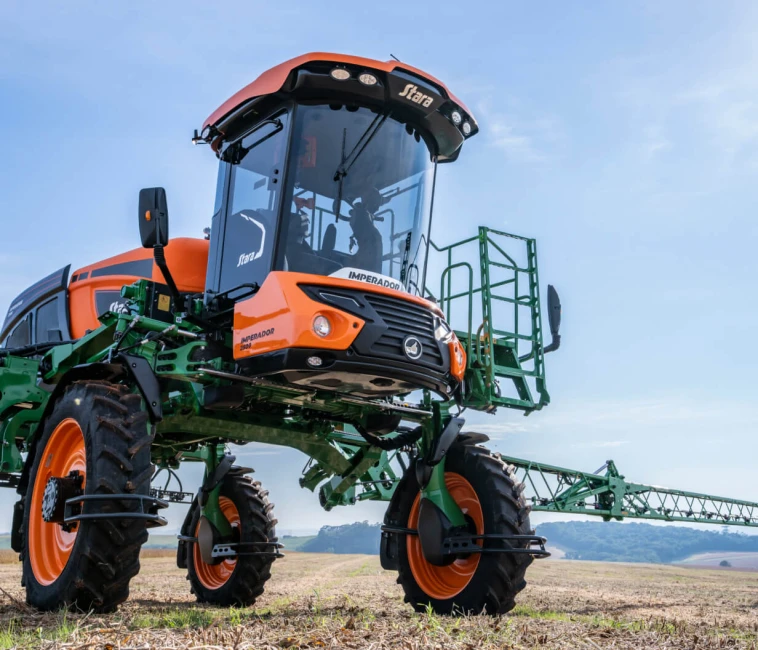
On a self-propelled sprayer from the Imperador range, for example, the on-board controller and spray-system components contribute directly to application quality. These systems must be correctly inspected, serviced and adjusted to continue performing as intended.
For farmers investing in innovation, efficiency, quality and accuracy, servicing machinery at the right time helps protect the performance of its integrated technology.
Preventive maintenance protects your investment
A preventive maintenance plan helps keep agricultural machinery ready for work, extend equipment service life and protect farm productivity by reducing unnecessary downtime during the season.
It should be treated as an ongoing part of the farm’s operational and strategic planning.
In Brazilian agriculture, where planting and application windows demand speed, accuracy and close cost control, timely maintenance gives farmers greater reliability and confidence when planning their operations.
Stara Scheduled Maintenance supports this approach through a structured programme defined by the manufacturer and carried out by trained technicians using genuine parts and recommended products.
Learn more about Stara Scheduled Maintenance and speak to a Stara dealer about planning the preventive maintenance of your agricultural machinery.
Frequently asked questions about preventive maintenance plans
What is a preventive maintenance plan?
A preventive maintenance plan is a scheduled programme of inspections, cleaning, adjustments and component replacements intended to maintain machinery performance. It takes account of operating hours, the farming calendar, equipment type and the manufacturer’s recommendations.
Why is preventive maintenance important for agricultural machinery?
It can extend equipment service life, reduce unplanned downtime, maintain operating accuracy and make expenditure on parts, labour and servicing easier to predict.
How does planned maintenance improve farm management?
Planned maintenance allows farmers to anticipate requirements and manage seasonal costs more effectively. Without a plan, servicing often takes place only after a fault occurs or the machine has to be taken out of operation. Planning ahead allows farmers to schedule technical support, obtain parts in advance and reduce pressure during critical periods of the season.
Does preventive maintenance support precision farming?
Yes. Preventive maintenance helps keep sensors, on-board controllers, hydraulic systems, metering devices and electronic components in good working order. This is particularly important for operations using technologies such as variable-rate application, section control and telemetry.
How should I choose a preventive maintenance provider?
Preventive maintenance should be carried out by trained professionals with detailed knowledge of the relevant machinery model. The Stara Dealer Network has technicians trained by the manufacturer, access to up-to-date technical information and genuine parts for each machine.
What is the difference between preventive maintenance and Stara Scheduled Maintenance?
Preventive maintenance is the general practice of inspecting and servicing machinery according to a planned schedule. Stara Scheduled Maintenance is a structured service for self-propelled sprayers and spreaders. It includes predefined maintenance intervals, standardised procedures and work carried out by trained technicians in accordance with the manufacturer’s recommendations.
Is Stara Scheduled Maintenance available for all models?
Stara Scheduled Maintenance is available only for self-propelled machines in the spraying and spreading ranges.
Found these tips helpful? Book your Stara Scheduled Maintenance service today.
Contact a Stara dealer to request a quote tailored to your machinery’s maintenance needs.