



Rural connectivity is no longer just a matter of getting internet access on the farm. Today it underpins the exchange of data between machinery, sensors, controllers, digital platforms and management systems, creating the basis for more precise, more integrated operations.
In precision agriculture, this framework helps turn what is happening in the field into management decisions. With connected data, the farmer can track machines at work, run prescription maps, reduce overlaps, monitor applications and adjust operations more quickly.
Despite advances in mobile internet infrastructure, satellite communication and private networks, rural connectivity still faces challenges around coverage, signal stability, setup cost and training. Understanding how these technologies work is therefore essential to judging where they add value on the farm.
This article explains what rural connectivity is, which challenges still hold back its expansion in Brazil, which technologies make it possible and how it benefits precision agriculture. Find out more below!
What is rural connectivity?
Rural connectivity is the ability to provide communication infrastructure and internet access in rural areas. The concept covers both connecting people, farms, schools and communities, and running the technologies used in farm operations.
It can run over mobile internet, satellite internet and private rural networks, supporting technologies such as telemetry, sensors and agricultural IoT, as well as apps and digital platforms.
Within the farm operation, rural connectivity lets different technologies work together:
- machinery collects operating data;
- sensors monitor crop variables;
- controllers carry out commands automatically;
- digital platforms organise the information to support management.
This integration is one of the pillars of precision agriculture, making operations more efficient, more connected and more accurate.
Challenges of rural connectivity in Brazil
Rural connectivity has been advancing in Brazil, but it still faces challenges with telecommunications infrastructure, particularly in more remote regions.
The country's sheer size, together with setup costs and the need for technical support, means that the digitalisation of farm operations is happening gradually.
Although internet access in rural areas has grown, coverage does not always reach the whole productive area of a farm. In many cases the connection is limited or unstable in the more outlying parts of the farm, which can affect data transmission, communication between teams and continuous use of digital tools.
Beyond infrastructure, adopting connected technologies calls for investment in integration, information security and staff training. Making proper use of digital resources, protecting the farm's strategic data and preparing operators to use the available tools are all important if connectivity is to deliver consistent results for the business.
5 benefits of rural connectivity for precision agriculture
Rural connectivity strengthens farm management by turning data into information that supports better decisions. With access to real-time information, farmers and managers can monitor operations more precisely, spot opportunities to improve and act quickly as different situations arise in the field.
Here are the main benefits of rural connectivity for precision agriculture.
- Decisions based on farm data
With data well organised, it is easier to compare yields, understand variability across the crop, adjust rates, plan when machinery goes in and assess which areas need attention first.
Reading the field this way strengthens management because it cuts down on one-size-fits-all decisions. Analysing farm data helps the farmer see whether the agronomic recommendation was carried out as planned and whether the results in the field tally with the area's history.
- Remote monitoring of machinery
Viewing data remotely on movement, performance, stoppages and how operations are running helps correct routes more quickly. It also makes it easier to compare machines, fields and working periods.
- Farm automation with less overlap and greater control
Farm automation uses data, sensors and controllers to carry out operations with less manual input. The available features include:
- Auto steering;
- section control;
- variable-rate application;
- row-by-row shut-off;
- controlled traffic;
- machine-to-machine synchronisation.
Built into the machinery, these technologies help reduce overlaps, improve the alignment of passes and make both operations and prescription maps more precise. As a result, they support more efficient use of inputs, more consistent operations and better operational control.
- Better input management in the field
Agriculture 4.0 also affects the management of seed, fertiliser and crop protection products. By integrating prescription maps, the control terminal and telemetry, you can track where an input was applied, at what rate and under what operating conditions.
This matters because different management zones may need different rates. Without integrated data and digital monitoring of operations, application tends to rely on field-wide averages, which can lead to over-application in some spots and under-application in others.
On top of that, technology fitted to planters can shut rows off automatically in areas already sown, or along the tracks used by sprayers and spreaders. This reduces overlap and saves seed.
- Faster monitoring of production
Rural connectivity in the field speeds up the flow of information around the farm. Operating data, maps, alerts and reports are transmitted in real time, reducing the reliance on manual transfers and later syncing.
Now the production can be monitored more readily through the season, making it easier to fine-tune operations quickly and take more accurate decisions in the field.
Technologies and applications of connectivity in the field
Connectivity in the field involves a range of technologies, each with its own applications, limitations and best-fit situations. The choice should take account of the terrain, the distance from the farm base, signal availability, the type of crop, the machinery in use and the data-transmission requirement.
Satellite internet
Satellite internet is one of the main options for extending connectivity in the field, including in areas far from masts, fibre or mobile networks.
It supports telemetry, map transfer, communication with operators, technical support and machine monitoring. How well it works depends on service availability, the package taken out, the installation and the farm's data demand.
Mobile internet
4G and 5G mobile networks in rural areas also provide internet access and remote management of the crop, allowing telemetry data to be transmitted, machines to be managed and digital operating systems to be linked up.
Depending on the coverage available, they can support telemetry, automation, connected sensors and other digital solutions used in farm management.
Private networks and dedicated connectivity infrastructure
Some farms may adopt private networks or their own infrastructure to connect machines, sensors and systems. This kind of solution is usually considered where data demand is high, public coverage is poor or in-house control is needed.
In these cases, farms may need masts, repeaters, fibre, radio, long-range wi-fi and hybrid systems. The decision comes down to cost, scale, topography and purpose.
Agricultural IoT and sensors connected to production
The Internet of Things (IoT) brings together devices that can collect and transmit information about farm operations.
During planting, on-board sensors monitor how seed and fertiliser are placed, helping to identify skips and variation in the operation.
During spraying, connected systems track parameters such as flow rate, pressure and nozzle performance, helping to control the application more tightly.
And when spreading lime and fertiliser, sensors and controllers support variable-rate application and real-time monitoring of the operation, helping farmers take more precise decisions in the field.
Telemetry for real-time operations management
Telemetry links the machine to the management system and logs information on movement, usage, stoppages, application maps, alerts and performance.
This type of technology helps the farm keep track of its fleet, organise logistics, compare working days and speed up decision-making. It also strengthens technical support, since remote data can inform diagnostics and guidance for the operator.
How do Stara's technologies connect to precision agriculture?
Stara's technologies make precision agriculture workable, turning it into something more practical, efficient and connected in the farmer's daily work. More than just generating data, they turn information into smart decisions that raise productivity, cut waste and improve the performance of operations in the field.
A full range of machinery for different operations in the field
Stara's machines are designed to suit different types of farm, crop and planting conditions, combining technology, precision and operational efficiency. With solutions for a wide range of production systems, they deliver strong performance in the field, more uniform operations and technology geared to precision agriculture.
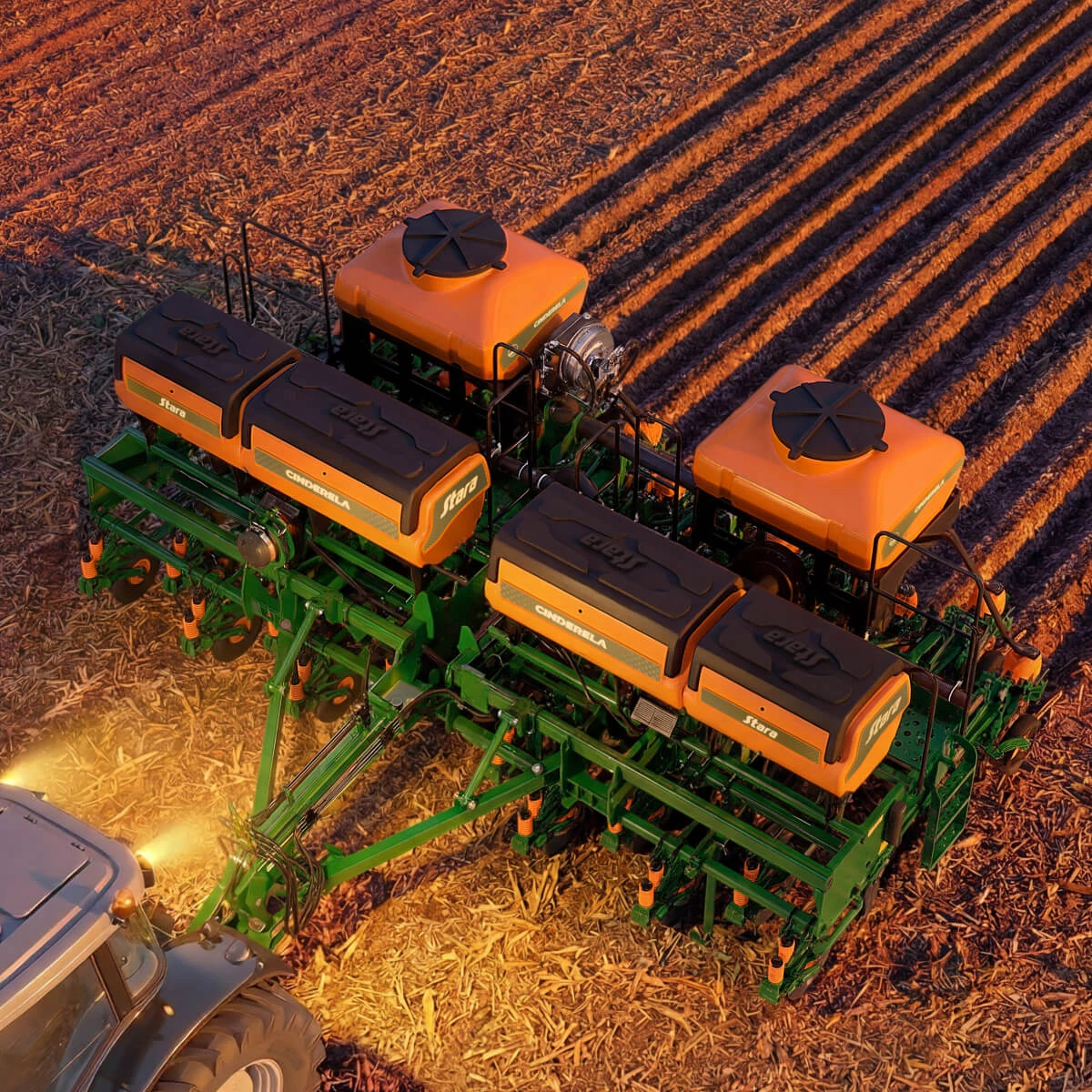
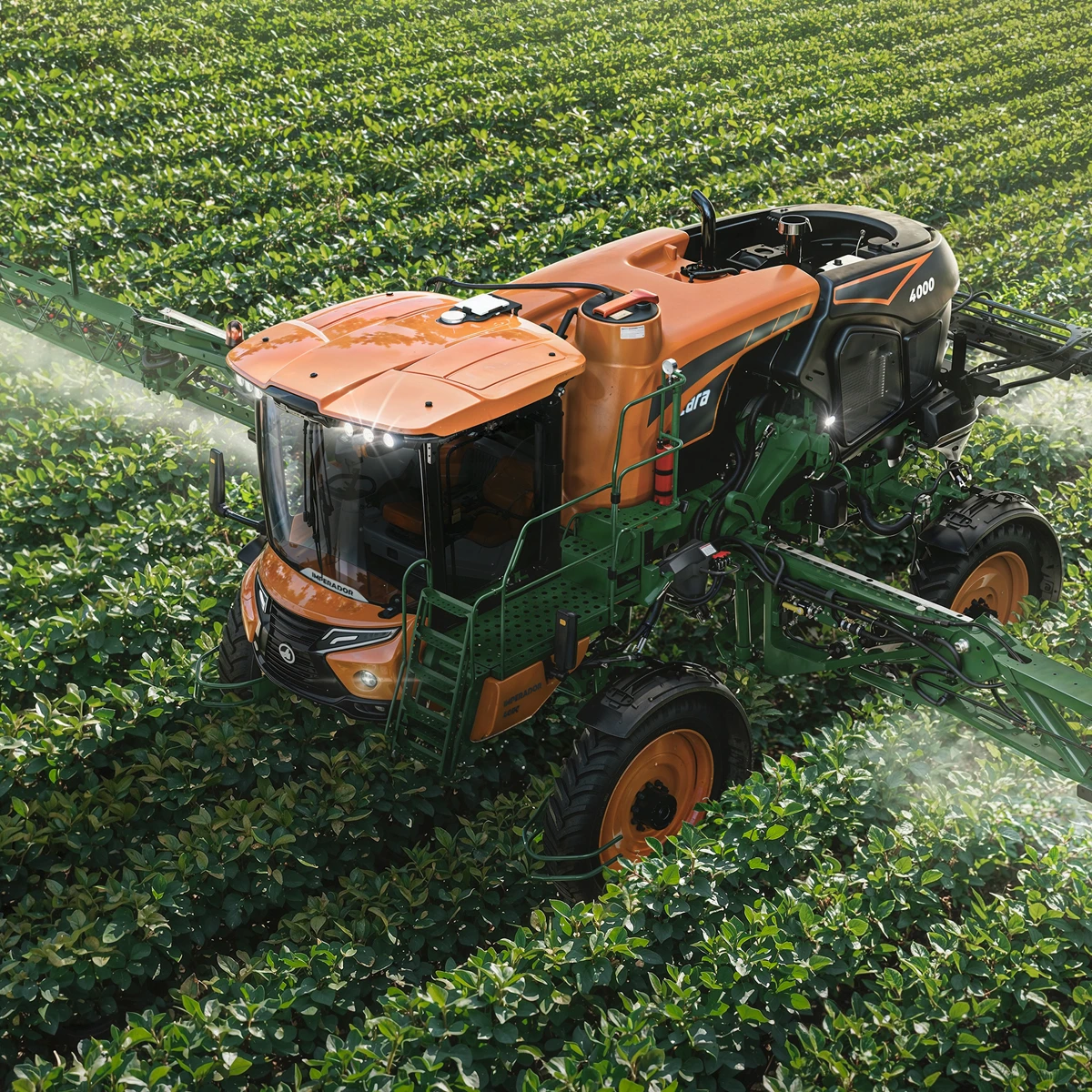
The range includes planters, sprayers, spreaders and other solutions designed to deliver productivity, input savings and greater control of operations, adapting to each farmer's needs.
Machines such as the Hércules range of spreaders use connectivity features to extend operational control, integrate information and apply products more precisely.
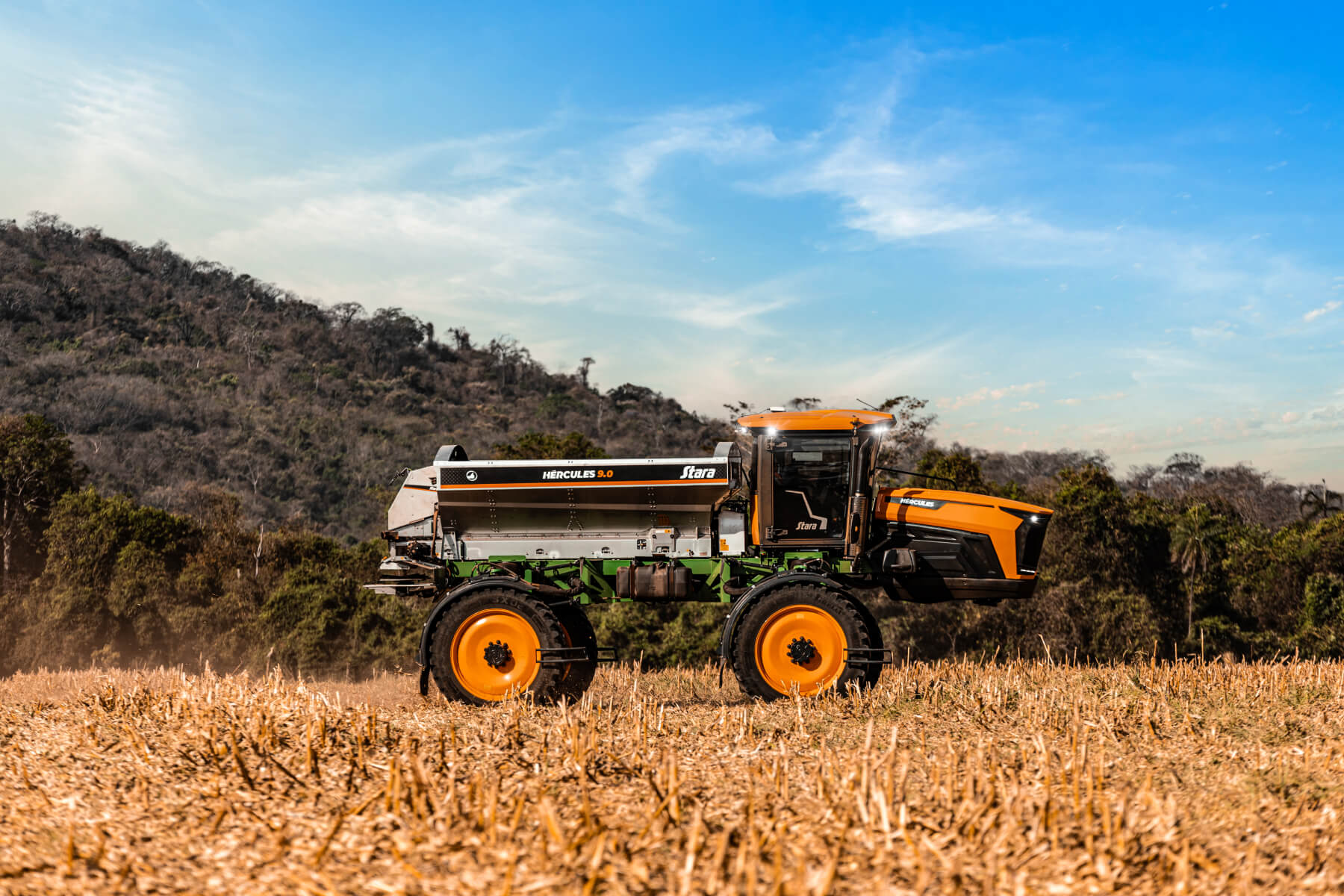
With integrated data, georeferenced maps and variable-rate features, these machines adjust fertiliser application to the needs of each part of the field, reducing overlap and making the best use of inputs.
The Land Space ecosystem
Stara's Land Space is the technology ecosystem that brings together machines, services and digital solutions, allowing information to be managed in real time with greater security, efficiency and speed. It is designed to make operations smarter and more accurate, getting the most out of Stara's technologies and ensuring high performance and precision even in remote areas. Its main features include:
- Stara Connectivity: Stara machines now come fitted with high-speed, low-latency satellite internet, allowing them to connect even in remote areas.
- Syncro: lets machines doing the same job work in sync in the same field, sharing data to reduce overlaps, operational errors and wasted inputs.
- Telemetria Stara: monitors the operation in real time, producing data, performance reports and application maps to support faster, more precise decisions.
- Paid Signal: Stara's signal correction systems secure machine positioning for maximum precision in field operations.
- Stara Machine Monitoring: tracks operating performance in real time, sending alerts when a parameter falls outside the configured range.
- Zero Crop Damage: a system on the planters that automatically shuts off the planting rows where sprayers and spreaders travel. This prevents plants from being flattened, saves seed and protects the area.
- Factory-calibrated planters: with Land Space, Stara planters leave the factory with Row-by-Row Shut-off and Zero Crop Damage already calibrated, for greater convenience and precision in the field.
Connectivity improves remote support
Connectivity also strengthens Stara's technical support. Part of Land Space, Conecta Stara is the aftersales service provided directly from the factory, giving a technician remote access to the Topper terminal in the cab. It can:
- run diagnostics remotely;
- guide calibrations;
- correct operational faults;
- adjust settings in real time;
- reduce the need for a technician to travel out to the farm.
In practice, this increases machine availability, cuts downtime and speeds up support in the field.
The future of digital farming
Connectivity in the field looks set to become ever more deeply built into machinery. Rather than being treated as an add-on, it is likely to become built into the way production works.
With satellite internet, sensors, agricultural IoT, automation and data analysis, operations should be quicker to read the crop and more precise in carrying out management.
Artificial intelligence is already widening the use of farm data, letting systems spot patterns, compare seasons, suggest operational adjustments and support more strategic decisions in the field. As these technologies develop, this analysis is likely to become steadily more precise and more automated.
The safest approach, then, is for farms to carry out this digital transformation in three clear stages:
- understand which data is already being generated;
- decide which decisions connectivity could improve;
- integrate machinery, controllers, telemetry and platforms into a single flow that supports production.
It is worth stressing that connectivity does not replace agronomic knowledge or operator experience. It extends the ability to measure, monitor and manage the crop on the basis of consistent information.
Connectivity in the field brings together management, precision and productivity
Rural connectivity underpins the exchange of information between equipment, digital platforms and farm operations, keeping pace with the evolution of precision agriculture.
Throughout this article, we have seen how it contributes to monitoring production, running prescription maps, synchronising machines, automating tasks and taking more accurate decisions in crop management.
Despite challenges around coverage, infrastructure and systems integration, technologies such as satellite internet, machine monitoring and telemetry continue to widen the potential of digital farming in Brazil.
More than just communication, connectivity has become strategic support for uniting planning, operational efficiency and productivity on the farm.
Frequently asked questions about connectivity in the field
What is rural connectivity?
It is a framework that connects machinery, sensors, controllers, apps, platforms and management systems across the farm. The concept covers mobile, satellite and private-network internet, along with technologies such as agricultural IoT and telemetry, to collect, transmit and integrate the data that supports management decisions.
Is 4G internet enough for digital farming in rural areas?
4G can be enough for several applications, such as telemetry, data transfer, communication and using apps. The quality, though, depends on the coverage on the farm, the stability of the signal and the volume of data each technology requires.
What are the benefits of satellite internet in rural areas?
Satellite internet extends connectivity in the field, including in areas where traditional networks offer limited coverage. Integrated into Stara's Land Space ecosystem, it connects machines, operators and management systems in real time, boosting precision agriculture, fleet monitoring, the transfer of application maps and continuous access to operating data. This integration supports faster decisions, greater control of operations and better efficiency in the use of resources in the field.
How does agricultural IoT help the farmer?
Agricultural IoT connects sensors and devices to collect data on weather, moisture, machinery, irrigation, application and other points in the production process. This data helps the farmer track variables across the field and take decisions based on up-to-date information.
What should you watch out for with farm-data cybersecurity?
The farm should control access, set permissions, use strong passwords, keep systems updated, maintain backups and provide guidance on good digital practice. Because farm data influences management and planning decisions, protecting it needs to be part of the connectivity strategy.
Found these suggestions useful and want the right technology to improve connectivity and management on your farm?
Visit a Stara dealer to find the equipment best suited to your needs and to maximise your output.