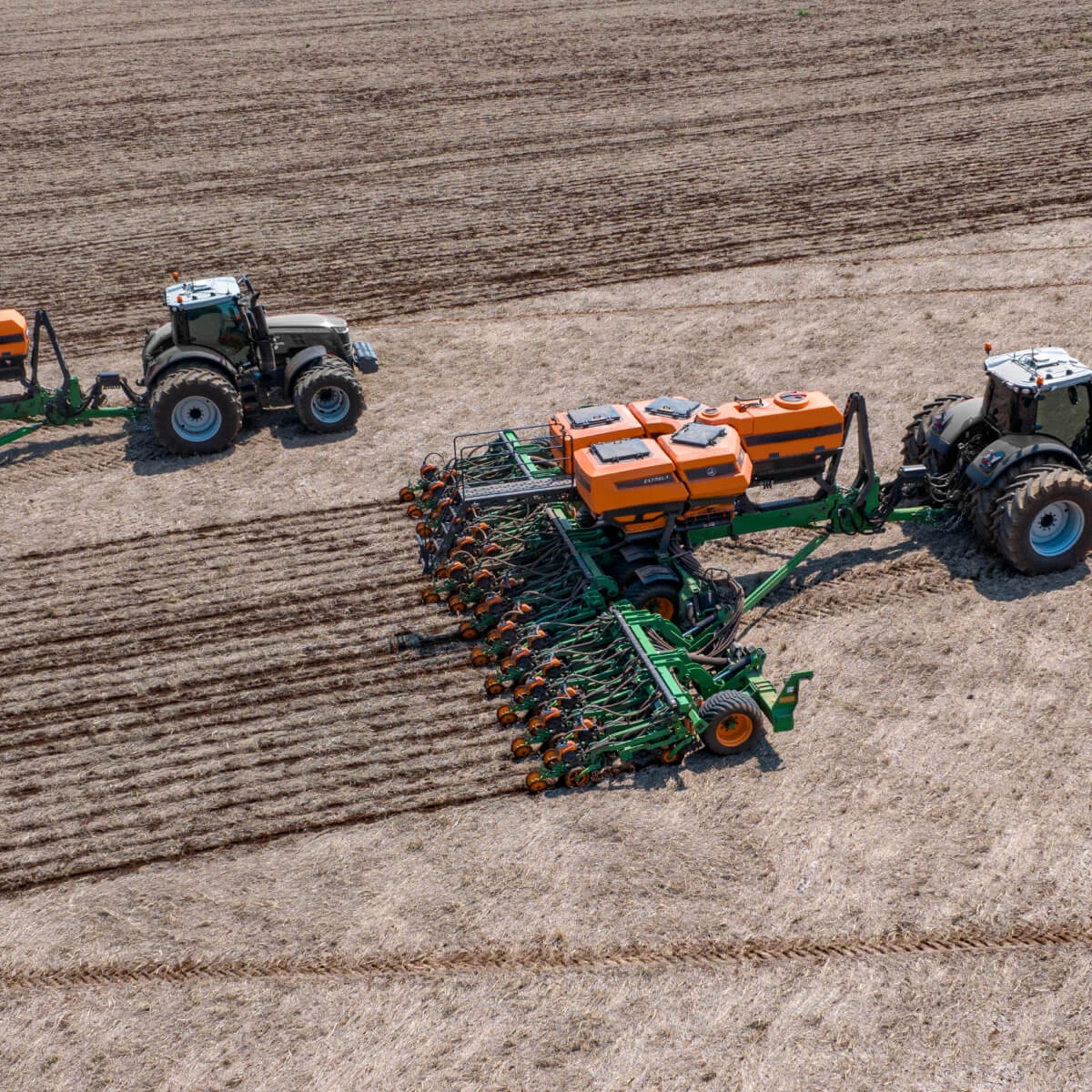



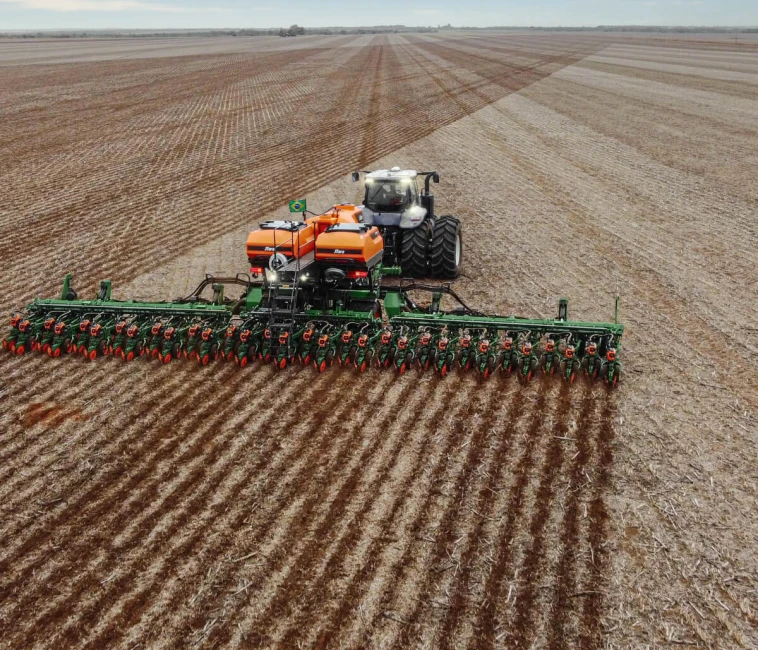
In recent years, maize has further strengthened its importance in Brazilian agriculture. According to Conab's 12th survey for the 2024/25 crop year, published in September 2025, total cereal production was estimated at 139.7 million tonnes, the highest volume ever recorded. Within this result, the second crop, known as 'milho safrinha', played a decisive role, accounting for 112 million tonnes.
This scenario becomes even more significant in the Centre-West, a strategic region for second-crop maize production and one marked by the strong succession between soybeans and maize. This means that the pace of harvesting the previous crop, rainfall distribution and field access conditions directly affect how effectively the planting window is used, requiring careful planning and strong responsiveness on the farm.
It is in this context that planning for second-crop maize becomes especially important. With agricultural machinery designed for high planting performance, such as the Absoluta planter, and advanced agricultural technologies such as the Topper 6500 controller, Stara helps coordinate operations more effectively and make better use of the planting window.
In this article, find out what second-crop maize is, why its planting window requires more planning, and how agricultural machinery and onboard technology help reduce delays in the field.
What is second-crop maize?
Second-crop maize is maize grown in the second season, usually in succession to soybeans, after the main summer crop has been harvested. In general, it is planted between January and April, with the highest concentration in February and March, depending on the region, the agricultural calendar and field conditions.
As it plays a central role in national production and is planted in succession to the previous crop, second-crop maize requires even more careful planning, since the planting window is usually shorter.
Why is planning for the second crop so important?
Planning for the second maize crop is important because it depends on a narrower planting window. As this second crop follows soybeans, the farm needs to align the calendar, inputs, agricultural machinery and production capacity to establish the crop at the most appropriate time.
For that reason, planning the second crop means making decisions in advance. This includes organising the sequence of activities, preparing the structure needed for planting, and reducing the need for improvisation during the most sensitive period of the agricultural calendar. When this work begins earlier, the farm achieves better operational flow and a stronger capacity to respond in the field.
This planning also creates the conditions needed to make better use of the available window. In second-crop maize, this makes a difference because the outcome depends on how effectively each stage is carried out, with pace, precision and consistency.
To understand why this planning needs to begin early, it is worth looking at the factors that have the greatest influence on planting pace in the regions where second-crop maize is grown.
What most delays second-crop maize planting?
In regions where the succession between soybeans and maize puts pressure on the agricultural calendar, such as the Centre-West, making the most of the planting window depends on factors such as the pace of harvesting, rainfall distribution and the ability to establish the new crop quickly.
Studies by Embrapa highlight that planning for the second crop should begin while the previous crop is still being managed, in order to increase the chances of sowing maize during a more favourable period for crop development.
In this scenario, some factors directly compromise the best possible use of the planting window:
Delay in soybean harvest
The soybean harvest is one of the factors that most affect the start of second-crop maize planting. As the second crop is usually established immediately afterwards, any delay in the previous crop reduces the time available for the new planting and makes the calendar even tighter.
Rainfall and weather
Weather also has a direct impact on the pace of field operations, especially in the Centre-West region. As second-crop maize is sown at the end of the rainy season, rainfall distribution affects both the soybean harvest and the planter's ability to operate in the field.
Soil conditions for the operation of agricultural machinery
Soil moisture is another decisive factor. Embrapa highlights that, in second-crop maize, the management strategy needs to take water conservation for the plants into account, which makes field conditions even more important at the time of sowing.
Logistical difficulties on the farm
Farm logistics also affect how effectively the planting window is used. Harvesting, transport, refilling and field preparation all need to progress in sync for planting to take place smoothly.
Low operational efficiency
The performance of the agricultural machinery is another part of the picture. Within a short planting window, organisation, operational performance, daily field capacity and planting consistency all make a difference in keeping production on schedule.
What are the impacts of delays on productivity?
When sowing takes place outside the most favourable period, second-crop maize tends to lose part of its yield potential from the very start of the cycle. As succession with the previous crop leaves less room in the calendar, delays reduce the effective use of the planting window and require even greater precision during crop establishment.
The main impacts of delays on productivity are therefore:
- reduced use of the most favourable conditions during the crop cycle;
- less uniform crop establishment;
- greater pressure on sowing, fertilisation and early-stage management;
- reduced yield potential across the area.
How can planting windows be planned more effectively?
Planning requires a well-organised calendar on the farm. Monitoring the progress of the soybean crop, estimating when fields will become available and setting priorities by plot help reduce mismatches between stages and guide production more effectively when time is limited.
It is also important to assess soil conditions before agricultural machinery enters the field. Water availability and water retention capacity directly influence the effective planting window, making field assessment an important step in supporting more uniform crop establishment.
In addition, inputs, logistics and agricultural machinery need to be aligned in advance. Preventive maintenance and scheduled servicing are essential steps in this process, as they ensure that the equipment is ready at the right time. With products, settings and refilling already organised, the farm can work more efficiently and make better use of the planting window.
What is the role of agricultural machinery in reducing delays?
In second-crop maize, agricultural machinery plays a direct role in making the most of the planting window, since this second crop is usually planted soon after the soybean harvest, leaving less time available for sowing.
In this context, operations need to maintain pace, high output, quality and consistency so that the crop can be established at the most suitable time. This means that agricultural machinery helps ensure more consistent operations during a stage of the agricultural calendar that demands agility.
In regions where crop succession places even greater pressure on the pace of production, such as the Centre-West, agricultural technologies focused on plantability and precision agriculture help reduce delays. This is where Stara's solutions become even more relevant.
How Stara agricultural machinery contributes to greater planting efficiency
In second-crop maize, Stara agricultural machinery, such as the Absoluta planter, helps combine plantability, operational efficiency and agricultural technology to make better use of the planting window.
The planter features Stara Integrated Ground-Following, a system that ensures the row units follow the terrain consistently, even in challenging conditions, delivering the proper depth, precision and uniformity in seed distribution.
In addition to its high working autonomy, supported by its large capacity, Absoluta's hoppers are designed to allow simultaneous refilling, reducing stoppages and improving operational flow in the field.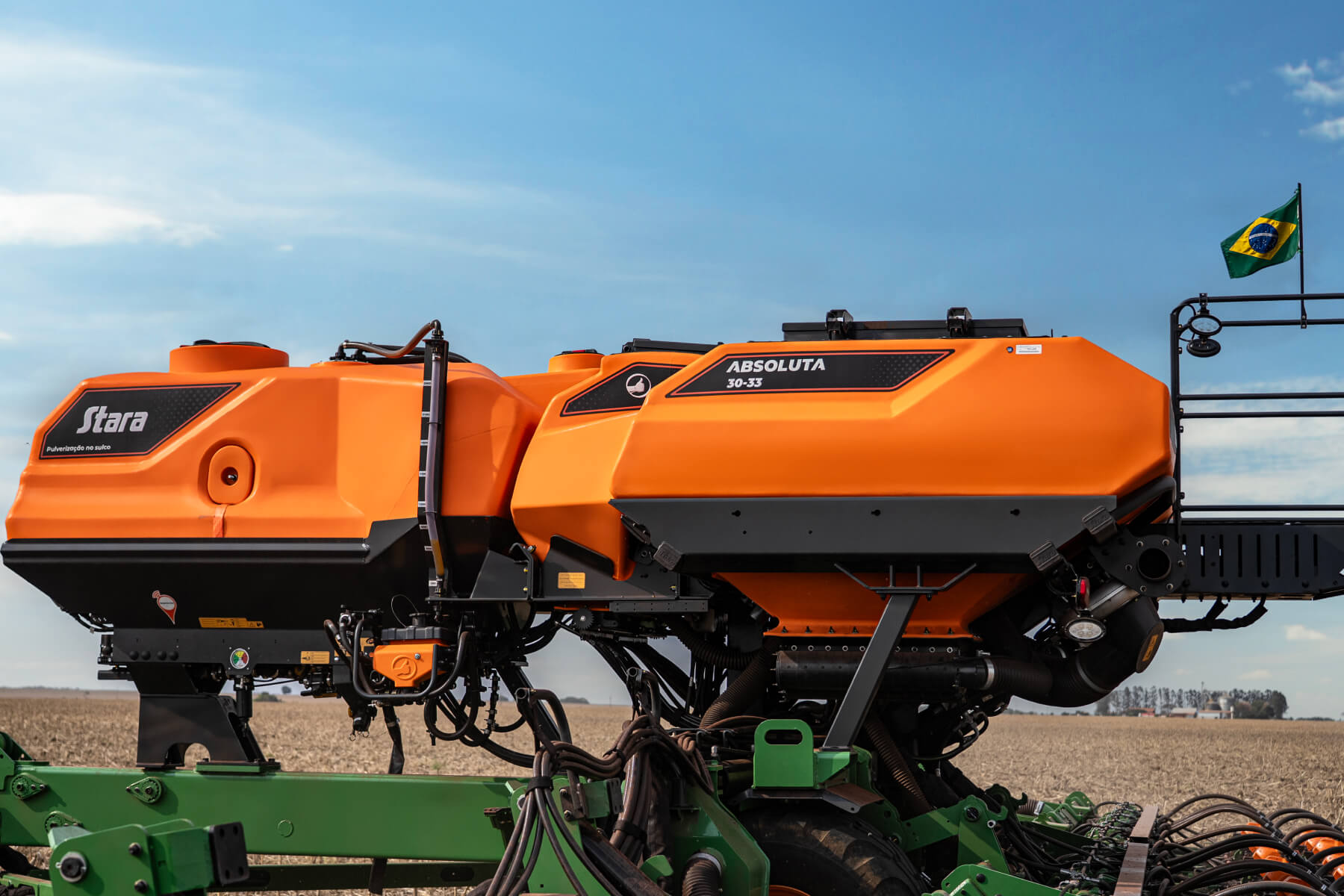
Another important aspect is the support provided by precision agriculture during cultivation. The Topper 6500 is Stara's agricultural controller, designed and manufactured to integrate functions such as downforce adjustment, automatic section control and variable-rate application, helping to optimise input use and improve operational efficiency.
Integration with Land Space, Stara's technology ecosystem, also allows the machine to leave the factory with Row-by-Row Shut-Off and Zero Crushing already calibrated, which speeds up set-up, increases planting precision and improves the machine's availability in the field.
As part of Land Space, Stara Telemetry enables remote monitoring of machine performance, facilitating quick adjustments and improving operational management. Likewise, Conecta provides remote technical support directly from the factory, enabling faster assistance and saving time.
By combining plantability, set-up and agricultural technology, Stara helps deliver more efficient and better-coordinated sowing in second-crop maize.
5 recommendations for making better use of the planting window
In second-crop maize, making good use of the planting window depends on early decision-making and effective execution in the field. These five recommendations help organise production more efficiently and reduce delays on the farm:
1. plan crop succession in advance;
2. service the agricultural machinery before the critical period;
3. check settings and cultivation parameters;
4. organise inputs and logistics in advance;
5. monitor weather and soil conditions continuously.
By integrating planning, agricultural machine performance and onboard technology, the farm becomes more responsive in the field. As a result, Stara agricultural machinery contributes to more precise, organised sowing aligned with production demands.
Frequently asked questions about planting windows for second-crop maize
What is the difference between second-crop maize and first-crop maize?
The main difference lies in the planting calendar. First-crop maize is planted during the summer period, while second-crop maize is planted later, in the second season, usually after soybean. With less room in the calendar, second-crop maize requires more precise execution. This means planting depends on better organisation and greater efficiency from agricultural machinery to make the most of the available window.
What happens when second-crop maize is planted outside the ideal window?
When planting is delayed, the crop may lose part of its yield potential because it begins to develop during a less favourable period. In second-crop maize, this puts pressure on the pace of production, reduces the effective use of climatic conditions and demands even greater efficiency from agricultural machinery in the field.
How does planting performance influence second-crop maize?
Planting performance directly affects seed distribution uniformity, spacing and sowing stability. Within a shorter planting window, maintaining this standard helps establish the crop more consistently and make better use of the available time.
Which technologies help the operator plant with greater precision?
Features such as an agricultural controller, variable-rate application and row-by-row shut-off help the operator fine-tune planting and reduce overlaps, faults and loss of efficiency in the field.
Why should the agricultural machine be adjusted before the critical period?
When the agricultural machine is adjusted in advance, the farm reduces the risk of interruptions during the most critical stage of crop establishment. This helps maintain the pace of operations, improves sowing quality and avoids rework when the planting window is tighter.
How do you choose an agricultural machine for planting second-crop maize?
The choice should take operational performance, precision agriculture features, planting quality, ease of adjustment and suitability for the farm's conditions into account. In crops with a shorter planting window, these factors become even more important in the decision-making process.
Did you like the hints and want to find out the agricultural machine that best suits your crop field?
Stop by a Stara dealer and find the most suitable equipment to boost your crop production. Request a quotation.