


A crop’s yield potential begins to take shape before it is even sown. Cover crops play an important role in this process by protecting the soil, helping to produce crop residue, supporting nutrient cycling and creating better conditions for the next crop.
When choosing a cover crop, consider the next crop, the management strategy and the establishment period, so that the cover crop can be terminated at the right time without affecting planting.
This is essential because missing the management window can leave the plant material too wet, make cutting during planting more difficult, cause machine stoppages for cleaning and affect seed and fertiliser distribution.
In regenerative agriculture systems, which aim to restore soil health through practices such as crop rotation, permanent soil cover and reduced soil disturbance, maintaining soil cover is a strategic decision. This means selecting species according to the agronomic objective, managing crop residue within the ideal window and using machine technology that responds accurately to field conditions.
In this article, you will learn how to optimise this transition and how Stara technology can help turn crop residue into profitability.
What is soil cover and why is it the foundation of regeneration?
Soil cover is the practice of keeping the field surface protected throughout the production cycle with living plants, crop residue or remains from the previous crop. In regenerative agriculture, it supports soil management by helping preserve soil health and promote key processes for crop production.
The main benefits of soil cover include:
- reduced erosion and lower direct impact from rainfall on the soil surface;
- less temperature variation and better moisture retention;
- greater biological activity and nutrient cycling;
- increased water infiltration and improved soil structure;
- a more stable environment for crop development.
In a study published in Pesquisa Agropecuária Brasileira and available on SciELO, some cover crops stood out for their ability to accumulate nutrients and return them to the soil, especially potassium. This reinforces the importance of cover crops for nutrient cycling and for maintaining no-till systems.
Soil cover also affects day-to-day work with agricultural machinery. The volume, distribution and behaviour of crop residue can affect operations such as furrow opening, seed placement, machine adjustment and planter performance.
How should cover crop species be chosen in regenerative agriculture?
Cover crop selection should be guided by the specific needs of the field, taking into account the previous crop, the next crop, the window between crops and the agronomic objective for the area.
In regions with a short window between maize harvest and soybean planting, for example, the chosen species must establish quickly, produce enough crop residue and help diversify the system.
Based on this assessment, the farmer can identify which plant groups are best suited to the management strategy.
Crop rotation and the window between crops
Cover crop selection should also take crop rotation and the available window between crops into account. In some regions of southern Brazil, for example, there may be only a short interval between maize harvest and soybean planting, so the chosen species need to establish quickly and perform well within the time available.
In these cases, species such as forage radish can be used to keep the field covered between crops, produce crop residue and add diversity to the system. It is also important to choose species from a different botanical family from the main crop, as this helps break pest and disease cycles and supports better agronomic planning on the farm.
Grasses for building crop residue and producing biomass
Grasses such as brachiaria, millet and oats are well suited to producing biomass and building longer-lasting crop residue. They keep the soil surface protected for longer, which is essential for successful no-till systems in regions with challenging climatic conditions.
Legumes for nitrogen input and diversification
Legumes such as sunn hemp and vetch can be included in the plan to increase biodiversity and benefit the following crop through nitrogen input and improved soil porosity.
Species mixes
Using a species mix is an effective way to combine several agronomic functions at once, including biomass production, root diversity and nutrient cycling deeper in the soil profile. It is a useful strategy for farmers looking to build greater long-term balance and stability into the system.
Stara machines that optimise cover crop sowing
Good soil cover starts with efficient, well-planned sowing. Technologies that allow cover crops to be established at different stages of the growing cycle give farmers greater management flexibility and help support more sustainable production systems.
Stara offers machines that allow cover crops to be sown at different stages of the production cycle. See some examples below:
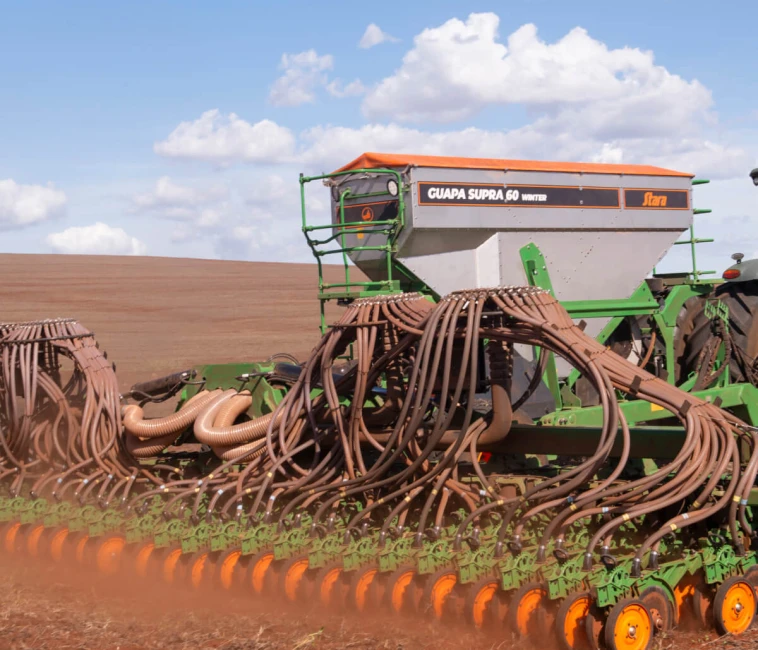
Guapa line: uniform sowing and precise metering
As well as winter crops, machines in the Guapa line can be used to sow cover crops such as forage radish and vetch, along with pasture species such as ryegrass and brachiaria.
With highly articulated row units, the seed drills provide excellent ground following and maintain uniform sowing even on uneven ground, including contour lines and raised field ridges. They also feature an exclusive seed metering and delivery system, ensuring accurate distribution and better crop establishment.
Imperador 3.0 and Imperador 2000 PV: cover crop sowing with the Ponte Verde system
Imperador 3.0 and Imperador 2000 PV sprayers are equipped with the Ponte Verde system, which sows cover crops accurately and efficiently across the full boom width. As the operation is carried out in the same pass as spraying, the system helps reduce operating time, fuel consumption and crop damage.
This gives farmers more flexibility to establish soil cover at different stages of the production cycle, while helping integrate agricultural technology into farm planning. It also prepares the area for effective crop residue management in the next stage.
How does Stara technology support planting in fields with soil cover?
In fields with soil cover, agricultural machinery must deliver consistent performance, even with high volumes of crop residue, uneven ground and varying crop establishment conditions.
That is why Stara planters and seeders combine features designed to cut through crop residue efficiently, keep the row units stable and ensure even seed and fertiliser placement.
Machines in the Guapa line, for example, provide uniform sowing and precise metering for cover crop cultivars, while also delivering excellent performance in fields with crop residue. Other machines in Stara’s planting line also stand out in these conditions.
Stara planters: ground following, cutting capacity and plantability in areas with soil cover
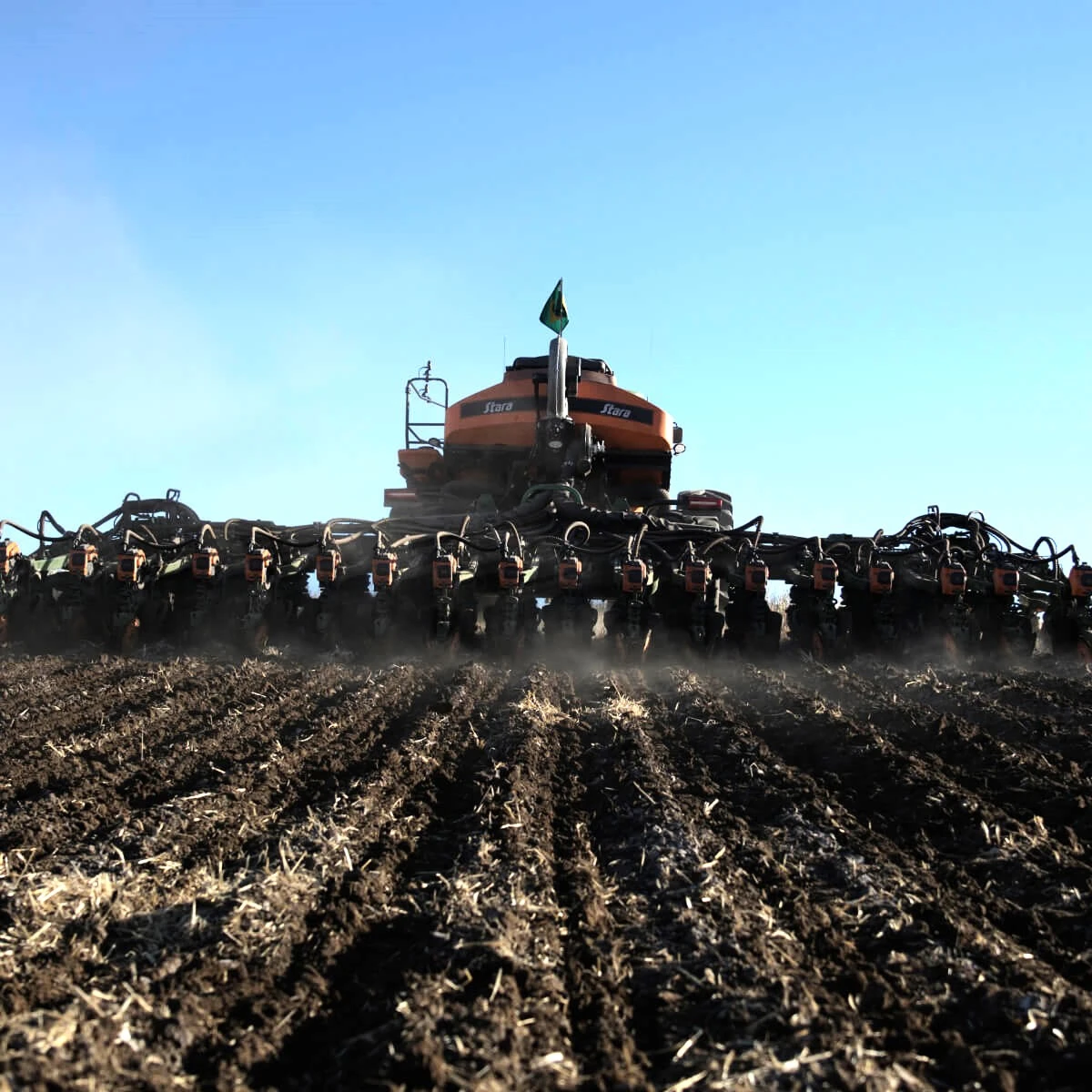
Princesa, Estrela and Absoluta planters feature technologies that help the operator maintain consistent planting in fields with crop residue, such as Stara Integrated Terrain Following System and excellent cutting capacity. These features help the machine adapt to uneven ground, maintain row-unit downforce and support more uniform seed placement.
On all three models, Stara Integrated Terrain Following System combines chassis articulation, individual module ground following and ground following of the seed rows. The planters also stand out for their crop residue flow and row-unit pressure adjustment directly on Topper, making it easier for the operator to respond to field variations during planting.
They also help maintain consistent depth and sowing quality in fields with soil cover. In fields where crop residue is not fully uniform, row-unit stability, cutting capacity and ground following help reduce planting variations and support a more uniform crop stand.
Eva also supports planting performance in fields with soil cover by providing uniform seed and fertiliser placement. Its pantograph row units provide excellent ground following and planting precision, while the Fertisystem helps ensure uniform fertiliser distribution across different field conditions.
Crop residue management: what defines a good result in the next planting operation?
Producing biomass is important, but the performance of soil cover depends on how the field is managed. When the selected species, the desiccation timing and the planting technology are aligned, soil cover helps improve the performance of the following crop.
Several factors help explain this result:
- management timing: if desiccation takes place outside the ideal window, crop residue can act as a physical barrier, making cutting more difficult and affecting furrow consistency;
- crop residue uniformity: concentrated or poorly distributed crop residue can cause blockages and prevent accurate seed and fertiliser placement;
- cutting efficiency: in fields with high residue loads, machine performance is put to the test. Here, cutting capacity and row-unit stability are the factors that determine the final crop stand.
That is why crop residue management must be treated as part of the crop establishment strategy.
Agronomy and mechanisation working together
Regenerative agriculture requires a system-wide approach. The best results come when careful soil analysis, cover crop selection and crop residue management are supported by machines built for demanding conditions.
With agricultural technology suited to the field conditions, the operator can achieve more consistent planting, better fertiliser distribution and greater predictability in crop establishment.
Frequently asked questions about soil cover in regenerative agriculture
What is soil cover?
Soil cover is the practice of keeping the field surface protected with living plants, crop residue or remains from the previous crop. In regenerative agriculture, it helps preserve moisture, reduce erosion, support nutrient cycling and improve the conditions of the production system over time.
Why is soil cover important in regenerative agriculture?
Soil cover is important because it helps protect the field throughout the production cycle and contributes to the agronomic balance of the crop. It reduces the direct impact of rainfall, limits temperature variation, supports biological activity and creates better conditions for the next planting operation.
How do you choose the best species for soil cover?
The best species or species mix for soil cover depends on the next crop, the window between crops, water availability, soil analysis and the expected result in the field. The key is to align cover crop selection with the actual needs of the field, rather than applying the same solution to every situation.
How does soil cover influence the next planting operation?
Soil cover directly influences the next planting operation because it affects the amount of crop residue, furrow opening, seed placement and fertiliser distribution. When it is managed properly, the field tends to deliver greater planting consistency and better conditions for crop establishment.
How does agricultural machinery influence results in fields with soil cover?
In fields with higher volumes of crop residue, agricultural machinery must maintain cutting capacity, row-unit stability and placement consistency. That is why planter performance has a direct impact on the quality of the next planting operation.
How does soil analysis help choose the cover crop?
Soil analysis shows what the field needs and helps identify which species are best suited to each objective. With this information, soil cover is no longer a generic choice and can contribute more effectively to crop residue management and planting consistency.
What defines good soil cover?
Good soil cover meets the field’s objective, produces crop residue with the right volume and persistence, supports the production system and does not compromise the next planting operation through excessive or poorly managed biomass.
What is the impact of soil cover on the next planting operation?
When well managed, soil cover improves soil structure. When poorly managed, it can make crop residue cutting more difficult and affect sowing uniformity.
Why is machine technology essential?
Machines with limited cutting capacity or poor ground following can struggle in fields with high volumes of crop residue. Stara machines, such as Princesa, are designed to maintain precision even in demanding soil cover conditions.
Did you find these suggestions useful and want to know which agricultural machine is best suited to your field?
Visit a Stara dealer and find the right machine to improve your crop production. Request a quote.