


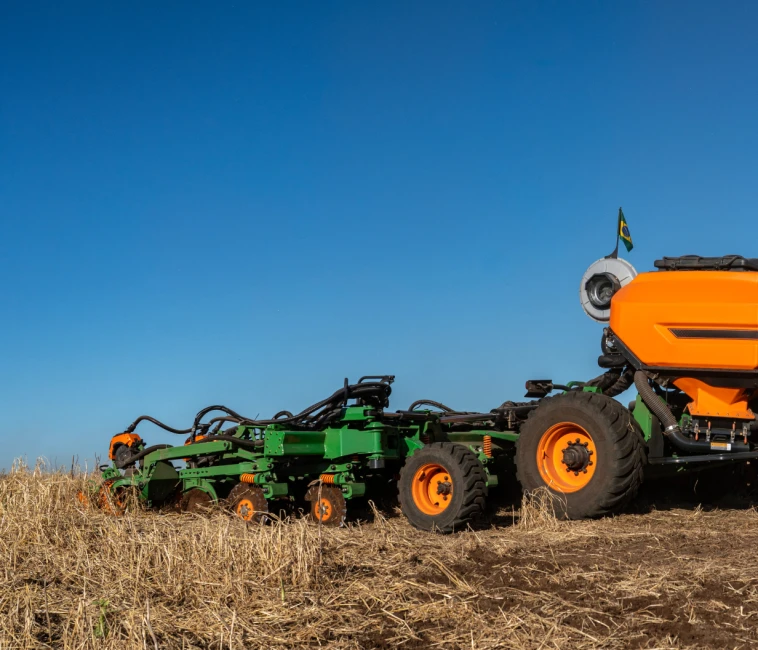
Soil erosion is a serious concern on any farm. When rainwater cannot soak into the soil properly, it flows across the surface, carrying away soil particles and nutrients, and stripping away the fertile topsoil.
Sparse ground cover, soil compaction, unsuitable cultivation, badly planned field traffic and sowing up and down the slope can all accelerate this process. On undulating land or in fields prone to runoff, minor signs of erosion can lead to major soil losses over successive seasons.
According to a study by UFRGS, erosion control should combine field assessment, permanent ground cover, contour farming, good soil structure, planned field traffic and appropriate use of machinery.
In this article, Stara's experts explain what soil erosion is, its main types and causes, and how farm machinery and implements can support soil conservation. Here's how it works!
What is soil erosion?
Soil erosion is the detachment, removal and transport of particles from the surface layer of the soil. This movement is caused by water, wind or land management practices that leave the soil vulnerable.
The loss of topsoil reduces soil fertility because this is where most organic matter, nutrients and biological activity are concentrated. Without it, crops struggle to root, absorb water and make efficient use of fertiliser.
Erosion also disrupts crop production planning. Eroded areas need more frequent remedial work, reduce sowing efficiency, hamper the movement of farm machinery and leave the ground uneven.
In more advanced cases, heavy runoff can open up deep channels and damage productive parts of the farm. That is why erosion control must begin before the soil loss becomes visible.
Watching for signs of surface flow, sediment build-up, exposed roots, areas of reduced vigour and rills helps to identify the type of erosion present in the field.
What are the main types of erosion?
Soil erosion is classified by what causes it, how much soil is lost and how the damage shows up in the field. The main types are sheet, rill, gully and wind erosion, each covered below.
Sheet erosion
Sheet erosion removes a thin layer from the soil surface. It can be particularly damaging precisely because it is easy to miss at first. The affected area forms no deep channels, but steadily loses fine particles, organic matter and nutrients.
It usually shows up through indirect signs such as reduced crop vigour, patchy yields, sediment collecting in low-lying areas and a weaker response to fertiliser. Where the soil is left bare, raindrop impact and surface runoff make matters worse.
Rill erosion
Rill erosion occurs when runoff becomes concentrated and cuts visible channels into the surface. These rills tend to appear along tramlines and headlands, between the crop rows, or on stretches where the slope drives runoff.
When a rill keeps reappearing in the same place after heavy rain, it is worth investigating the cause. It may be compaction, sowing up and down the slope, a lack of terracing, poor ground cover or concentrated field traffic.
Filling in the rill without tackling whatever is concentrating the water only treats the visible symptom and the runoff will be back with the next heavy downpour.
Gully erosion
Gullies are an advanced form of erosion: deep, hard-to-manage channels with heavy soil loss and unstable sides.
These cases call for a proper technical assessment. The priority is to slow the water before it gains pace, protect the banks, re-establish vegetation and keep machinery and implements clear of the unstable edges.
Wind erosion
Wind erosion is driven by the wind. It is most common in dry conditions with loose soil, sparse ground cover and intensive cultivation. The wind lifts and carries away fine particles, stripping the surface layer of the field.
Control depends on permanent ground cover, reduced soil disturbance, crop rotation and retaining crop residues.
Identifying the type of erosion helps shape the right response. But before settling on a control measure, it is essential to pinpoint what is causing it.
What causes soil erosion?
On many farms, the problem does not stem from a single factor. It takes hold when several adverse conditions build up in the same area. The main drivers of erosion are:
- Rainfall: heavy rain on bare soil dislodges particles and seals the surface into a crust. This capping reduces infiltration and encourages runoff.
- Topography: the steeper and longer the slope, the faster the water tends to flow. On sloping ground, sowing up and down the slope creates ready-made channels for runoff.
- Sparse ground cover: Embrapa notes that land under conventional cultivation with no ground cover is more prone to water erosion, because it encourages surface capping, reducing infiltration and increasing runoff.
- Field traffic: when machinery travels on soil that is too wet, or with no planned traffic pattern, it adds to compaction. This reduces porosity, restricts infiltration and leaves water standing on the surface for longer.
How to diagnose soil erosion?
It is not enough to judge erosion from the surface alone. A field can show signs of runoff because there is a compacted layer below cultivation depth, or in the area carrying the most traffic.
So, alongside the surface signs, a proper diagnosis should also consider the field's history of runoff, how the ground cover is distributed, how readily water infiltrates, whether compaction is present and where flow tends to concentrate.
Where the diagnosis confirms compaction, putting it right may call for specialist intervention. The aim is to relieve the compaction while preserving as much ground cover and soil structure as possible.
How to prevent soil erosion through good sowing practice?
Sowing well is one of the most important practices for preventing soil erosion. It has a direct bearing on ground cover, water infiltration and how evenly the crop develops.
When establishment is uniform, the crop protects the soil more quickly against raindrop impact and slows surface runoff.
In conservation systems, and no-till in particular, the planter has to keep most of the residue on the surface. To do that, it must:
- cut cleanly through the residue;
- open the furrow at the correct depth;
- place the seed evenly;
- close the furrow without excessive soil disturbance.
These steps help preserve soil structure, reducing the areas left vulnerable to runoff.
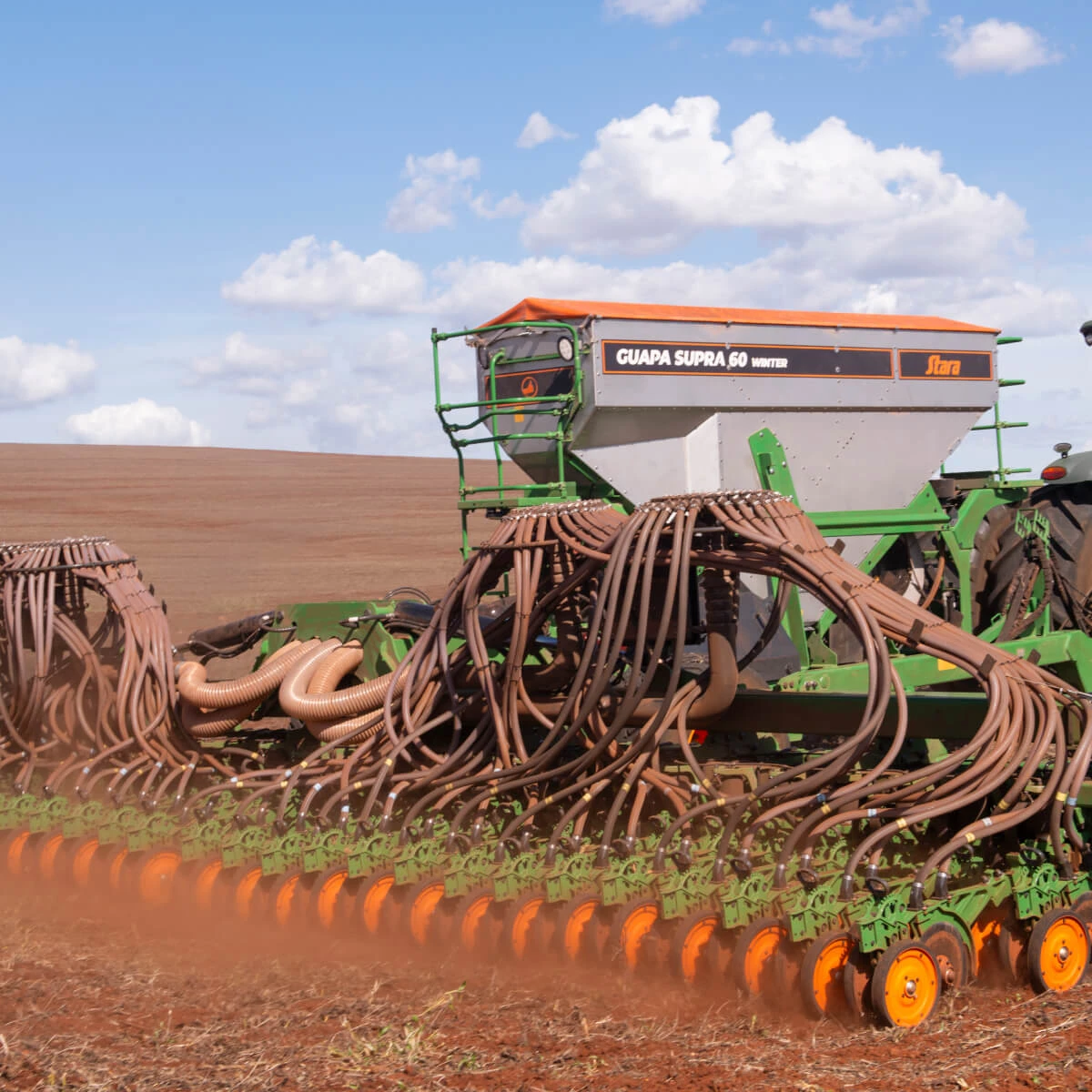
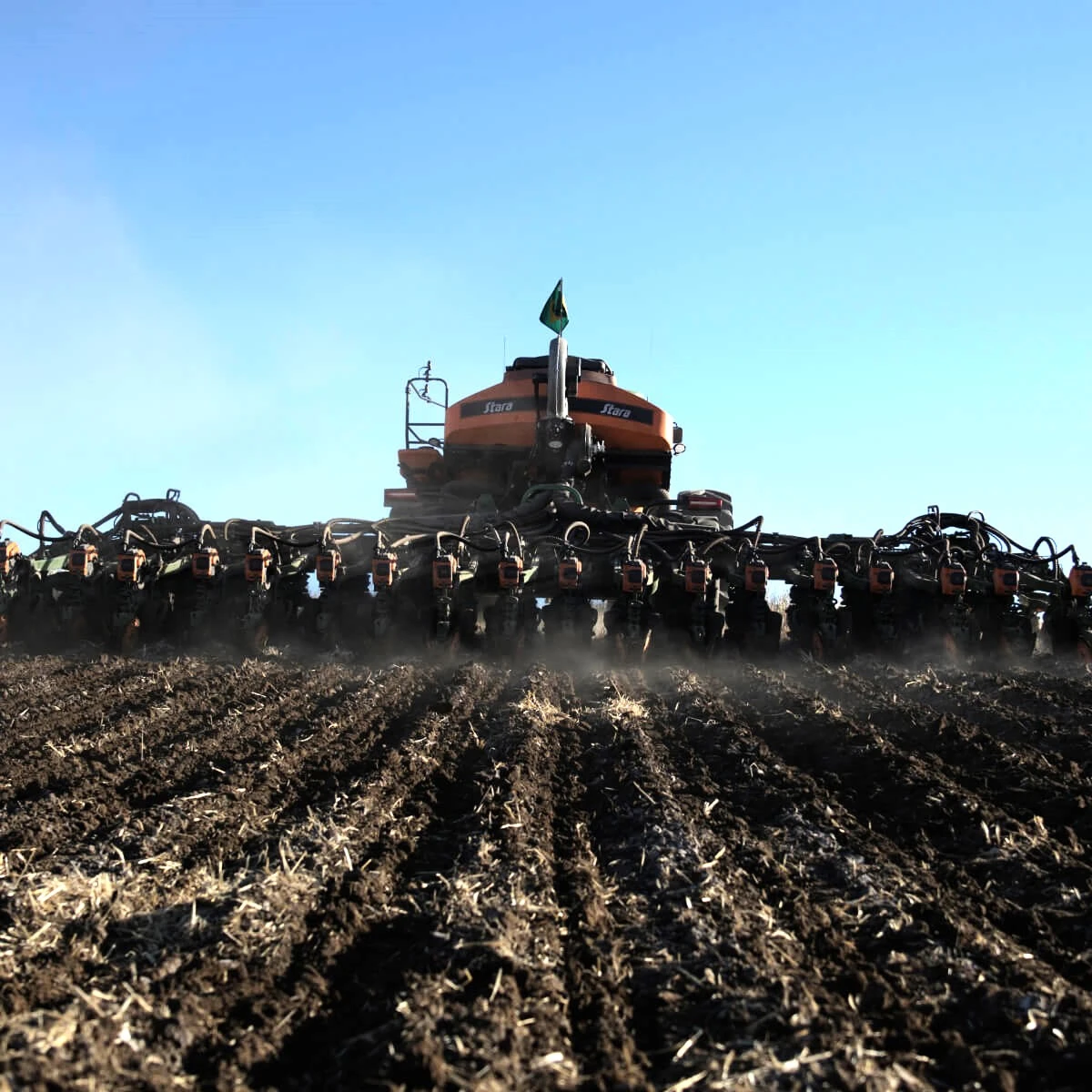
Stara's planters and seeders are built with technology that delivers more consistent work in the field with less soil disturbance. Models such as the Absoluta, Princesa, Estrela and Guapita, along with the Guapa range, offer consistent sowing, accurate depth control, precise seed placement and clean residue cutting. Together these support even crop establishment and help preserve surface residue.
Below, we look at other ways to protect your soil.
Other effective ways to reduce soil erosion
Proper residue management, correct use of implements, even application of inputs and well-planned operations all help conserve the soil and make field management more efficient. In each case, the latest technology is essential.
Ground cover and residue
Ground cover is one of the soil's main defences against erosion. It softens the direct impact of rain, reduces particle detachment, improves infiltration and helps retain moisture.
Residue also increases surface roughness, so water slows down and is held back before it can build into runoff.
In no-till, success depends on combining minimal disturbance, permanent ground cover and crop rotation. Simply leaving the soil undisturbed does not guarantee the best result if the area is short of residue or suffering from compaction.
Implements matter at this stage too, because they have to work without damaging the cover. The planter needs to cut residue cleanly, avoid blockages and hold a steady sowing line. To achieve that, the down-pressure, cutting disc and depth settings should all be matched to field conditions.
In fields carrying a heavy volume of crop residue, it is worth checking that the machine keeps the residue flowing freely. If the implement drags the residue along, it leaves rows bare or interferes with seed placement, producing an uneven crop.
Good cover only does its job when management keeps the residue evenly spread across the surface.
Even application of fertiliser and inputs
Applying fertiliser and inputs evenly supports more even crop development, which in turn improves ground cover and reduces the areas left exposed to rain. Where application varies widely, some parts of the field can show reduced crop vigour and remain more exposed to erosion.
Here too, highly accurate spreaders make a difference, giving more consistent application and better use of inputs across the whole area.
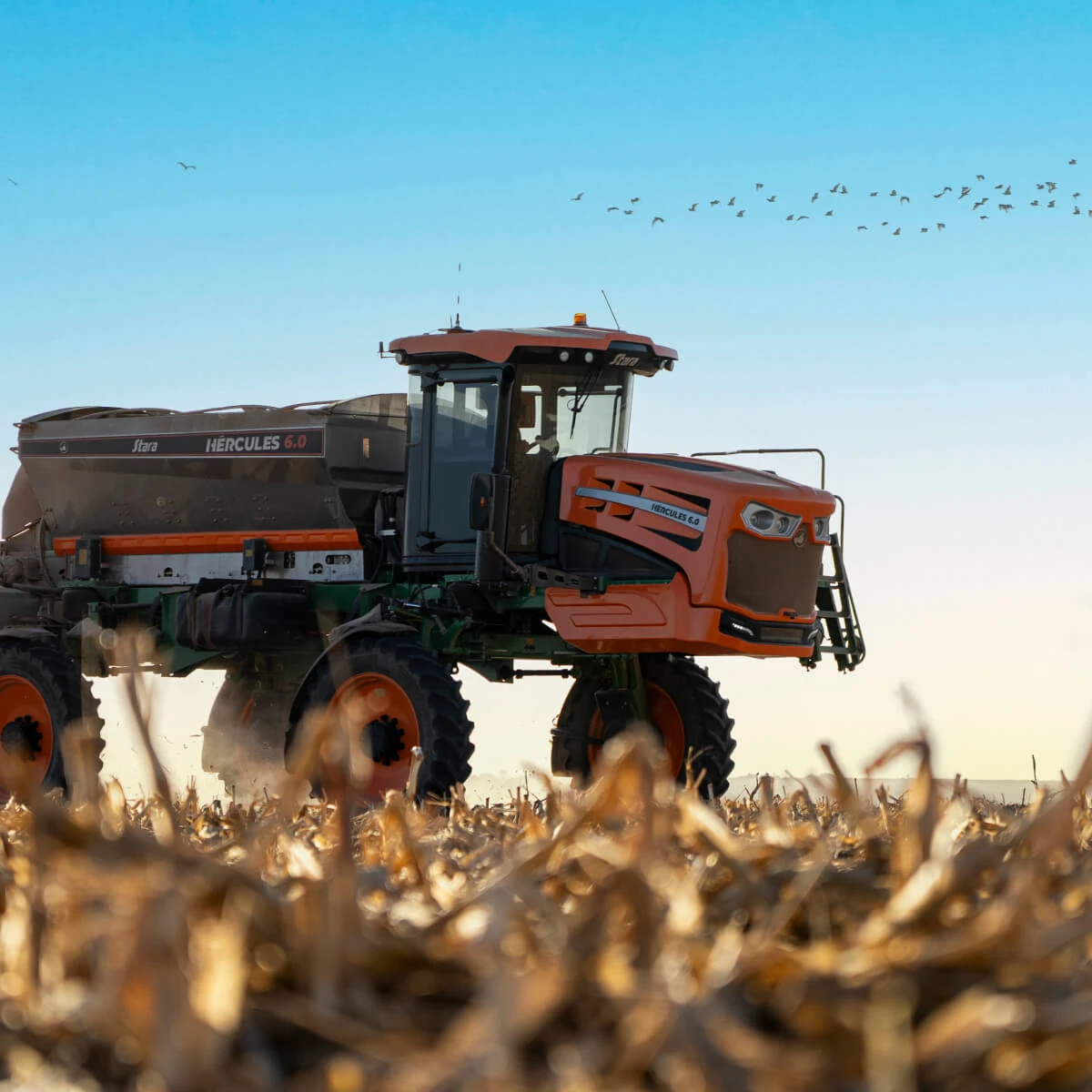
Stara models such as the Hércules and Bruttus ranges, along with the Twister 1500, feature precision agriculture technology that allows variable-rate application in line with agronomic recommendations. With the right settings and less variation between bouts, these machines perform efficiently across a range of field conditions.
Correcting compaction with proper diagnosis
Compaction makes erosion worse because it reduces water infiltration. When rain cannot move down through the profile, it runs off the surface and raises the risk of rills.
So, in areas affected by both compaction and erosion, it is essential to establish whether there is a denser, more resistant layer that restricts root growth and water movement. Confirmation should be based on digging a soil pit, assessing the root system, and reviewing field maps, traffic history and penetrometer readings.
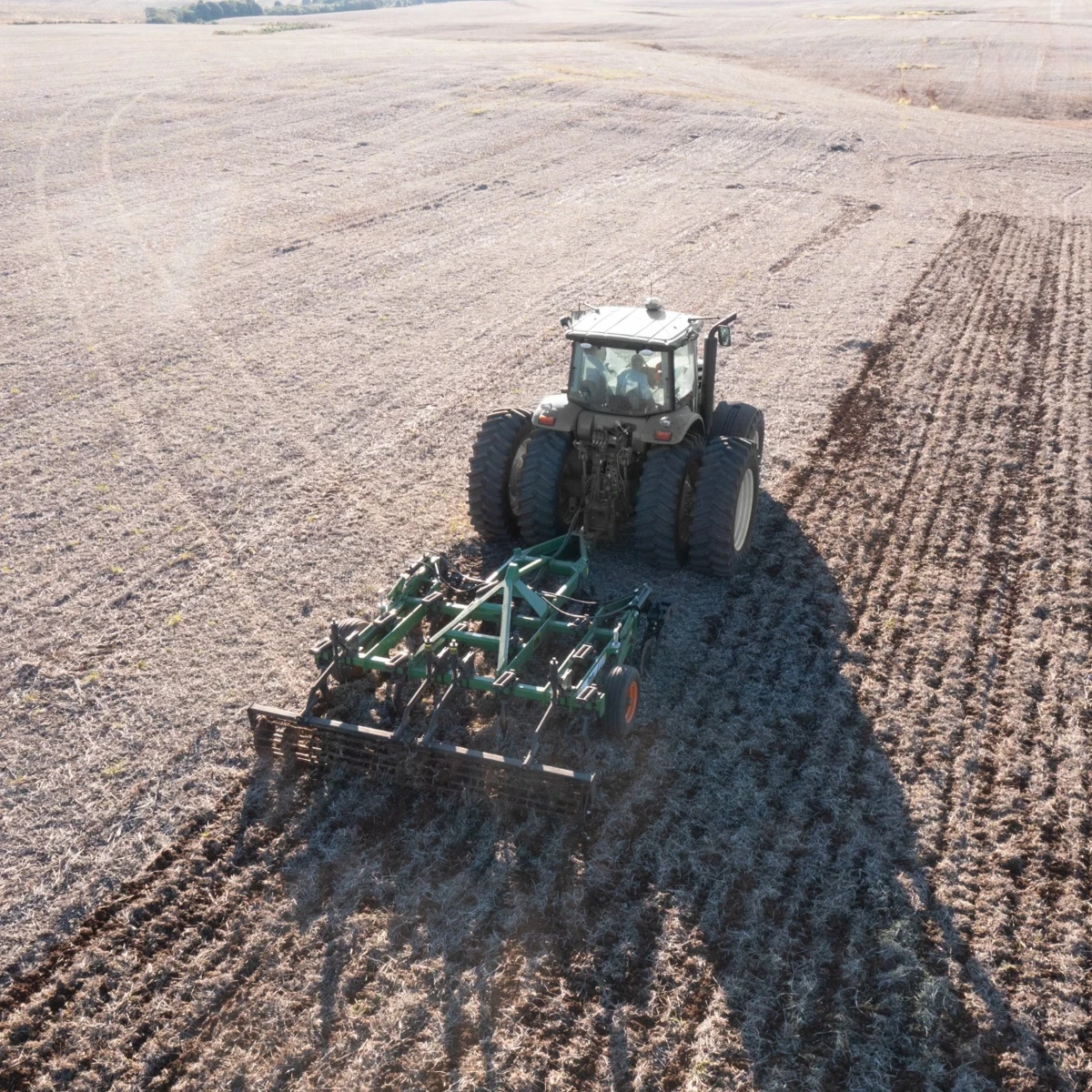
Once compaction is confirmed, specific implements may be needed to put it right. Subsoiling or turning the soil without a diagnosis can expose the soil, break down the surface structure and weaken the protection the residue provides.
Contour farming and terracing
On sloping ground, controlling soil erosion also means controlling the path the water takes. Ground cover softens the impact of rain, but it does not remove the risk of runoff altogether on long slopes or during heavy downpours.
Contour farming, where the rows follow the contours of the field, helps slow runoff and makes it harder for channels to form down the slope.
Terracing complements this, with terraces built across the slope to the design recommended for the site.
Implements help when operations are carried out in line with this plan. Sowing, spreading and spraying all need to follow lines that match the layout of the field. When the machine works with GPS guidance, signal correction, auto-steer and defined tramlines, it can make consistent passes.
The Topper, for example, is Stara's control terminal, supplying the data and guidance for more precise, better-planned operations, particularly where passes need to be tightly controlled.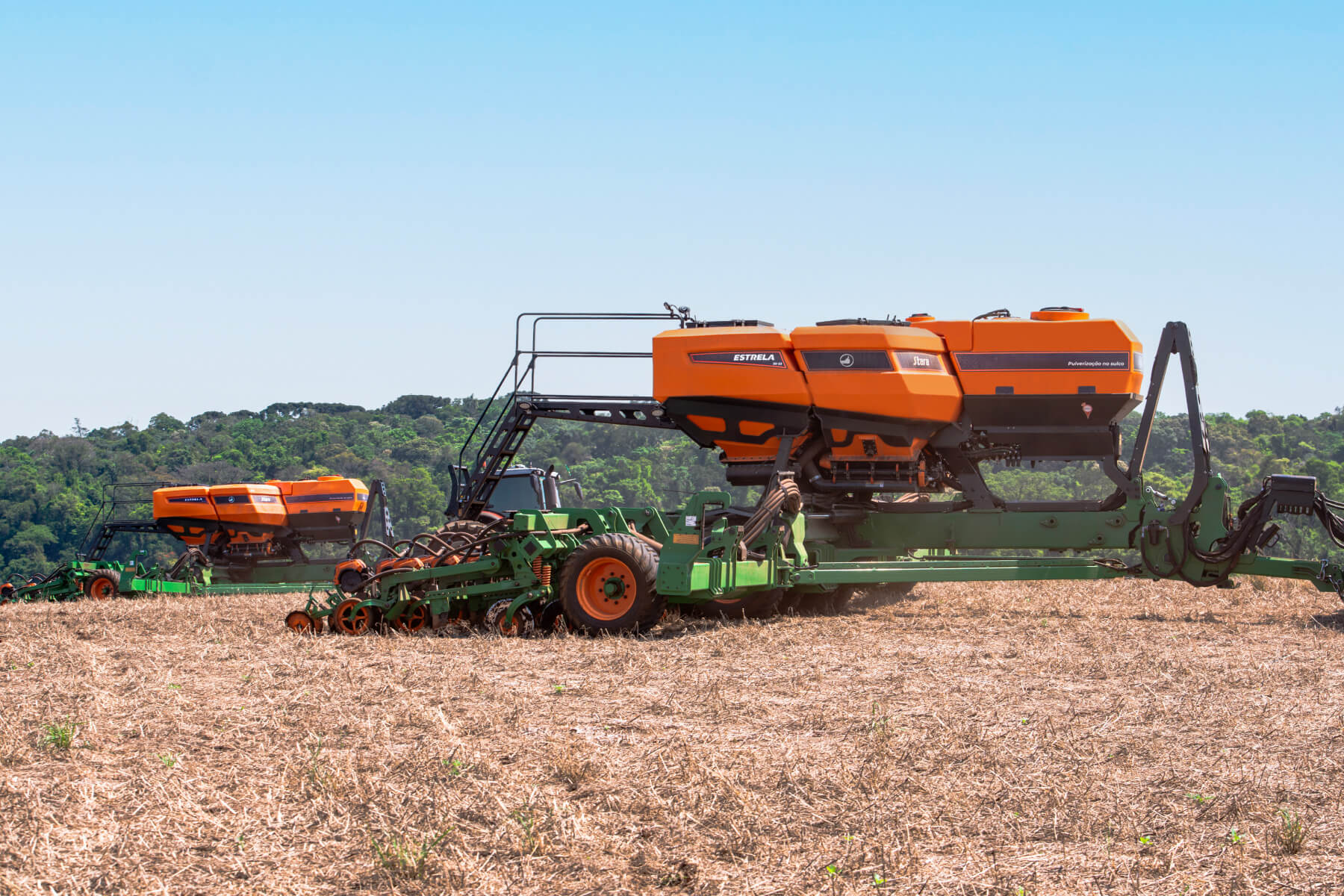
Planned field traffic
Field traffic needs to be part of the conservation plan. Repeated passes over different parts of the field increase the load on the soil, encourage compaction and create ready-made channels for water to follow.
Planned tramlines help organise machinery movement. When the machine keeps to set lanes, the cropped area is less exposed to random trafficking, and the operator has a predictable pattern to follow.
Precision agriculture
Precision agriculture helps control erosion by guiding decisions for each management zone. Yield maps, compaction maps, imagery, elevation data, application history and field observations help pinpoint problem areas.
This data shows where erosion keeps recurring, where water collects and where the crop is underperforming.
With this information, growers can plan targeted actions and cut out unnecessary operations across the field.
Efficient management begins with planning
Throughout this article, we have seen that controlling soil erosion on a farm does not come down to any single action, but to bringing together diagnosis, technique and the way the work is carried out in the field.
Adopting conservation practices alongside the proper use of implements helps reduce erosion, preserve soil structure and improve the efficiency of farm operations.
The more consistent this approach, the better the land can hold water, protect its surface and sustain yields season after season.
Frequently asked questions about soil erosion
What is soil erosion?
It is the detachment, removal and transport of particles from the soil's surface layer, caused by water, wind or poor management.
What causes soil erosion?
Sparse ground cover, heavy rainfall, sloping ground, compaction and over-cultivation. A lack of conservation practices, such as contour farming and well-built terraces, also allows the problem to take hold.
What are the types of soil erosion?
Sheet, rill, gully and wind erosion. Sheet erosion removes surface layers gradually, while rills and gullies point to a more concentrated flow of water.
How can you tell if erosion is starting in a field?
The first signs often include small rills forming, patches of bare soil and water pooling unevenly after rain. You may also see loss of residue, excessive surface runoff and a less uniform crop.
How can you prevent soil erosion?
Prevention involves maintaining permanent ground cover, running a well-managed no-till system and planning field traffic properly. Setting implements up correctly and maintaining terraces also help reduce the impact of runoff.
Does precision agriculture help control soil erosion?
Yes. Precision agriculture makes it possible to identify the areas most prone to erosion and adjust operations more efficiently. This helps reduce management errors, improve how inputs are applied and preserve soil structure.
Does compaction increase the risk of soil erosion?
Yes. Compaction reduces water infiltration into the soil profile and increases surface runoff during rain. That encourages the movement of soil particles and speeds up the onset of erosion.
What is the difference between soil erosion and compaction?
Compaction is a loss of porosity caused by pressure on the soil structure, which restricts water infiltration and root growth. Erosion is the removal and transport of particles by water or wind, a process that can be made worse when the soil is compacted.
Found this useful and want the right implement to control erosion on your land?
Visit a Stara dealer to find the equipment best suited to your needs and to maximise your output.