Weather conditions have a direct influence on the planning and execution of agricultural operations. Rainfall distribution and temperature variations, which may be influenced by phenomena such as El Niño, affect the definition of the most suitable periods for planting. In situations of frequent rainfall, for example, excessive soil moisture may make it difficult for machinery to enter the field and reduce the number of days available to carry out the operation.
When the planting window becomes shorter, activities must be reorganised, taking into account the capacity of agricultural machinery, supply logistics and field conditions. The challenge is to make the most of favourable periods without compromising planting quality.
The following sections explain how to plan operations, reduce unproductive time and use agricultural technology to manage planting delays.
What Changes When Weather Conditions Reduce the Planting Window?
The planting window refers to the recommended period for sowing a particular crop, taking into account factors such as climate, soil conditions, location and cultivar characteristics. However, not every day within that period offers suitable conditions for operating agricultural machinery.
When rainfall prevents access to the field, delays may push planting into less favourable periods for crop development and affect subsequent operations. In soybean and second-crop maize succession systems, for example, delayed soybean sowing may postpone harvest and reduce the recommended period available for establishing the maize crop.
For this reason, growers must consider the entire agricultural calendar when planning operations. An important reference is the Agricultural Climate Risk Zoning Programme (ZARC), which identifies sowing periods with different levels of climatic risk according to the region, soil type and cultivar characteristics.
Using this information, it is possible to organise operations according to the priorities of each field, machine availability and suitable working periods.
Why Is Preserving Planting Quality More Important Than Increasing Speed?
When the planting window is short, increasing travelling speed may seem like a way to recover lost time. However, if speed is incompatible with machine recommendations and field conditions, it can negatively affect seed spacing and the uniformity of planting depth, compromising sowing quality.
Matheus Henrique Baumgratz, Agronomist and Product Marketing Analyst at Stara, highlights the importance of this precaution:
“An unsuitable operating speed can reduce placement uniformity and compromise crop establishment. Operators should follow the recommendations for each agricultural machine, monitor controller indicators and check seed distribution within the furrow.”
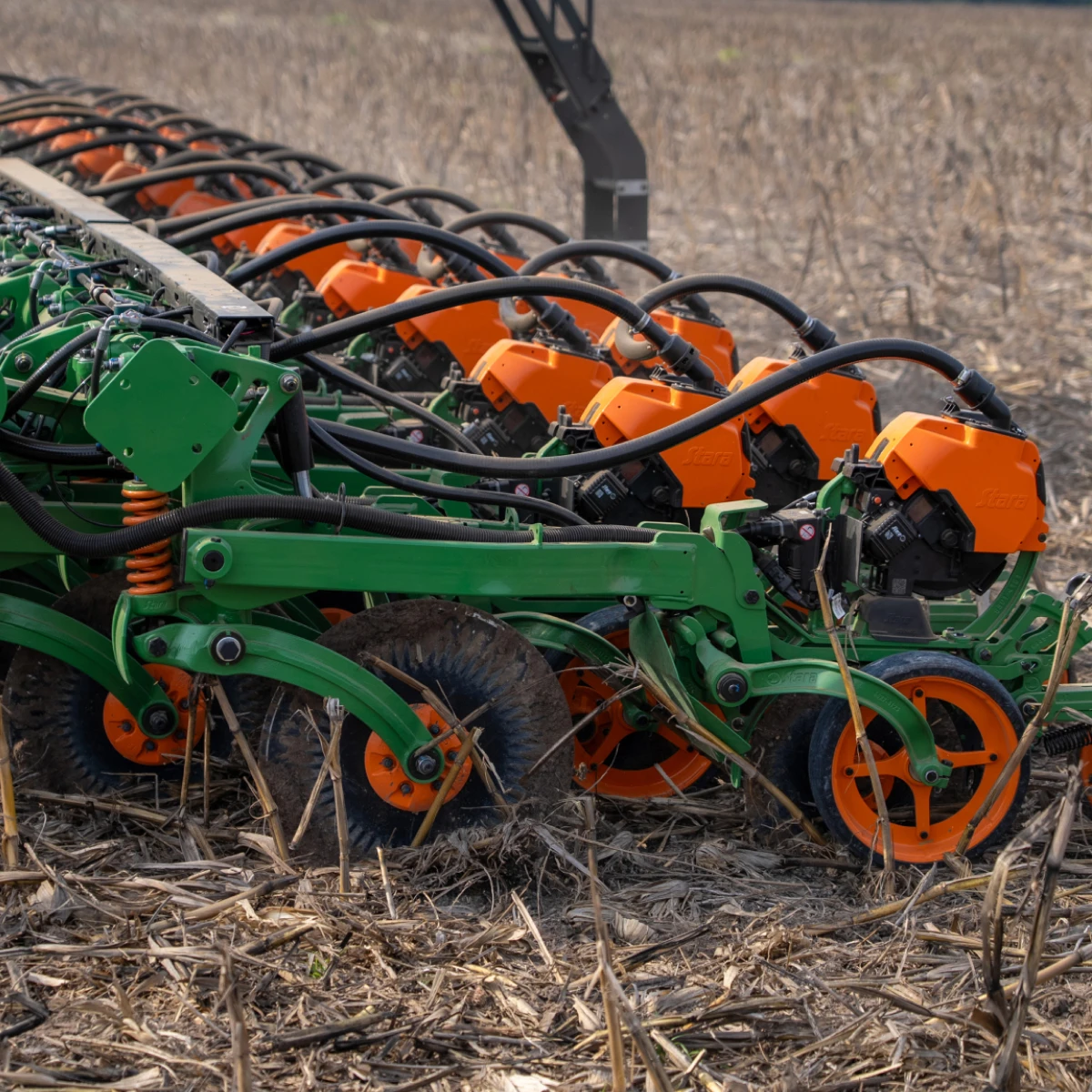
To provide greater uniformity in seed distribution, Stara has developed technologies such as DPS-E (Stara Electric Seed Meter), which features seven double-seed elimination points and performs curve compensation. Another solution is Row-by-Row Shut-Off, which automatically interrupts seed placement in areas that have already been planted, reducing overlaps at headlands and field boundaries.
These technologies contribute to planting accuracy, but they do not replace proper machine adjustment and field inspections, which remain essential for maintaining operational quality.
Learn more: How to Avoid Misses and Overlaps in Corn and Soybean Planting.
How Can Unproductive Time Be Reduced During Planting?
When the time available for planting decreases, growers can seek to improve operational performance without compromising quality. Proper planning makes it possible to reduce unproductive time caused by refilling, transport and scheduled stops. Three aspects deserve particular attention when organising activities.
1. Organise Input Supply
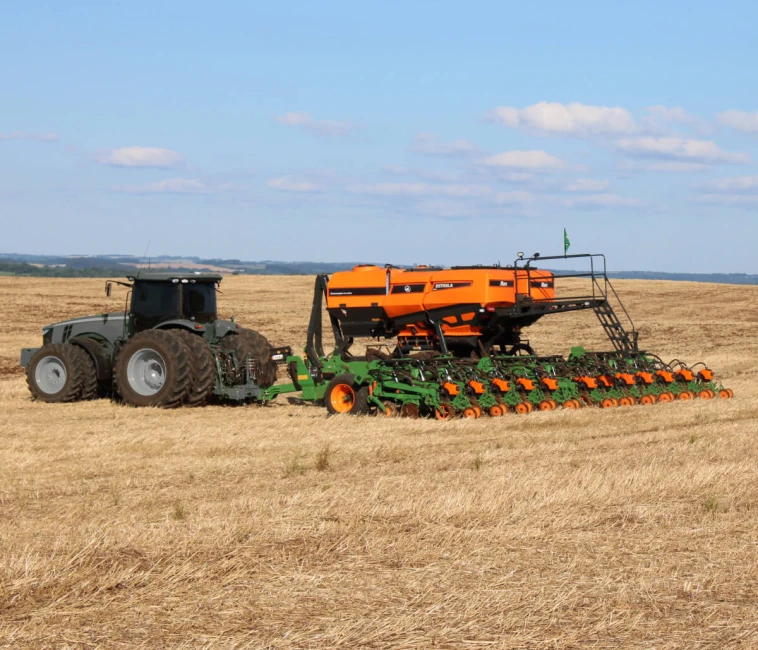
Preparing seeds, fertilisers and other inputs before operations begin helps prevent prolonged stoppages. On the Stara Princesa and Absoluta planters, the proportional design of the hoppers allows simultaneous filling, optimising time and improving operational efficiency.
According to Ramon Pereira Cancian, Agronomist and Product Marketing Analyst at Stara, considering hopper characteristics during operational planning also contributes to reducing downtime:
“Planters equipped with a central hopper, for example, make refilling easier. Autonomy and operating procedures vary according to the equipment and inputs used, which should be taken into account when scheduling stoppages.”
2. Plan Travel Between Fields
The distance between fields, access conditions and the time required to transport machinery all influence daily operational performance. Organising the sequence of fields according to the most favourable planting conditions enables transport activities to be optimised and subsequent operations to be prepared in advance.
Where fields are located far apart, the ease of placing the planter in transport position also contributes to logistics efficiency. Stara planters feature systems designed to provide greater practicality when moving between fields and properties.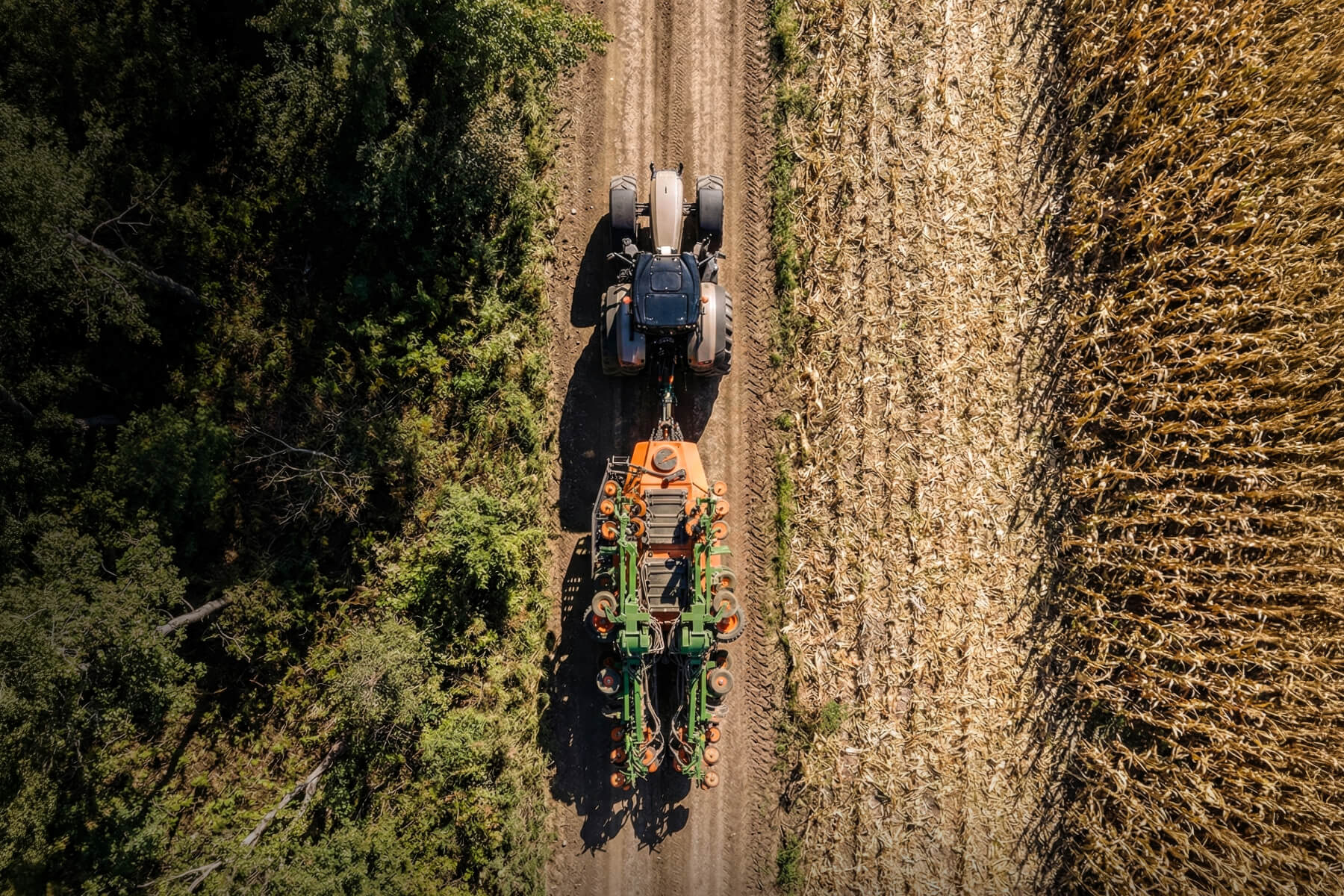
3. Carry Out Machinery Maintenance in Advance
Preventive maintenance is essential for reducing the risk of unexpected downtime during planting. Before beginning operations, it is important to inspect component condition, carry out the necessary lubrication and follow the procedures recommended in the operator’s manual for each machine.
Stara planters also include features that reduce the need for maintenance stops. The Princesa, for example, has lubrication points throughout the machine, requiring lubrication only before planting begins. The Eva planter is equipped with self-lubricating bushes on its parallelograms, requiring no lubrication during planting operations.
With these measures in place, the next step is to assess whether the operational capacity of the available machinery is sufficient to complete sowing within the time available.
How Can Operational Capacity Be Recalculated After a Planting Delay?
When weather conditions reduce the number of days available for planting, it is important to assess whether the operational capacity of the available agricultural machinery will be sufficient to complete sowing within the planned timeframe.
The first step is to identify the area that still needs to be planted and the number of days effectively available. With this information, it is possible to calculate the daily work target:
Daily target (ha/day) = Remaining area (ha) ÷ Available days
For example, if 600 hectares remain to be planted and there are six available days, the operation must achieve an average of 100 hectares per day:
600 ÷ 6 = 100 ha/day
Once the target has been defined, the next step is to estimate the operational capacity of each planter. This should take into account the effective working width and travelling speed, while respecting the machine's technical recommendations.
The first estimate corresponds to the theoretical field capacity:
Theoretical capacity (ha/h) = Speed (km/h) × Working width (m) ÷ 10
In a hypothetical example, considering a planter with an effective working width of 12 metres and an operating speed of 6 km/h, the calculation would be:
(6 × 12) ÷ 10 = 7.2 ha/h
However, theoretical capacity does not take into account the time spent on headland turns, refilling and other interruptions during operation. To obtain a figure closer to actual field conditions, it is necessary to calculate effective capacity:
Effective capacity (ha/h) = Theoretical capacity × Field efficiency (decimal value)
According to an Embrapa study on operational sizing, field efficiency can be estimated at 70% for the scenario analysed. This percentage is used only as a reference in this example and may vary depending on field and operational conditions.
Applying this efficiency to the previously calculated theoretical capacity gives:
7.2 × 0.70 = 5.04 ha/h
Assuming a planned operational day of 10 hours, the estimated daily capacity of one planter would be:
5.04 × 10 = 50.4 ha/day
If two planters with the same capacity are available, the estimate becomes:
50.4 × 2 = 100.8 ha/day
Note: This simulation is illustrative and does not correspond to a specific planter model. The 70% field efficiency already accounts for time spent on manoeuvres, refilling and other interruptions when calculating effective capacity. The speed of 6 km/h is used solely as an example and should not be interpreted as an operational recommendation.
In this example, two planters would be sufficient to achieve the daily target of 100 hectares. If estimated capacity falls below the required level, the grower may consider adjustments to working schedules, refilling logistics or the availability of additional machinery, always while respecting field conditions and maintaining sowing quality.
After Heavy Rainfall, What Precautions Are Needed Before Resuming Planting?
Even when operating under a tight schedule, planting should only resume when soil conditions are suitable. Excessive moisture can make machinery traffic difficult, increase the risk of soil compaction and negatively affect furrow opening and closing.
Before restarting operations, the operator should check:
- Soil moisture conditions for machinery traffic and sowing activities;
- The presence of mud or debris accumulated on planter components;
- The adjustment of furrow-cutting, opening and closing mechanisms;
- Alerts and indicators displayed by sensors and the agricultural controller;
- Planting depth and seed distribution within the first metres sown.
On Stara Estrela, Princesa and Absoluta planters, the hydraulic downforce control system allows adjustments to be made directly through the Topper agricultural controller. This system helps maintain row-unit stability and consistent seed placement, reducing the need for manual adjustments.
After operations resume, monitoring performance helps identify any additional adjustments required to the operational plan.
How Does Agricultural Technology Help Monitor Operations?
In addition to organising activities, it is important to monitor machine performance in order to identify potential delays and make adjustments to operational planning. Stara Telemetia provides information about completed work, machine movements and reasons for stoppages, making it possible to evaluate operational efficiency.
For example, if refilling operations are taking longer than expected, the stoppage records available through the"Reasons for Stops" function within the Topper controller make it possible to identify the duration of these interruptions and evaluate improvements to input supply logistics.
Stara Machine Monitoring complements this process by tracking equipment parameters during operation. When any indicator exceeds the predefined limits, alerts are displayed on the Topper controller and transmitted to Stara Telemetry. If the issue is not resolved, the Stara team may contact the operator or manager to provide guidance on the necessary actions.
In this way, these technologies provide information to identify interruptions, monitor machine operating conditions and support decision-making that helps maintain continuity of field operations.
How Can More Than One Planter Be Coordinated During Field Operations?
When more than one planter is working in the same area, coordinating passes is essential for making the best use of the available operational capacity.
To support this process, Stara developed Syncro, a technology that enables up to five compatible machines performing the same operation to be synchronised and share information. In the Syncro Net version, communication takes place via the internet and requires all participating machines to be equipped with Stara Connectivity.
How Should Contingency Strategies Be Adapted for Soybeans, Maize and Winter Crops?
Strategies for managing planting delays should take into account the characteristics of each crop, field conditions and their impact on the agricultural calendar. Although many best practices are common across different operations, some situations require specific attention.
For soybeans, planning should consider both the sowing period and cultivar maturity cycle, particularly in areas designated for succession with second-crop maize. When delays occur, it is necessary to assess the potential impact on harvest timing and the period available for establishing the following crop.
For second-crop maize, delays may increase the crop’s exposure to water deficits and low temperatures, depending on the region. For this reason, prioritisation of planting areas should take into account periods of lower climatic risk while still ensuring that soil conditions remain suitable for the operation.
For wheat and other winter crops, reorganising the schedule should also consider weather conditions expected during the most sensitive stages of crop development, particularly the risks of frost and excessive moisture. In fields with greater amounts of crop residue, special attention should be given to the adjustment of cutting and furrow-opening mechanisms, a recommendation that also applies to other crops grown under no-till systems.
Regardless of the crop, any changes to cultivars or sowing dates should follow agronomic recommendations and the periods defined by the Agricultural Climate Risk Zoning Programme (ZARC), while respecting the specific characteristics of each region.
Checklist: How to Reorganise Planting Operations Over the Next 24 Hours
When delays begin to threaten the planned schedule, growers should reassess field conditions, available operational capacity and priorities for the coming days. The checklist below summarises the main actions required to support this reorganisation:
- Update the weather forecast and consult the sowing periods recommended by the ZARC;
- Determine the remaining area to be planted and estimate the number of days available;
- Calculate the daily sowing target and assess the fleet’s operational capacity;
- Identify stoppages and transport activities that can be reduced;
- Organise field sequences, refilling schedules and machinery maintenance;
- Evaluate soil conditions before resuming operations;
- Check machine settings and the quality of the first planted metres;
- Monitor machine performance and adjust planting plans whenever necessary.
Reviewing this information helps establish priorities and direct available resources towards activities requiring the greatest attention, while considering the conditions of each individual farming operation.
A Short Planting Window Requires Planning and Operational Quality
When weather conditions shorten the planting window, contingency strategies should focus on organising activities and making the best use of the available working hours while preserving sowing quality. Planning refilling operations, carrying out maintenance in advance, correctly sizing the machinery fleet and monitoring operations are measures that help minimise the impact of delays in the field.
Stara develops agricultural machinery and precision farming technologies that support growers in planning and carrying out these activities. The features available vary according to machine model and configuration.
Discover the range of Stara planters and seed drills and evaluate the solutions best suited to the reality of your farming operation.
Frequently Asked Questions About Short Planting Windows
What Should I Do When Rain Delays Planting?
The first step is to reassess the remaining area, the number of days available and the operational capacity of the machinery fleet. With this information, it is possible to reorganise the schedule, prioritise fields and plan refilling operations while respecting suitable soil conditions before resuming sowing.
Is It Worth Increasing Planter Speed?
Increasing speed to compensate for delays is not recommended, as it may compromise sowing quality. Operations should follow the speed recommended for each machine, preserving seed distribution, planting depth uniformity, cutting efficiency and crop-residue flow.
How Do I Know If I Need Additional Machinery?
The decision should be based on the remaining area, available time and the fleet’s effective operational capacity. Before adding more machines, it is advisable to assess whether reducing time spent on stoppages, refilling and transport activities could allow the schedule to be completed.
How Long After a Period of Excessive Rainfall Can Planting Resume?
There is no fixed interval, as the decision depends on soil characteristics, moisture levels and weather conditions. In addition to supporting machinery traffic without excessive compaction, the soil must provide suitable conditions for furrow opening, furrow closing and seed placement.
Find a Stara Dealership
To prepare for your next planting season, contact your local Stara dealership and learn more about the agricultural machinery, technologies and services available to support your farming operation.
Send Us Your Message