


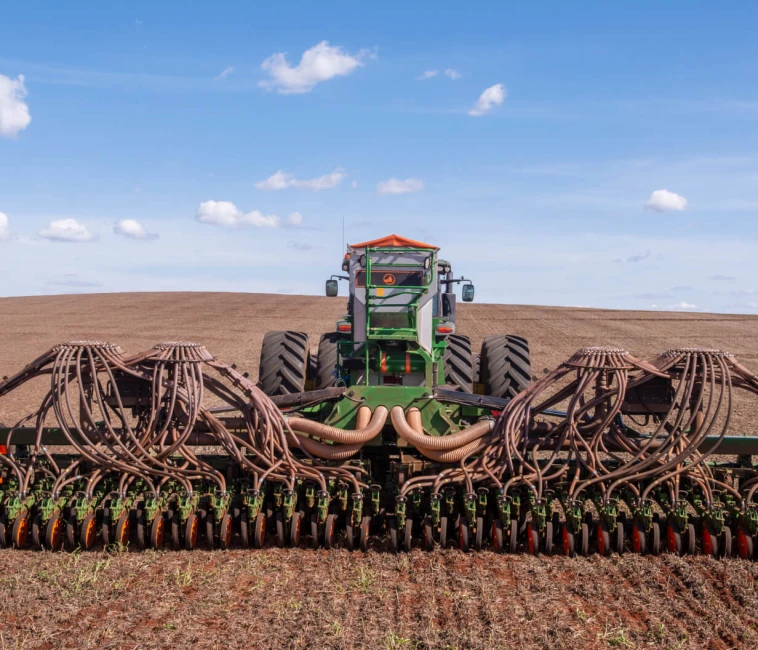
Integrated crop-livestock farming (ICL) is gaining ground on Brazilian farms because it addresses familiar challenges: making better use of farmland, diversifying income and improving soil management from season to season.
For farmers already growing grain or keeping livestock, ICL offers a way to get more from their land without relying on a single enterprise. However, it requires planning. Simply establishing pasture after harvest or bringing livestock onto arable land is not enough. Planting practices, crop rotations and crop residue management must also be adapted.
This article explains how integrated crop-livestock farming works, what needs to change in soil management and how agricultural technology can help improve farm productivity.
What is integrated crop-livestock farming?
According to Embrapa, ICL combines grain, fibre, meat and milk production on the same land in three ways:
- Sequential cropping: a crop occupies the field for part of the year, followed by pasture, usually between cropping seasons. A common example in Brazil is summer soybeans followed by maize intercropped with brachiaria, or pasture established for autumn and winter grazing.
- Rotation: fields alternate between cropping and livestock production over the years. When well managed, this approach diversifies land use, reduces weed pressure and improves soil structure.
- Intercropping: two species are established within the same growing period. Maize grown with brachiaria is one of the best-known examples. It produces grain or silage, after which the forage provides residue for soil cover or grazing for cattle.
The choice of planting system is central to this approach. No-till is often the most suitable option for ICL because it maintains soil cover, reduces soil disturbance and helps develop a more stable soil structure for crop growth.
However, the choice should reflect the field’s history, soil health, crop type, climate and the farm’s financial objectives.
Key benefits of integrating crops and livestock
Integrating crops and livestock keeps farmland productive for more of the year. Instead of relying on a single main cropping season, the farm combines grain crops, forage and livestock so that each enterprise complements the others. This brings economic and agronomic benefits, including:
- Restoring degraded pastures.
- Producing grazing, forage and grain at different times of year.
- Improving soil fertility, structure and biological activity.
- Increasing soil cover to support no-till farming.
- Diversifying farm income.
- Increasing output per hectare.
- Making better use of inputs.
- Reducing weed, pest and disease pressure.
- Improving livestock performance at pasture, depending on forage management.
These benefits strengthen the farming system and prepare the land for more efficient cropping, grazing and rotations.
How can you make integrated crop-livestock farming work efficiently?
Farmers need to assess their whole production system when planning ICL. Soil management is particularly important. Planning must address the risks of compaction, loss of soil cover, pasture degradation and poorer sowing quality.
The following steps explain how to introduce ICL on your farm using sound agronomic practices.
1. Assess your farm’s suitability
Before introducing ICL, check whether your farm can support both crops and livestock. Consider the infrastructure, land characteristics, management capacity and machinery you will need.
Where soil is compacted, fertility is low or ground cover is sparse, first restore the land to a productive condition. Cover crops, soil amendments and well-managed no-till practices can help prepare these fields for ICL.
2. Define your farm’s objectives
Decide what you want to achieve by integrating crops and livestock before choosing crops, forage species and planting systems.
In Brazil’s Cerrado region, for example, a farmer might intercrop second-crop maize with brachiaria to provide residue cover and grazing after harvest. In southern Brazil, a farm might grow soybeans in summer and oats or ryegrass in winter, adjusting stocking rates to maintain ground cover.
3. Assess the soil and choose a planting system
Each field has its own limitations and potential. On clay soils, for example, check soil moisture before allowing machinery or livestock onto the land. Working or grazing these soils in unsuitable conditions increases the risk of compaction.
On sandy soils, the priorities are to establish ground cover, protect against erosion and gradually increase soil organic matter.
Use this assessment to choose the planting system best suited to each field.
4. Plan your crop rotations
Crop rotation is a cornerstone of integrated crop-livestock farming. Plan rotations to avoid leaving soil bare for long periods. Keeping living roots and vegetation cover in place for as much of the year as possible generally improves soil protection and helps maintain a stable cropping system.
5. Plan how and when to establish crops and forage
Intercropping is an important option in ICL, but it requires careful planning to prevent excessive competition between species. Establishment options include:
- Sowing the main crop and forage crop at the same time.
- Broadcasting forage seed into the standing crop.
- Establishing forage after the main crop has been harvested.
- Overseeding where appropriate.
Operators must also set up the machinery to sow at the correct depth and distribute seeds evenly and consistently. In heavy crop residue, residue cutting settings, row unit downforce and seed placement directly affect sowing quality.
6. Put your plan into practice with the right machine settings and field traffic management.
In ICL, even small errors in machine settings can compromise emergence, pasture establishment or crop uniformity. When sowing, operators should check:
- Seed placement depth.
- Row unit downforce.
- Crop residue cutting.
- Seed-to-soil contact.
- Row spacing.
- Plant population.
- Fertiliser application rate.
- Forward speed.
- Soil moisture at planting.
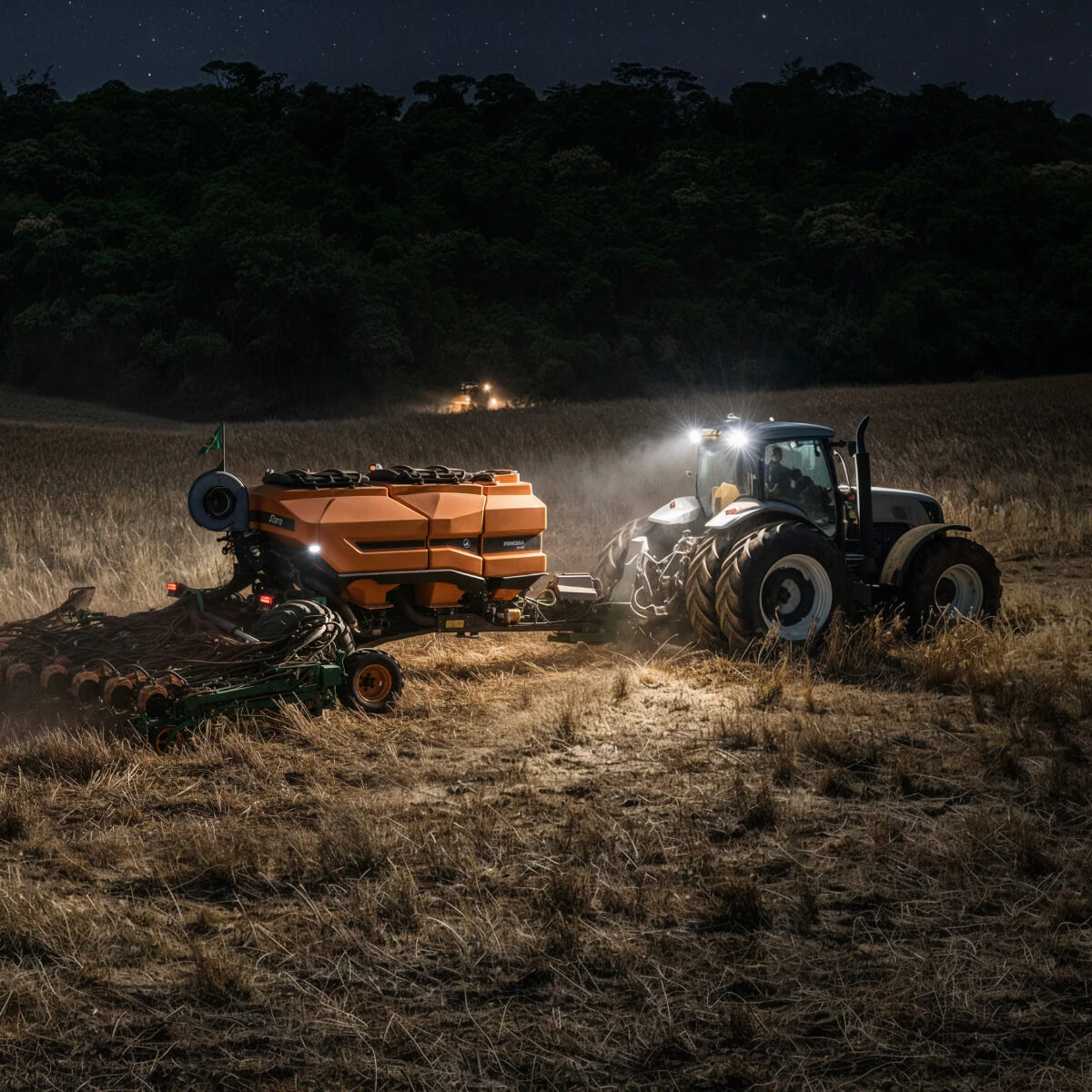
Machine operation varies by model and configuration. Stara seeders offer features that help ensure consistent sowing quality.
Guapa Supra Winter, for example, has row units with a wide range of movement, ensuring consistent sowing even on very uneven terrain. Its exclusive seed metering and delivery system distributes seed efficiently and uniformly, with a low coefficient of variation.
Designed for winter crops, cover crops and pasture establishment, it follows ground contours closely to maintain sowing accuracy, even over contour banks and bunds.
Guapita also follows uneven ground closely and delivers accurate sowing, promoting uniform emergence and better plant development.
7. Monitor the performance of your integrated crop-livestock system throughout the year
Combining crops and livestock on the same land requires continuous monitoring because field conditions change throughout the year. Crops leave residue, pastures develop roots, livestock affect the soil surface and machinery enters the fields at different stages of production.
Effective monitoring allows farmers to use data to manage these activities as an integrated system, rather than simply carrying out one after another.
What role does technology play in integrated crop-livestock farming?
Agricultural machinery and technology play an important role in improving operational efficiency and making better use of farmland throughout the year when introducing ICL.
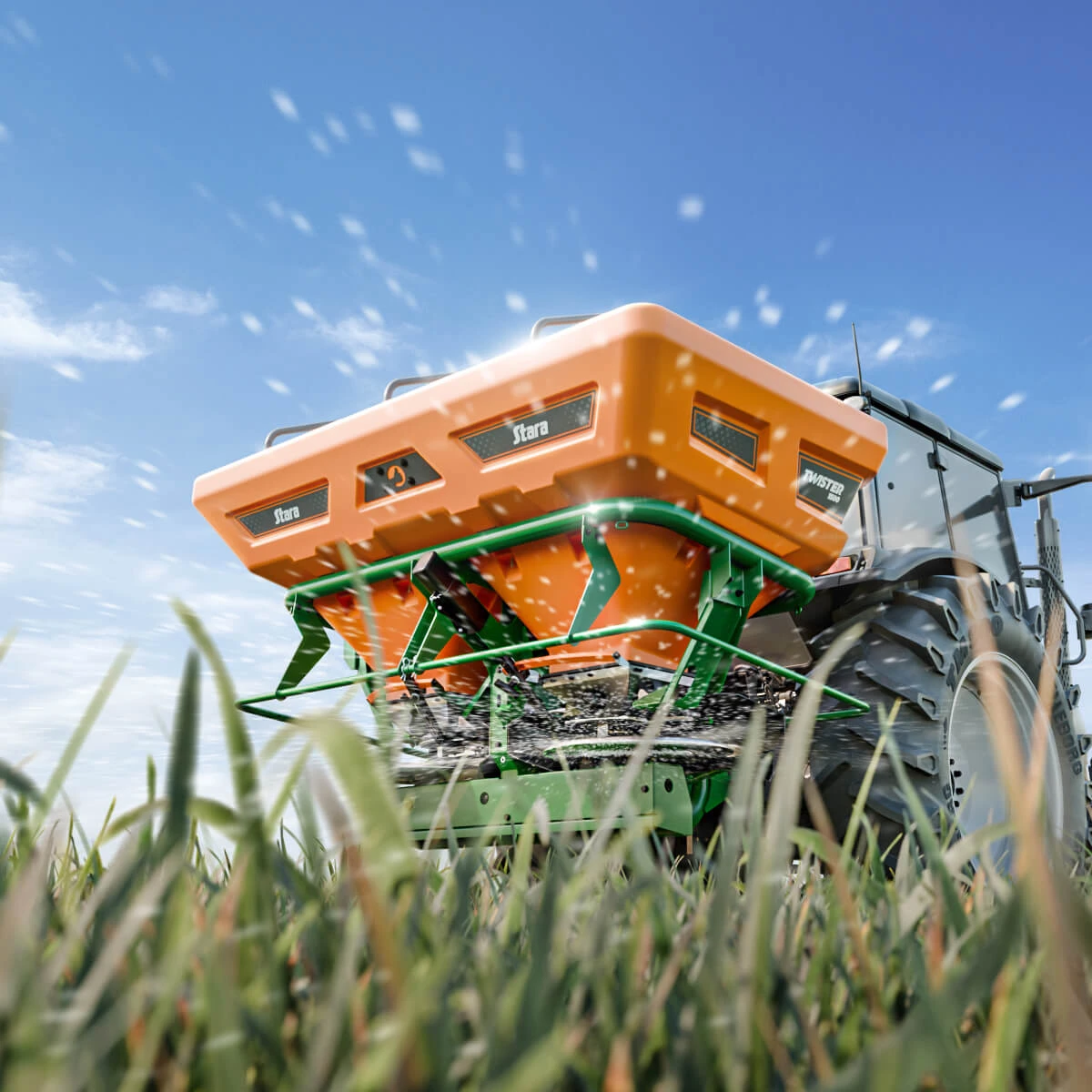
Stara equipment supports different stages of production, from establishing crops to establishing and managing pastures.
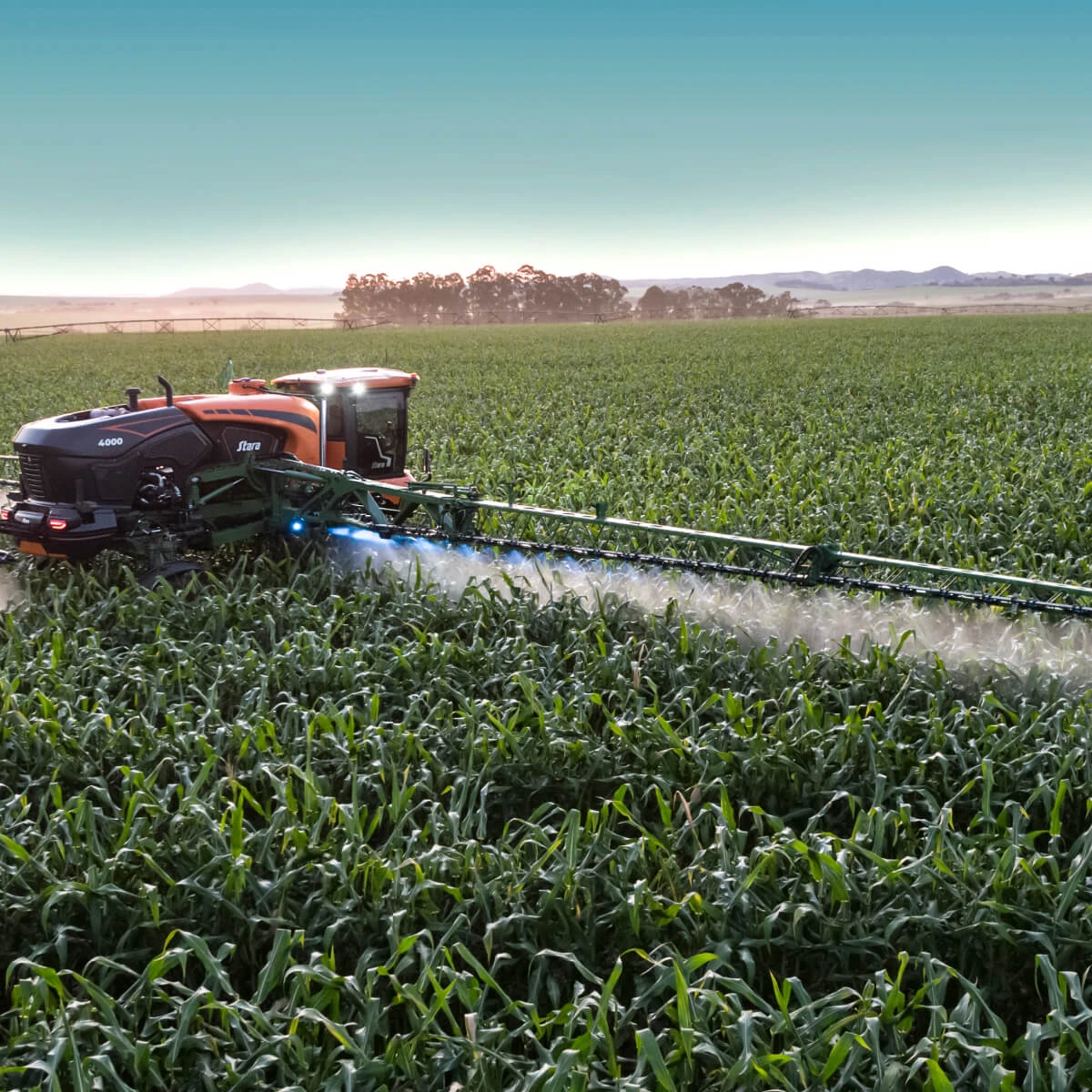
Imperador 2000 PV, for example, combines spraying and pneumatic cover crop seeding in one machine. Its exclusive Ponte Verde System sows across the full boom width using the same tramlines as for spraying. This reduces operating time, fuel consumption and crop damage while helping establish cover crops for integrated farming systems.
Imperador 3.0 combines three functions in one machine: spraying, fertiliser spreading and pneumatic seeding of cover crops and pasture, all using the same tramlines. This allows farmers to carry out different operations throughout the production cycle more efficiently and with less impact on the soil, meeting the needs of each stage of ICL.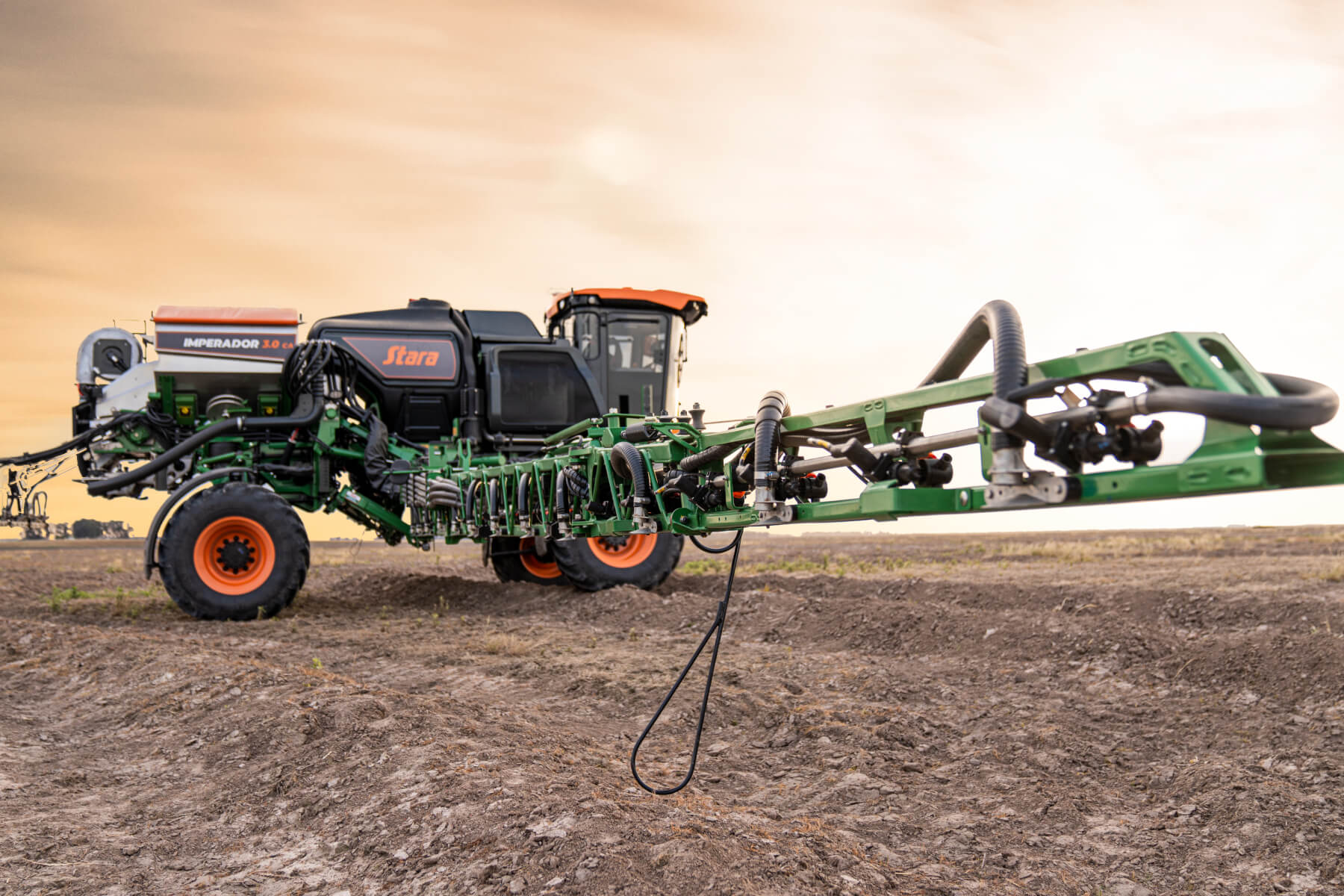
Stara precision farming technologies also help farmers manage field operations.
Syncro allows up to four machines carrying out the same operation to work in sync and share information. Stara Telemetry provides real-time access to production data, making it easier to monitor activities and make decisions at every stage of ICL.
Opportunities for farmers adopting ICL
Integrating crops and livestock diversifies income and makes better use of farmland between cropping seasons.
Successful integration requires sound technical planning. Farmers need to adapt their planting system, ensure enough crop residue is produced to maintain soil cover, manage grazing, monitor compaction and use efficient machinery suited to their farm.
With agronomic planning, agricultural technology and the right machine settings, ICL improves farm performance and strengthens financial resilience from season to season.
Frequently asked questions about integrated crop-livestock farming
What is integrated crop-livestock farming?
Integrated crop-livestock farming, or ICL, combines crops, forage and livestock on the same land. The aim is to make better use of farmland, diversify income and improve soil management.
What is the difference between ICL and ICLF?
ICL combines crop and livestock production on the same land through intercropping, sequential cropping or rotation. It can include soybeans, maize, pastures, forage crops and livestock to diversify production, restore land, provide crop residue for soil cover and make better use of the soil. Integrated crop-livestock-forestry (ICLF) adds trees to the system. Alongside crops and livestock, trees provide timber and shade, help keep livestock comfortable in hot weather, protect the soil and diversify income.
Which planting system is best suited to integrated crop-livestock farming?
No-till is often one of the main options for ICL because it maintains soil cover, reduces soil disturbance and makes use of crop residue. The final choice depends on field history, crop and forage species, and farm conditions.
Which crops can be used in ICL?
In Brazil, ICL can include soybeans, maize, sorghum, rice, oats, ryegrass, pearl millet, brachiaria and other forage species, depending on the region and production objectives. The choice should take account of the climate, planting window, intended land use and technical advice.
How can you prevent soil compaction in integrated crop-livestock systems?
To reduce the risk of soil compaction, the farmer should control stocking rates, avoid grazing when the soil is very wet, prevent livestock from grazing the grass too short, plan machinery traffic and monitor soil structure throughout the year.
Does integrated crop-livestock farming improve soil fertility?
Yes. It helps improve nutrient cycling, increase soil organic matter and maintain vegetation cover. These benefits depend on crop rotation, crop residue management, correcting soil fertility deficiencies and effective grazing management.
What are the challenges of integrated crop-livestock farming?
The main challenges are planning crop rotations, managing grazing, retaining crop residue, preventing soil compaction and adjusting machinery for each stage of ICL.
Looking for solutions to introduce integrated crop-livestock farming on your farm?
Visit a Stara Dealer to find the right equipment to maximise your farm’s performance. Request a quote.